
Wafer-scale chips from Cerebras Systems have shorter lifespans than official statements suggest, according to research and short-selling firm Culper Research.
In a post on X, Culper disclosed a short position on the chipmaker, stating that its wafers break down after around two years of use.
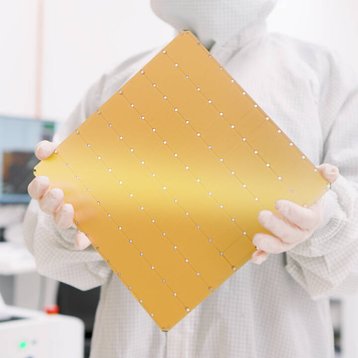
Culper said this lifespan “undermines the entire business.”
A core element of Cerebras’ official statements and marketing is that it solved long-term issues with wafer-scale chip design.
Cerebras CEO Andrew Feldman has said the company solved a “75-year-old” issue, and in a post on Medium in 2019, Cerebras claimed it had invented “a new material and designed a connector from it,” fixing thermal expansion problems.
However, in a report published yesterday, Culper claimed that Cerebras’ “new” material is actually a 40-year-old product from Paricon Technologies.
“We don’t think Cerebras ever solved thermal expansion at the hardware level,” the research firm said, with Culper adding that a former Cerebras employee had confirmed that the connector material came from an outside vendor.
He further claimed that Cerebras programs its wafers with a “jerry-rigged ‘fix’” that constantly runs dummy operations on the chip. This results in the chip drawing near-peak power constantly, with CS-2 at 70 percent of peak while idle, and CS-3 at 80 percent of peak while idle.
Culper said the result of this is a shorter chip lifespan. The research company backed up these claims by publishing customer statements that said their systems had failed sooner than expected.
In draft IPO filings, Cerebras had said that its chips could last between three and five years, but Culper said the wafer-scale chips last just 1.4 to 2.3 years.
“Cerebras’ pitch largely rests on the claim that CEO Feldman and his co-founders solved what the semiconductor industry could not solve for over 75 years. Their track record does not inspire confidence,” Culper said in a post on X.
“Nearly all of Cerebras’ co-founders and patent holders, as well as many key employees, came from Feldman’s last company, SeaMicro. AMD acquired the business in 2021, but within three years Feldman had left, while AMD took a $76 million write-down and shuttered the business.”
Cerebras stock dropped 5.66 percent yesterday after the report was published. Its stock is down a further 2.27 percent in pre-market trading today.
DCD has reached out to Cerebras for comment.





Comments