

Calxeda, an Austin, Texas-based maker of ARM-based processors, has closed its third financing round, which added US$55m to its wallet. Counting this round, the company has raised more than $100m.
Calxeda CEO and co-founder Barry Evans said the cash infusion would accelerate its strategy to sell low-power ARM chips – primarily used in mobile devices today – into the data center market for servers running modern large-scale workloads, such as cloud services and analytics applications.
“Businesses require a more efficient solution for the web, cloud, and Big Data,” Evans said. “That is what Calxeda is now delivering, and this funding will enable us to go bigger and faster.”
The company’s new investors are Austin Ventures and Vulcan Capital. Companies that have invested in Calxeda in the past include Battery Ventures, Flybridge Capital Partners, Highland Capital Partners and ARM Holdings itself.
While an individual ARM chip’s performance is reportedly inferior to that of a modern x86 processor, the architecture – which vendors like Calxeda license from the UK-based company – the appeal of ARM processors for data center operators is in their low power consumption.
They are energy efficient and small, so IT vendors have been packing a lot of them into some of the earliest servers to have been built around the architecture.
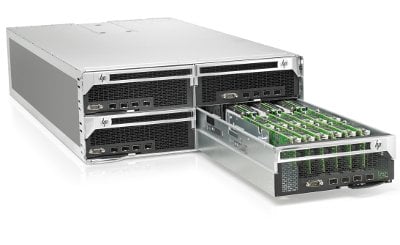
HP’s development platform using EnergyCore ARM Cortex processors by Calxeda is called Redstone. This is a 4U chassis that can support up to 288 quad-core Calxeda nodes, consuming about five watts per node when running at full steam.
HP unveiled Redstone as part of Project Moonshot, an effort to develop low-power servers for web-scale applications.
Although Redstone was the first system to come out of the project, it was a “development” server, designed for testing and proof of concept. HP chose another vendor’s chips to build the first commercial product under Project Moonshot: Centerton processors by Intel, codenamed Atom.
Dell called its ARM-based servers Copper. In May, the company started shipping Copper servers to select customers and partners to give some developers a chance to start working on operating systems and applications for the architecture early.