
BT Group's CEO has suggested that the telco could cut even more jobs than initially expected due to advances in AI.
In an interview with the Financial Times over the weekend, Allison Kirkby hinted that firm's workforce will be lighter by the end of the decade because of AI.
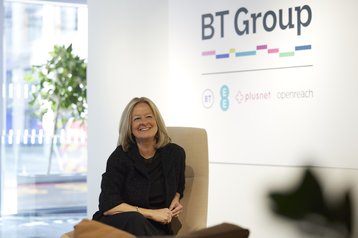
Her comments come two years after the telco said it planned to cut 55,000 jobs, noting at the time that it expects AI to replace workers in customer services roles.
At that point, BT said AI was expected to account for one-fifth of those jobs, with those plans were announced by her predecessor, Philip Jansen.
“Depending on what we learn from AI... there may be an opportunity for BT to be even smaller by the end of the decade,” Kirkby told the FT.
Kirkby said BT plans to cut more than 40,000 jobs by the end of the decade, claiming this will save £3 billion ($4.08bn) in costs. She added that this "did not reflect the full potential of AI."
BT currently employs 100,000 people, according to the company's own website. This figure was 130,000 a couple of years ago. However, job cuts and asset sales have led to the workforce being reduced.
Since taking over at the company last year, Kirkby has pushed to streamline operations, in favor of focusing on the UK market. The UK has been a key part of her turnaround strategy.
At the start of this month, BT launched a dedicated standalone international business unit.
In April, the company agreed to sell its Italian unit to Retelit and prior to that, signed a deal to sell its Irish wholesale and enterprise unit to Cordiant subsidiary Speed Fibre Group.
Just before Christmas, Equinix agreed to acquire BT Group's Irish data center business for €59 million ($67.3m), a deal expected to be completed during the first half of this year.
Openreach spin-off?
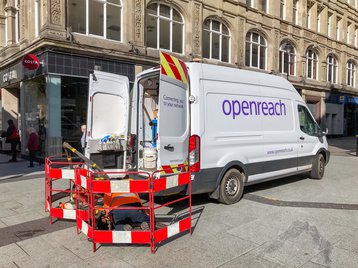
During the same interview with the FT, Kirkby said it might be time to spin off Openreach, BT's infrastructure arm.
Openreach is currently on track to deploy its fiber network to 25 million homes across the UK by the end of next year. The company has passed 18 million locations already.
Kirkby told the FT that she did not feel the value of Openreach was reflected in the company’s share price. She noted that her preference would be to see the value of the network reflected in BT’s shares, rather than separate the unit from BT.
She told the newspaper that the time to consider this will be once Openreach completes its rollout.
At present, Openreach is building its fiber rollout at around one million premises a quarter, though this will drop to around one million homes a year by the time the carrier sets out to hit its 30 million target by 2030.






Comments