
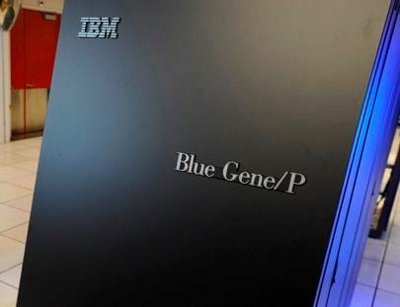
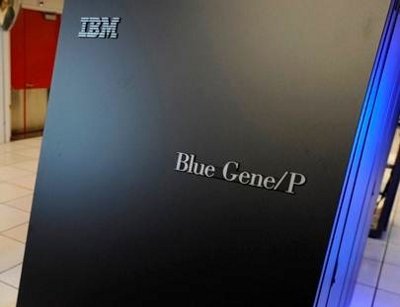
Rice University in Houston, Texas, has partnered with IBM to bring the first Blue Gene supercomputer to the State of Texas, IBM announced Friday.
A related collaboration agreement with the University of Sao Paulo (USP), Brazil, was also announced, whereby administration and use of the supercomputer will be shared by the two universities.
Blue Gene will help faculty at Rice to further their own research and collaborate with partners on a range of science and engineering questions in the fields of geophysics, basic life sciences, cancer research, personalized medicine and more.
Rice Provost George McLendon said high-performance computers like Blue Gene were critical in about every discipline of science and engineering.
“For individual faculty, the supercomputer will open the door to new areas of research,” McLendon said. “The Blue Gene also opens doors for Rice as the university seeks to establish institutional relationships both in our home city and with critical international partners like USP.”
USP officials said their faculty would use their time on Blue Gene to conduct research in areas that range from astronomy and weather predictions to particle physics and biotechnology.
Blue Gene/P is the third supercomputer that will have been launched over the past two years. The latest project doubles the number of supercomputing CPU hours the university can offer.
The six-rack system contains nearly 25,000 processor cores that are capable of conducting about 84 trillion mathematical computations each second, IBM said. When fully operational, the system is expected to rank among the world's 300 fastest supercomputers as measured by the TOP500 supercomputer rankings.