
US fuel cell developer Bloom Energy has launched a new deployment system that it claims can reduce on-site power installation time by more than 40 percent.
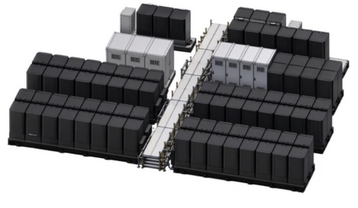
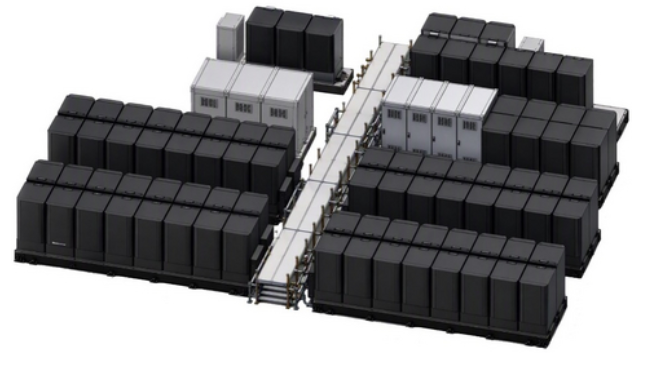
The new platform, dubbed Power Connect, will speed up connections by moving most installation work to the factory. As a result, the system arrives at the site pre-connected, pre-wired, tested, and ready for installation, which reduces on-site complexity. The company claims this improves deployment consistency and accelerates commissioning.
The company said that the new offering will focus on delivering power for the data center market, which has become Bloom’s biggest offtaker for its Solid Oxide Fuel Cell (SOFC) system. The company’s SOFC fuel cells convert fuel into electricity via an electrochemical reaction rather than combustion, which Bloom claims results in much higher efficiency and lower emissions.
Bloom said that the system will be manufactured and assembled in the US via its manufacturing network.
"Power Connect is the latest innovation supporting our speed-to-power advantage," said Joe Tavi, head of Bloom Energy's customer installation group. "It reflects how we're rethinking the entire power deployment process, moving complexity out of the field and into a controlled manufacturing process. By standardizing critical electrical integration, Bloom Power Connect creates a simpler, more repeatable installation model, helping customers move more quickly from project approval to electrons flowing."
The company has already signed several deals in the data center space. Earlier this year, it expanded an agreement with cloud firm Oracle to supply it with up to 2.8GW of capacity. The companies inked a deal last year for an initial 1.2GW of capacity, with deployments currently underway and expected to continue into next year.
Bloom has also signed deals with Equinix for deployments across 19 data centers with a capacity exceeding 100MW, as well as an agreement with US utility American Electric Power for up to 1GW of SOFCs to power AI data centers off-grid.






Comments