

AT&T has deployed Cisco’s latest carrier-grade solution that supports IPv6 (Internet Protocol version 6) addressing system as part of its network, which can now serve customers with IPv4 and IPv6 services simultaneously.
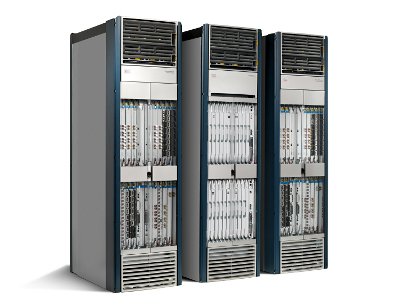
Called Cisco Carrier-Grade IPv6 solution, the product provides carriers with a blueprint for transition to IPv6. The system deployed by AT&T is based on Cisco’s Carrier-Grade Services Engine (CGSE) for its Carrier Routing System.
Surya Panditi, senior VP and general manager of Cisco’s Server Provider Networking Group, said the company’s network solutions for the next-generation Internet Protocol had been instrumental in the build-out of Internet since its inception.
“The implementation of this technology complements our IPv6 solution portfolio, helping service providers address immediate challenges as they preserve and prepare their networks for long-term success, prosperity and business growth,” Panditi said.
The CGSE solution is powered by a multi-core processor, which allows it to scale to be able to serve tens of millions of address translations and gateway functionality with tens of gigabits of throughput.
Cisco cited the non-profit organization RIPE in saying North America was expected to run out of IPv4 addresses sometime in 2013. The need is even more pressing in China, whose rapid growth in the number of people connected to the Internet has pushed telcos to race to upgrade their networks to support IPv6.
According to Cisco’s own research, about 19bn devices will be connected to the network in 2016, or 2.5 devices per capita on average.
On 6 June, 65 network operators and thousands of websites, including Google, Facebok and Yahoo!, switched on systems that used IPv6 on what was dubbed the “World IPv6 Day”.
IPv6 is a different format for Internet packets, providing 128 bits of address space instead of 32 bits comprising an IPv4 address. The IPv4 address space provides for a total of 4.3bn termination points on the Internet, while IPv6 makes it possible to create 3.4 x 10³Ôü©, or 340 trillion-trillion-trillion addresses, Vint Cerf, a computer scientist credited with being one of the Internet’s original creators, said in a Google-produced YouTube video.