

ARM Holdings kicked 2013 off with a strong first quarter, reporting revenue growth, new licensees and growth in shipments of processors based on its technology.
The UK-based company that licenses its designs for low-power processors dominates the mobile-device market. Over the course of last year, however, it enjoyed strong momentum in the server market, where energy consumption has become a top concern.
ARM reported about US$264m (£170m) in revenue for the first quarter of 2013 – up 26% year over year. Its profit before tax was about $136m (£89.4m) – up 44%.
The company's operating margin went from 44.5% in the first quarter of last year to 50.5% in the first quarter of 2013.
Commenting on the results, ARM CEO Warren East said applicability of the company's technology and demand for it was growing because everyday devices were becoming smarter, more connected and energy efficient. The company's performance during the quarter was driven by market share gains in digital TVs and microcontrollers, he said.
“In addition, the growth in smartphones and tab lets continues to benefit ARM.”
While many IT vendors have announced ARM-based servers, news of actual deployments has been scarce. Data center application of the “wimpy-core” processor technology is a relatively new concept, with few end users testing the waters.
Traditional x86 processors are still dominating the data center world, and Intel's rival wimpy-core processor Atom has been gaining steam in the IT-vendor circles. Also, 64-bit ARM chips for servers are just now coming to the market, while Atom for servers has featured a 64-bit instruction set from the get-go.
The most recent major deployment announcement was by the chipmaker Marvell, which said China's leading search-engine company Baidu had deployed servers based on ARM chips made by Marvell as part of its infrastructure.
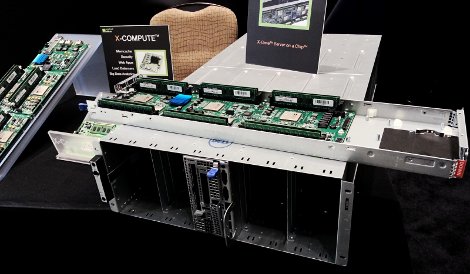
Processor company Applied Micro was first to introduce a 64-bit ARM processor to the market. Called X-Gene, the product became available in January.
AMD and Calxeda are expected to roll out 64-bit ARM chips next year.
Earlier this month, HP announced its first commercially available wimpy-core-based server called ProLiant Moonshot. HP chose Atom for its first production Moonshot system, but said it had plans to release configurations based on processors by AMD, Applied Micro, Calxeda and Texas Instruments – all ARM licensees.
Dell's ARM-based servers are called Copper. In May 2012, the vendor started shipping Copper systems to select few developers to start testing operating systems and applicatins on the new platform.
Servers are not the only application of ARM in the data center. There are ARM-based storage and networking systems on the market as well.