

Argonne National Laboratory, the US Department of Energy’s lab established as part of the Manhattan Project, has chosen Rackwise’s data center infrastructure management (DCIM) solution for its data centers, the vendor said Friday.
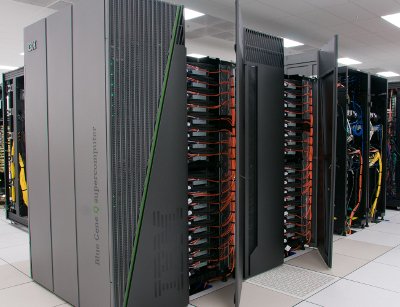
Operated by the University of Chicago, Argonne researches in a variety of areas, focusing mainly on energy at the electronic, atomic and molecular levels. The lab’s data centers house a lot of computing muscle, including Mira, the world’s third most powerful supercomputer according to the most recent Top500 list.
Argonne will start by using Rackwise’s DCIM X product to monitor and report data center Power Usage Effectiveness (PUE) on an ongoing basis. The lab ultimately needs a tool to help set a baseline for energy utilization, as well as for monitoring, reporting and planning in order to improve energy use over time.
Rene Gobeyn, data center facility manager at Argonne, said things were complicated further by the federal regulations and executive orders regarding data collection and reporting.
“The fact that other national laboratories in the United States currently use Rackwise products to successfully address similar challenges contributed to our confidence in selecting Rackwise DCIM X for our facilities,” Gobeyn said.
Rackwise has publicly announced one other national-lab customer: the Stanford-University-operated SLAC National Accelerator Laboratory in Menlo Park, California. Other federal customers include the Securities and Exchange Commission and Army Corps of Engineers.
When established in 1946, the lab became a foundation for a massive national-laboratory infrastructure that would later be developed across the US, according to a book about Argonne by Jack Holl, Richard Hewlett and Ruth Harris.
Argonne emerged out of the notorious Manhattan Project by the US government. The first self-sustaining nuclear reaction was achieved by the University of Chicago’s Metallurgical Lab (a code name) as part of the project.
When it became clear that doing these experiments near a major city was dangerous, the university moved these operations to an area outside of Chicago, where the lab received its current name. Its first mission was to develop nuclear reactors for the US military.