
US airline JetBlue is to use Amazon’s Project Kuiper Low Earth Orbit (LEO) satellites to provide in-flight WiFi.
The companies this week announced JetBlue will be the first airline in the world to sign on with Amazon’s Project Kuiper to provide its onboard WiFi services, known as Fly-Fi.

“Our agreement with Project Kuiper marks an exciting leap forward for us as the hands-down leader in onboard connectivity,” said Marty St. George, president, JetBlue. “Whether it’s binge-watching a favorite show, staying connected with loved ones, or wrapping up a work project, we’re always looking for ways to make our customers’ time in the air as connected and productive as they want it to be.”
JetBlue launched Fly-Fi in 2013 to become the first major US airline to offer free, high-speed WiFi on every aircraft in its fleet. JetBlue currently offers in-flight WiFi on every aircraft served from geostationary Earth orbit (GEO) satellites.
The companies will install Project Kuiper technology on aircraft currently flying JetBlue’s original Fly-Fi technology, saying the new services will provide faster connectivity speeds and lower latency. The airline said with the addition of LEO satellite connectivity, JetBlue is “positioned to explore a multi-orbit solution in the future, which could combine the strengths of both its low Earth orbit and GEO networks for even more robust inflight connectivity.”
JetBlue expects to begin rolling out Project Kuiper’s system in 2027 with a phased rollout to follow. The companies said more details on installation timelines, routes, and aircraft will be shared in the future.
“Staying connected is part of everyday life, even when you're traveling," said Panos Panay, SVP of Amazon devices & services. "With Project Kuiper, we're working to ensure customers can enjoy fast, reliable internet wherever they are - at home or 35,000 feet in the air—and we’re pumped to bring that to life with JetBlue.”
New York-based JetBlue carries customers to more than 100 destinations throughout the United States, Latin America, the Caribbean, Canada, and Europe.
Amazon said its aviation-specific customer terminal is based on the company’s most powerful Kuiper terminal - a full-duplex, Ka-band phased array antenna that can support download speeds up to 1Gbps on a single device.
Amazon recently signed an agreement with European aircraft manufacturer Airbus to integrate Project Kuiper's connectivity solution into its aircraft catalog.
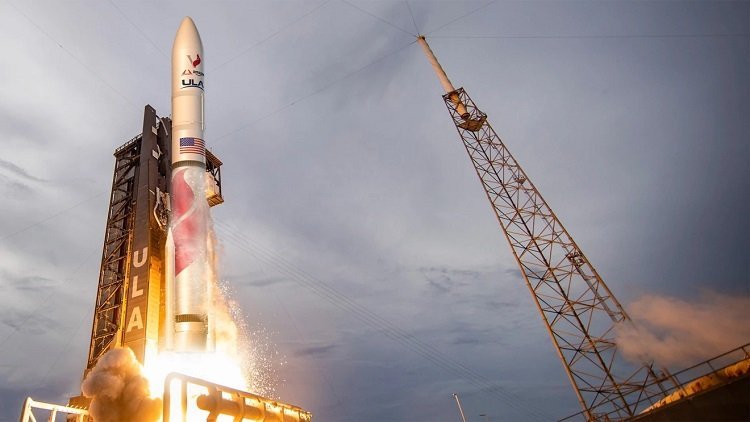
Following four rocket launches in four months, Amazon now has more than 100 of the 3,200+ planned Kuiper satellites in orbit. It aims to begin delivering services to its first customers later this year, ahead of a wider roll-out.
To date, Amazon has signed deals for Kuiper with Vodafone and Vodacom, Verizon, NBN Co., and Vrio. An AWS deal with mining company Gold Fields mentioned using Kuiper for connectivity at its remote locations.
In-flight WiFi was long provided by satellites in geostationary orbits. But the lower costs, higher throughput, and lower latency of LEO satellites have seen many airline operators choose the likes of Starlink to provide services. United Airlines, airBaltic, Zipair Tokyo, and JSX have also chosen Starlink Aviation. JSX’s entire Embraer ERJ fleet is already fitted with SpaceX’s technology.



Comments