
South Korean AI chip startup Rebellions has raised $400 million in a pre-IPO funding round and unveiled two new AI infrastructure platforms, dubbed RebelRack and RebelPod.
The round was led by Mirae Asset Financial Group and the Korea National Growth Fund and brings the total raised by the company to $850m, valuing Rebellions at approximately $2.34 billion.
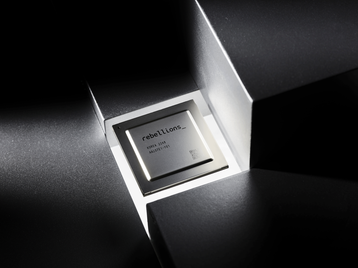
While the chip startup has not given a target date for its IPO, in a statement, Rebellions said the funding will allow it to enter a “new phase of growth focused on US market expansion,” which involves the scaling up of its Rebel100 platform alongside “preparation for a future IPO.”
The US expansion will be led by chief business officer Marshall Choy, who recently joined the company to drive global growth.
Additionally, the company has also launched two new “vertically integrated” AI infrastructure platforms – RebelRack and RebelPod.
The RebelRack delivers a production-ready unit of inference compute, while the RebelPod integrates multiple racks into a scalable cluster designed for large-scale AI deployment, Rebellions said. Built on the company’s chiplet-based Rebel100 NPU, the platform is optimized at the system level for “performance-per-watt and cost efficiency,” which the company claimed will enable organizations to operate AI workloads “within real-world power and infrastructure constraints.”
Both RebelRack and RebelPod are available now.
Commenting on the announcements, Sunghyun Park, co-founder and CEO of Rebellions, said: “AI is now measured by its ability to operate in the real world – at scale, under power constraints, and with clear economic return. That shifts the center of gravity toward inference infrastructure and software that makes that infrastructure usable. The companies that succeed in this era will not be defined by silicon alone, but by how effectively they integrate into the open source software ecosystem and enable developers to build and deploy without friction.”
Founded in 2020, Rebellions specializes in AI inference accelerators that offer energy efficiency and low-latency performance.
The company began mass-producing its Atom and Atom Max NPU to run large language models (LLMs) in the data center in 2023. The chips have been deployed by customers in Japan, Saudi Arabia, and the US, the company said, adding that it is looking to expand its presence in the US, Europe, and Asia-Pacific to support sovereign AI infrastructure initiatives.
In June 2024, the company agreed to a merger with Sapeon Korea, a semiconductor company that was spun out of SK Telecom in 2016, and in July of the following year, partnered with Marvell to offer high-performance, energy-efficient AI systems that support AI deployments across APAC and the Middle East.



Comments