
Piq Energy has raised $5 million in seed funding to support the deployment of its agentic grid-planning platform, designed to expedite the connection of new energy projects to the grid. The funding round was led by Active Impact Investments.
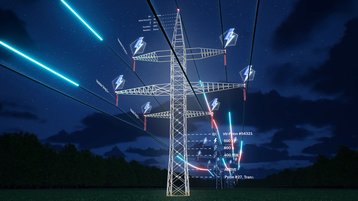
The San Francisco-based startup's grid planning platform is designed to speed up the process by which utilities and developers connect new energy projects to the grid. According to the company, the funding will be used to bring the platform to more utilities and developers and to expand its underlying grid intelligence layer.
Typically, connecting new projects to the grid requires a lengthy series of engineering studies that can take months or years to complete. Piq claims that its platform is built to sit atop existing engineering software and workflows rather than replace them, running studies through AI agents to enable engineering teams and business leaders to collaborate more directly.
Since its launch in 2025, Piq claims to have managed more than 1,000 transmission grid models and completed more than 10,000 engineering workflows, supporting customers who run dozens of analyses daily.
"Connecting a project to the grid shouldn't take longer than physically building it," said Tom Nudell, CEO and co-founder of Piq Energy. "The next terawatt of energy infrastructure is waiting to connect to the grid, not because the physics is hard, but because the engineering can't keep pace."
Mike Winterfield, founder and managing partner at Active Impact Investments, said: "The team understands the complexity of the grid better than almost anyone we've met, and they've built a platform that has the potential to become foundational as the grid continues to evolve."
The funding round also saw participation from Cisco Foundation, Mobilize AI x Energy Ventures, New Climate Ventures, Ascent Energy Ventures, Umami Capital, CLAI Ventures, and 9Zero.
Several companies have emerged over recent years promising an AI-powered solution to grid planning. The most notable is Tapestry, a Google X 'moonshot project' that, using AI, seeks to expedite the grid planning and connection process. The firm recently completed the first deployment of its AI-powered platform to handle the initial site control review for PJM Interconnection's first reformed interconnection queue cycle.






Comments