
For years, deploying digital infrastructure followed a relatively predictable formula. Teams understood how servers behaved, how networks scaled, and how facilities responded under load to the nth degree. In today’s AI-driven landscape a more fundamental shift is heating up.
Infrastructure itself is becoming dramatically more complex. Power densities are climbing, thermal demands increasing, and technologies that were once considered the icing on the cake are quickly becoming foundational aspects of operational strategy.
As a result, deploying AI infrastructure isn’t just a procurement exercise, but a complex engineering challenge. While securing the necessary compute resources remains fundamental, increasingly, the dominant challenge lies in integrating, validating, deploying, and operating these solutions successfully at scale.
"The most common misconception is that hardware selection is the hardest part," says Paul Ju, senior vice president and co-head of infrastructure solution BG at ASUS. "What enterprises consistently underestimate is the complexity that only surfaces at cluster scale – power spikes, thermal interactions, signal integrity issues – none of which are visible at the single-node level."
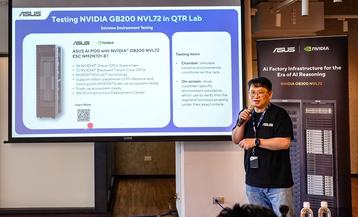
As AI deployments continue to rise with full force, success goes beyond the hardware alone, requiring a repeatable recipe for turning infrastructure into production-ready AI environments.
Step one: Understanding the landscape
The transition from traditional enterprise infrastructure to rack-scale AI systems has redefined the nature of deployment itself.
Historically, servers, storage, networking, cooling, and management tools were often procured separately and integrated over time, meaning infrastructure teams could evaluate systems largely in isolation. And crucially, their underlying technologies typically evolved incrementally.
AI factories are an entirely different flavor. Today's rack-scale systems combine dozens of CPUs and GPUs, high-bandwidth interconnects, liquid cooling technologies, advanced networking fabrics, software orchestration platforms, and increasingly complex operational requirements.
The dependencies between these components are growing stronger, and failures often emerge not within individual technologies but at the points where different systems intersect.
"The hardest part of rack-scale AI lies in extreme power management and high-speed signal integrity under real cluster conditions," explains Paul Ju.
The challenge becomes most evident when systems begin operating under sustained workloads where power demand fluctuates rapidly and thermal conditions change continuously. Given rising pressure for always-on operations, performance must remain consistent under these intense loads.
And yet, components that perform effectively during isolated testing can behave very differently when working in practice as part of a synchronized cluster.
ASUS is responding to these challenges by utilizing next-gen NVIDIA technology. NVLink, for instance, delivers ultra-high-bandwidth, low-latency GPU-to-GPU communication within and across nodes, letting an entire rack function as a single unified compute resource for large-scale AI workloads.
In addition, NVIDIA Quantum InfiniBand adds end-to-end networking with extreme throughput and ultra-low latency, NVIDIA Spectrum-X Ethernet, with its advanced SuperNICs, ensures fast, scalable connectivity, and NVIDIA BlueField strengthens secure, multi-tenant data access along with real-time threat detection.
Step two: Full-stack validation
As AI infrastructure grows more sophisticated, deployment timelines are increasingly constrained by validation rather than installation.
These realities are driving a broader industry shift. Increasingly, operators are recognizing that validation must be baked-in at the system level rather than across individual, isolated components. Crucially, the recipe matters as much as the ingredients.
The cost of discovering problems after deployment is too high. A thermal issue identified under testing conditions can often be resolved in days, while the same problem discovered after production rollout can delay projects for weeks or months. Similar risks exist across networking, power delivery, cooling systems, firmware, and software integration.
As a result, full-stack validation is a critical step in the deployment process. This recognition has driven investment in facilities capable of replicating real-world operating conditions before infrastructure reaches customer sites.
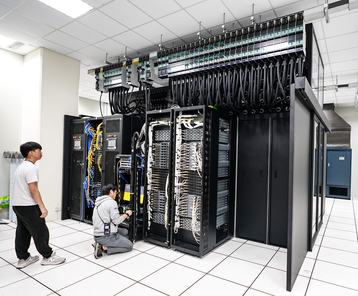
The ASUS AI Lab in Luzhu, Taiwan, has been developed specifically to validate rack-scale AI environments under realistic deployment scenarios. Rather than testing individual components separately, the facility focuses on validating the entire stack simultaneously – including silicon, systems, networking, cooling infrastructure, firmware, management software, and orchestration layers.
"The core philosophy of the project is full-stack infrastructure validation," adds Paul Ju. "Not component-by-component testing, but end-to-end integration of the entire stack."
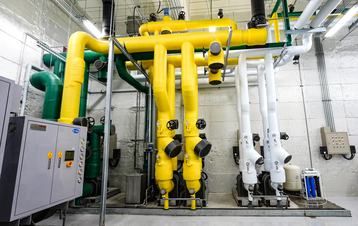
The facility includes multiple specialized environments: a research and development laboratory replicates live data center conditions for firmware and software validation; an environmental chamber simulates extreme temperature and humidity conditions; and a dedicated thermal facility recreates hot and cold aisle environments to validate both air-cooled and liquid-cooled systems at rack scale.
The objective is to understand how they behave under pressure, where failures emerge, and how potential issues can be resolved before deployment begins. In practice, this results in compressed deployment timelines with minimized operational risk.
Underpinning this reliability is ASUS’s close technical alignment with NVIDIA. By leveraging NVIDIA AI infrastructure, including leading GPUs, high-speed networking, efficient cooling, and enterprise-grade software, ASUS is able to deliver the dense, scalable, and secure data center environments next-generation AI demands.
On the compute side, NVIDIA Blackwell Ultra GPUs, Grace CPUs, and NVLink provide the performance foundation, while the GB300 NVL72 generation packs 72 GPUs into a single rack, giving large, complex AI models the scale and efficiency they require.
When it comes to software, NVIDIA AI Enterprise (including NVIDIA NIM and NeMo), Blueprints, Omniverse, NVIDIA Dynamo, Run:ai, and Mission Control together form a comprehensive AI software stack spanning development, deployment, and management.
Step three: Simulating success
Beyond validation, the next challenge is determining whether infrastructure will perform successfully within specific, tailored environments.
Traditionally, many deployment decisions were made after facilities had already been designed or constructed. Today, this approach is under-cooked. The financial and operational stakes surrounding AI infrastructure are simply too high. In response, simulation is emerging as an invaluable planning tool.
Rather than waiting for a facility to be completed, operators can model infrastructure requirements in advance – evaluating factors such as power consumption, cooling performance, networking topology, storage integration, and operational efficiency before physical deployment begins.
According to Paul Ju, pre-deployment simulation remains one of the most underutilized forms of risk management available today:
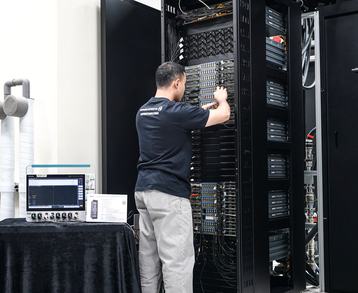
"The Lab can replicate a customer's planned data center environment without waiting for the physical facility to be built. Customers gain critical data before committing to a build direction."
This approach is becoming increasingly important as the concept of the AI factory gains momentum across the industry. Operators must understand how infrastructure, facilities, software, and operational processes interact as a complete system.
Through initiatives such as the ASUS AI Factory with NVIDIA DSX, modeling AI infrastructure before construction starts is becoming a key step in the recipe for AI infrastructure success.
Digital twin workflows built around OpenUSD-based simulations – a tool for creating realistic and accurate virtual environments – provide visibility into deployment requirements, allowing operators to evaluate readiness and optimize infrastructure plans before physical buildout begins.
This crucial step marks a shift in how infrastructure projects are planned, increasingly tying success to how much can be understood before installation begins.
Step four: Securing repeatability
The next question is clear: once the successful system has been validated and modeled, how can this be replicated consistently and at scale? Increasingly, the answer lies with standardization.
Across the industry, vendors are attempting to transform deployment experience into repeatable methodologies that reduce risk while accelerating implementation. Crucially, this doesn’t mean eliminating customization, but establishing proven foundations that can be adapted to individual requirements.
ASUS frames this approach as a ‘ready-to-deploy success recipe.’ According to Paul Ju, the concept refers to pre-validated system configurations built from accumulated testing, deployment experience, and operational knowledge.
"The foundation is thousands of Lab test results that become a knowledge base," he explains. "When the next customer arrives with a similar requirement, we can apply Lab-validated configurations directly without designing from scratch."
As operators face intense pressure to deploy AI capabilities at breakneck speed, constructing each and every environment from the ground up is no longer practical. What’s required are deployment models that provide both speed and confidence in equal measure.
This demand is also influencing software platforms. Automation tools such as the ASUS Infrastructure Deployment Center (AIDC) aim to streamline provisioning and cluster configuration, while the ASUS Control Center Data Center Edition (ACC) provides unified operational visibility across AI, HPC, and enterprise environments for end-to-end management.
"Getting the hardware running is only the first step," says Paul Ju. "Ongoing operations are where the real complexity lives."
As operational complexity grows faster than compute capacity itself, these streamlined digital capabilities are increasingly foundational to success.
Step five: Providing accountability
Perhaps the most significant change occurring across the AI infrastructure landscape is the growing expectation of accountability.
Historically, infrastructure projects involved numerous vendors, each responsible for a specific technology domain. Compute, networking, storage, cooling, software, and facility systems were often managed independently.
But as AI environments become more heavily integrated, when issues emerge at the boundaries between technologies, operators need answers rather than handoffs.
"Most vendors optimize the layer they own and treat everything else as someone else's problem," says Paul Ju.
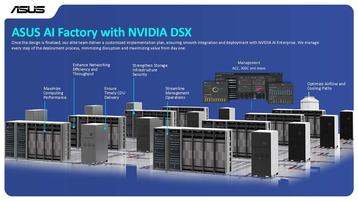


In and amongst this industry-wide shift, ASUS’ response is a growing emphasis on full-stack integration and lifecycle services.
The company recognizes that infrastructure providers are increasingly expected to deliver guidance that extends beyond hardware – covering architecture design, deployment planning, performance optimization, operational management, and long-term evolution.
This trend reinforces the idea that AI infrastructure isn’t a collection of products – it’s an ecosystem where success depends on how effectively these components work together over time.
Step six: Preparing for the next generation
The pressure cooker of the AI era shows little sign of waning. The ASUS AI POD powered by NVIDIA Vera Rubin NVL72 – a fully liquid-cooled rack-scale platform designed for trillion-parameter AI models and next-generation AI factory deployments – is a clear marker of just one of the ways in which the industry continues to turn up the heat.
Yet the significance of platforms like these extends beyond their specifications. They represent the culmination of a wider industry movement toward integrated, validated, deployment-ready infrastructure.
The future of AI will undoubtedly be shaped by a combination of advances in silicon, networking, software, and cooling technologies. But it will also be defined by something less visible: the ability to transform those innovations into reliable production environments.
What’s just as clear is that operators looking to compete in the AI era require an end-to-end strategy that includes the right partners capable of reducing uncertainty, accelerating deployment, and delivering predictable outcomes.
The recipe for readiness comes down to building not just powerful systems, but creating the processes, validation frameworks, operational tools, and deployment methodologies that allow those systems to succeed in the real world.
Learn more about ASUS infrastructure solutions: https://servers.asus.com/ Contact our team: https://servers.asus.com/support/contact
Comments