
In an industry saturated with noise around new and emerging technologies and often unsubstantiated claims, the ability to implement innovation in practical, real-world settings has become a defining requirement.
Nick Schweissguth, global product director for cabinets, cooling, and containment at Legrand, brings more than a decade of experience in advanced cooling solutions for micro and modular data centers. His work has consistently focused on integrating cohesive product ecosystems that address the evolving and varied demands of modern data environments. Schweissguth advocates for a disciplined, evidence-led approach:
“When we focus on a solution, we micro-analyze it from a physics and mathematical standpoint to make sure it has merit.”
This mindset reflects Legrand’s commitment to depth over breadth – prioritizing the refinement of robust, scalable solutions designed for real-world applications, rather than painting with a broad brush to deliver one-size-fits-all offerings.
Reintroducing two-phase liquid cooling
Single-phase direct-to-chip (DTC) cooling – spearheaded by companies such as Nvidia – has jump-started the industry’s shift toward liquid cooling. But as with any breakthrough, initial adoption quickly gives way to the next stage of evolution.
This stage encompasses two-phase DTC cooling, which has seen growing momentum, particularly compared to alternatives like immersion. One of the key drivers behind this evolution concerns the heat flux limitations of single-phase water systems. As power densities continue to rise, simply increasing flow rates is no longer seen as a sustainable path forward.
Importantly, two-phase systems retain much of the familiar architecture of single-phase cooling; manifolds, piping, coolant distribution units (CDUs), and fluid distribution networks remain largely unchanged. The key distinction lies in how heat is transferred.
Single-phase cooling relies solely on sensible heat – removing energy by raising the temperature without changing its liquid phase – requiring more liquid to be pushed through the system to absorb rising thermal loads.
By contrast, two-phase cooling leverages latent heat of vaporization, allowing the coolant to boil at the chip level and absorb heat through a liquid-to-vapor phase change. This creates a naturally self-regulating mechanism where, as heat increases, so too does the rate of boiling, enabling efficient thermal transfer without a proportional increase in flow.
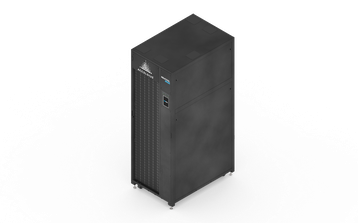
“It doesn’t mean you need to increase mass flow or overhaul your infrastructure to accommodate these drastic increases in thermal load – that’s the core difference in the technology,” says Schweissguth.
Now, two-phase DTC cooling is not necessarily a new concept. It has long been used in space-grade applications, where extreme environmental constraints demand highly advanced thermal management solutions. Its re-emergence in the data center, however, marks a significant shift driven by the rapid scaling of AI workloads and their associated thermal challenges.
Necessity
Today, two-phase DTC cooling is increasingly being endorsed for high-density AI infrastructure by the likes of Nvidia, because it addresses one of the industry’s most fundamental constraints: heat. As AI rack densities climb from 130kW to 250kW – and with projections approaching 1MW – the limitations of traditional water-based, single-phase systems are becoming increasingly apparent.
The associated thermal load expelled from modern chips – captured in thermal design power (TDP) – is rising sharply. As next-generation processors continue to push heat flux beyond the practical limits of conventional approaches, thermal management technology must evolve in step with the demands of next-generation compute, as Schweissguth observes:
“We saw this mass adoption in AI use cases, spurred on by staggeringly aggressive chip densities which are continuing to grow at an alarming rate.”
At a certain threshold, the shift to two-phase is less about incremental gains and more about fundamental capability. Schweissguth argues that it is not simply a better option – it may soon be the only viable one for sustaining continued chip development at scale.
“Even today, if a customer deploys a two-phase solution for roughly the same capex, they’re getting a significant reduction in opex, because you’re downsizing your mechanical systems that don’t require as much pump power, and lower overall heat rejection,” he says, adding:
“At some point, perhaps with Nvidia’s Feynman, customers will have no choice but to graduate from single-phase to two-phase in order to keep up with the trajectory of rising chip TDPs.”
Practicality
Even today, two-phase DTC cooling is proving practical at scale. Its inherent phase-change efficiency reduces pump power requirements by up to two-thirds and removes water from the white space, addressing both efficiency and operational risk in a single step.
“With two-phase DTC, you see about a 1:3 ratio in overall mass flow rate, meaning you have a much lower pump power and significantly smaller pipe diameters for fluid transport.”
Beyond efficiency, risk mitigation is a critical advantage. By eliminating water from the white space, two-phase systems reduce the likelihood of leaks and pressure-related failures – risks that will only intensify as operators push single-phase systems to keep pace with rising thermal demands.
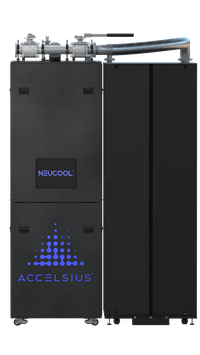


Adoption is also far less disruptive than it may first appear. In practice, it integrates effectively into hybrid data center environments, where multiple cooling strategies coexist. Back-end water infrastructure can remain largely unchanged, while operators retain flexibility within the white space to deploy two-phase, single-phase, or even air-cooled solutions as needed.
According to Schweissguth, the technology ultimately demonstrates its own value. A close collaboration between Legrand and Accelsius underpins this approach, combining system-level integration with advanced cooling innovation to support next-generation compute.
“Where Legrand comes in is through our integration capabilities. We have the cabinets, the supporting infrastructure, and the ability to tailor solutions for customers and deliver them at scale.”
From a capital expenditure perspective, two-phase systems are designed to deliver long-term value:
“Our design aim is to maintain capex to be on par with single-phase. But you then experience the benefits of opex,” says Schweissguth.
Those operational savings can be substantial, with reductions in annual opex of 35-44 percent and improved total cost of ownership of eight to 17 percent over a five-year period compared with single-phase cooling, as analyzed by Jacobs Engineering and reported by Accelsius.
Maintenance is another area where two-phase systems offer clear advantages. Unlike single-phase liquid cooling, which requires ongoing monitoring of fluid quality to maintain conductivity and prevent contamination, two-phase systems are far less demanding.
“It’s effectively a ‘set it and forget it’ approach. You eliminate the need for specialized apparatus to preserve fluid quality, significantly reducing maintenance requirements.”
Facilities also benefit from higher operating temperatures, reducing reliance on mechanical cooling even during peak ambient conditions.
“You can operate at warmer temperatures, so even on the hottest summer days, you eliminate mechanical cooling, because your chips are already running at substantially higher temperatures than in the past,” continues Schweissguth.
For operations teams, the technology introduces minimal additional complexity. HVAC technicians already service refrigerants, so two-phase introduces no new skillset or trade.
Finally, the use of industry-standard refrigerants ensures practicality across regions, minimizing regulatory friction and supply concerns.
“By using industry-standard refrigerants, the solution remains practical, even in regions with strict regulations. And unlike water, in the event of a leak, the fluid evaporates and is dielectric, so it does no harm to equipment.”
Taken together, these factors position two-phase DTC as a practical and operationally resilient approach to thermal management not just for the future, but today.
Scalability
According to Schweissguth, future-proofing is a defining advantage of two-phase DTC cooling. As chip innovation accelerates and infrastructure refresh cycles shorten, data center design is under increasing pressure to keep up. Two-phase systems are designed to be scalable so that operators can utilize the same infrastructure for today’s deployment as tomorrow’s ultra-high-density workloads.
By harnessing latent heat, two-phase DTC not only supports today’s high-performance AI environments but also creates a clear pathway to higher-density computing – delivering efficiency gains alongside long-term room for growth.
“Today, a customer can deploy two-phase to meet the needs of their current workloads and experience the efficiency benefits without fundamentally changing anything. In a couple of years, they can adopt newer server technology with next-generation chips and be able to support the thermal loads required without needing to redesign the system.”
For data center owners and operators, this ability to anticipate future demand at the points of deployment represents a significant advantage. Scaling a two-phase system is materially simpler than expanding a single-phase alternative. With pipe diameters a fraction of the size, there is far less need to oversize infrastructure upfront to accommodate future growth.
“You can upsize in a very cost-effective manner, knowing that three or four years from now you’ll already be able to support workloads that are ten times higher than what we’re seeing today.”
At the same time, Legrand is taking steps to ensure the technology can scale responsibly as it becomes more widely adopted. This includes active engagement in approved vendor lists (AVLs) and restricted vendor lists (RVLs), ensuring that materials and components meet stringent qualification standards.
Through rigorous supplier validation and alignment with industry frameworks such as the CHIPS and Science Act, Legrand is reinforcing both the reliability and long-term viability of its two-phase solutions.
Ultimately, nobody really knows how far conventional cooling approaches can stretch. As TDP and heat flux continue to rise, the limits of single-phase systems are harder to define with confidence.
In this context, two-phase cooling offers a stable foundation for what comes next (whatever that may be) – capable of absorbing rapid advances in high-performance computing without requiring continuous reinvention of the underlying infrastructure.
Learn more about two-phase direct-to-chip cooling for next-generation ultra-high-density environments here.
More from Legrand
-

Sponsored The future of rack power for high-density environments
Is Open Compute the key to unlocking the potential of DC architectures?
-

Sponsored Top ten reasons to consider rear door heat exchangers when refurbishing data centers
For operators looking to modernize without a fundamental redesign, rear door heat exchangers are emerging as a practical, technically robust solution
-

Sponsored Automation and flexibility: Exploring the benefits of a rack PDU universal input
Zach Chauncy from Legrand reveals how its next-generation intelligent rack PDUs are addressing industry challenges, while saving customers time and money
Comments