
Driven by ultra-high density AI workloads and the subsequent heat output modern AI-ready facilities are experiencing, the topic of cooling is firmly in the spotlight. But a key element of the conversation that often goes under the radar is cooling for Edge facilities – where although smaller in physical size, the challenges can be just as complex as those faced by their hyperscale counterparts.
Drawing from its experience in the hyperscale and colocation cooling space to help solve these issues, Airedale by Modine is providing innovative, agile systems tailored to Edge sites – focusing on those with a capacity of a few megawatts or less across Tier II and Tier III US markets. With a diverse product lineup, Airedale is delivering out-of-the-box solutions that flex to the unique demands of these growing facilities.
Jeffrey Zhou, director of new market development at Modine, and Tilly Gilbert, director of consulting and Edge practice lead at STL Partners, explore the key cooling challenges at the Edge, the need for modular and flexible solutions, and how Airedale is enabling operators to scale confidently and sustainably.
Three core challenges
One of the fundamental challenges in cooling modern Edge facilities is that many sites are not greenfield builds specially designed for data processing. Instead, these facilities are often retrofitted into storage units, back rooms of retail locations, or office spaces. As a result, ceiling heights may be low, and room layouts unconventional.
Adding to that complexity, many of these sites are located in dense urban areas. That imposes strict limitations on noise, visual impact, and equipment footprint – making it harder to install and operate cooling infrastructure.
Thirdly, Edge sites are generally smaller and more distributed than hyperscale campuses. They don’t typically have large on-site teams or the resources for customized system design and service. This means operators need straightforward cooling solutions that are easy to install, monitor, and maintain – with scalability built-in.
A shifting landscape for Edge cooling
Zhou explains how cooling needs at the Edge have evolved: “What we consider an Edge facility today began with small computer rooms cooled with CRACs. Now, workloads and densities are rising, and cooling solutions must scale with them.”
AI inference is increasingly expected to take place at the Edge, boosting density and heat loads. While Edge power remains lower than that of hyperscale builds, demand is rising steadily – and so is the need for effective cooling strategies that fit into existing and non-standardized sites.
“The direction of change is more steady at the Edge,” says Gilbert. “We’re seeing a gradual but confident rise in power-dense workloads, tied to enterprise adoption of newer technologies. This isn’t the dramatic growth seen in AI factories or hyperscale builds, but it’s consistent – and it’s here to stay.”
As Edge densification continues, flexibility and agility are must-haves in cooling systems. Tried and tested solutions from the hyperscale world cannot be simply copied and pasted to address higher temperatures at the Edge – they must be adapted to meet the specific constraints and diversity of these facilities.
Lessons learned
Airedale’s success across the hyperscale space stems from an end-to-end service model – delivering product design and manufacturing support, plus commissioning and ongoing monitoring to customers. But this exact model doesn’t translate neatly to the Edge, where operators are more dispersed and varied, with limited resources and technical bandwidth.
Instead of a bespoke approach for each site, Airedale has adapted its proven products and services into standardized, flexible solutions that can be rolled out across diverse Edge facilities. “We reviewed our hyperscale portfolio and selected products that were already performing well – but could be standardized for a more fragmented market,” says Zhou.
According to STL Partners’ research, there are around 50 non-hyperscale Edge operators in the US, each running between three and 15 sites with average power draws of 4MW per location. Together, they account for about 60 percent of total Edge capacity. Another 80 operators run just one or two sites each, accounting for an additional 10 percent.
Unlike hyperscale markets dominated by a few big names, the Edge is scattered and highly fragmented. As a result, standardization is key. “You simply can’t customize every Edge deployment because there’s so much diversity,” says Zhou. “By narrowing variation, we help customers focus on the right solution without overcomplicating things.”

The value of modularity
For many Edge operators dealing with lower initial loads, there’s no need to deploy direct-to-chip liquid cooling right away. But solutions must be scalable – ready to grow as demand gradually increases.
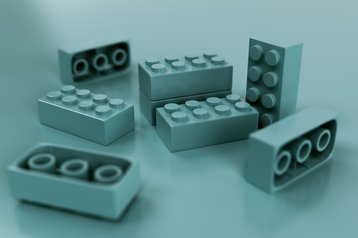
Edge facilities often scale incrementally by 0.5MW or 1MW at a time, so cooling must adjust flexibly and frequently to those changes. That’s why modularity is a natural fit. Modular systems enable fast deployment, easy integration with awkward spaces, and the agility to scale as needed.
Airedale’s modular chillers allow multiple smaller units to be deployed instead of one large installation – saving space and allowing strategic placement. Zhou provides some specific examples:
“In urban locations, our EdgeDX unit doesn’t require much overhead space or a cooling tower – so it’s discreet, quiet, and cost-effective. Outdoor units can be configured to blow air in various different directions, adapting to the requirements of that particular location. For noise-sensitive environments where chillers are required, we can offer extra-quiet models.”
This flexible approach gives Edge operators agility right out of the box. “We’ve created a suite of key components – indoor units, outdoor units, chillers, dry coolers – all with features like low noise, high efficiency, and compact form factors,” says Zhou. “Once we understand a site’s layout, we can quickly match and configure the right setup.”
Streamlining operations with remote intelligence
Edge facilities often operate with limited on-site staff, so remote control and monitoring is a critical advantage. Airedale brings hyperscale-level intelligence to the Edge, scaled down for distributed deployments.
Its cooling systems automatically adjust output based on real-time heat loads. When the temperature drops, systems scale down; when it rises, they ramp up – ensuring consistently efficient performance. The system balances workload across units, sharing capacity to ensure cooling keeps pace with demand. Plus, operators can monitor and manage all equipment from a single interface.
Plus, remote diagnostics reduce the need for on-site intervention. “Even if the site is unmanned, our backend software provides full monitoring,” says Zhou. “We offer both our own BMS and Cloud solutions to do that.”
When a fault occurs, diagnostic data allows technicians to pinpoint issues down to the valve level – so when maintenance crews arrive, they come equipped with the right parts and information to fix the issue in a single visit.
“All equipment is connected via network-based communication,” adds Zhou. “Everything is integrated into a centralized control system for predictive maintenance and seamless oversight.”
Advancing sustainability at the Edge
Sustainability is a pressing priority across the industry. While large hyperscale hubs often dominate headlines, Edge facilities must also reduce emissions and water consumption – even if they lack the scale and location flexibility of larger builds.
“Hyperscalers can often opt to build in areas where renewable energy is abundant – like remote locations with wind or solar,” explains Gilbert. “But Edge centers must be close to end users, like financial services firms or healthcare institutions. That limits location choices, and makes sustainability more complex.”
Airedale is addressing this hurdle with compact, closed-loop, and water-free cooling options. “We use dry coolers that can replace the need for chillers,” says Zhou. “Most of our solutions don’t consume water, which is important in urban areas with strict environmental regulations.”
These design choices reduce both environmental impact and operational complexity, helping Edge operators stay compliant with local regulations while supporting broader global, and industry-wide, sustainability goals.
Built-in agility for tomorrow’s needs
Looking ahead, workload variability will be the key driver of Edge cooling needs. As demand grows and diversifies, solutions must scale up and adapt – without burdening operators with complex retrofits or demand heavy investment.
“Edge operators want to future-proof their designs, but they can’t afford to overspend or overengineer,” says Gilbert. “They don’t have the R&D budgets of hyperscalers – so their priority is meeting today’s needs while staying ready for what’s next.”
That’s why scalable, modular systems backed by proven hyperscale tech, are so important.
“Whatever we’ve proven in hyperscale, we can adapt into standardized, modular solutions ready for quick deployment,” says Zhou. “When customers work with us, they don’t need to worry about future solutions – we’re already one step ahead. By building agility into everything we do, we’re giving Edge operators the confidence to grow at their own pace.”
With agility at the heart of its products and strategy, Airedale is well-positioned to meet the evolving needs of Edge operators – offering flexibility without sacrificing performance or sustainability. Its building-block approach delivers systems that are ready to slot into existing facilities, scale with demand, and operate efficiently with minimal intervention.
As density and heat outputs rise at the Edge, this strategy is increasingly essential for operators looking to keep pace with demand. Even with a steady pace of growth, prioritizing solutions that meet today’s needs and anticipate those of tomorrow, is key to staying ahead of the curve.
For more information, please visit www.airedale.com/edge-data-center-cooling/.
More from Airedale by Modine
-

Sponsored Global footprint, local expertise
Addressing unique customer requirements takes a global reach. Robert Bedard from Airedale by Modine shares how the company is providing expert end-to-end support around the world, at the local level
-

Sponsored It’s getting hot in here
As AI workloads intensify, early planning and integration of effective cooling solutions become critical factors in defining scalable, sustainable, and high-performing data centers
-

Sponsored The revolution will be optimized
Airedale by Modine on why it’s time to prepare tomorrow’s AI systems, today
Comments