
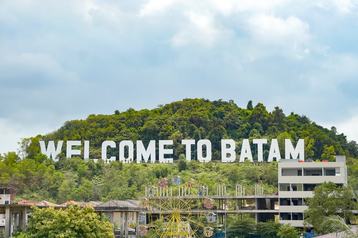
Batam has long held strategic importance as one of Indonesia's key industrial hubs. Today, the island is rapidly emerging as one of Southeast Asia's most promising destinations for AI infrastructure and data center investment.
An ideal combination of power availability, free trade zone status, established manufacturing capabilities, extensive subsea cable connectivity, and close proximity to Singapore has positioned Batam firmly at the heart of Indonesia's digital infrastructure ambitions.
While these factors provide a solid foundation for growth, long-term success will depend on more than simply building additional capacity. As AI continues to drive unprecedented infrastructure demand, operators must look beyond the next-gen tech to consider sustainability, talent development, and community impact.
Against this backdrop, in a recent DCD>Talks episode, Indrama YM Purba, CEO of NeutraDC Nxera Batam, discusses why Batam is attracting global investment, the importance of responsible development, and why collaboration across the wider ecosystem will determine the region's long-term position as a thriving digital hub.

Power and connectivity
Amid an ever-growing list of must-haves for modern data center deployments, power availability and network connectivity remain two of the most critical site selection factors. Batam is meeting the mark on both fronts.
The island has access to relatively abundant electricity generation, with a growing emphasis on cleaner energy sources. Purba explains:
"The fuel used to generate the power is cleaner. It's not fully coal-based, but primarily gas-based generation."
As sustainability becomes an increasingly important consideration for hyperscalers and enterprise operators alike, access to lower-carbon energy sources is quickly becoming a major competitive advantage.
When it comes to connectivity, Batam has already proved itself by serving as one of Indonesia's largest international connectivity hubs, sitting at the crossroads of regional internet traffic between Indonesia and Singapore.
"More than 80 percent of Indonesia's internet traffic passes through Batam," says Purba. "There are already around 20 operators of subsea cable systems, and that number will continue to grow as capacity in the region increases."
This combination of reliable power and extensive international connectivity creates an attractive foundation for operators looking to support energy-hungry AI workloads quickly and reliably across.
An open regulatory environment
Increasingly, regulatory certainty is equally important as access to the right infrastructure – particularly as the wider ecosystem seeks to balance digital advancement with environmental responsibility.
Purba is confident that Indonesia has established one of the region's most supportive and accessible investment environments for data center development:
"Indonesia is one of the most open countries in Asia when it comes to inviting investment to build data centers.”
However, he also believes that rapid growth must be managed carefully. "We don't want to repeat mistakes that have happened elsewhere and create unnecessary environmental damage," he continues.
Rather than focusing solely on increasing capacity, governments and operators must work together to ensure infrastructure expansion delivers lasting benefits for both the economy and existing communities.
"We have to think about how growth benefits society while also protecting the environment," adds Purba. "The government's role is very important in maintaining that balance."
Sourcing water the right way
As AI demand accelerates globally, many emerging markets are racing to build new capacity. But Batam has an opportunity to learn from challenges already experienced elsewhere.
Across several well-established data center markets, concerns around power consumption, water usage, and environmental impact have increasingly attracted public scrutiny.
Rather than waiting for these challenges to emerge, Purba believes sustainability should be embedded into infrastructure planning from the outset:
"Everyone is talking about increasing capacity because of AI. AI will help improve our lives, but we also have to remember the lessons learned from other markets."
Water management is one area receiving particular attention. Historically, Batam has relied heavily on rainfall and reservoir capacity to meet growing demand. However, investments in desalination infrastructure are expected to reduce this dependence and provide greater long-term resilience.
For Purba, this is about ensuring data center growth doesn’t have to compete with local communities for essential resources.
"We have to avoid situations where people ask why they don't have water because of a data center," he adds. "That kind of negative impact on society must be avoided."
Instead, infrastructure development should strengthen local resilience while supporting the digital economy.
Balancing growth with community impact
As facilities grow larger and AI drives record-breaking power demand, many projects have faced increasing opposition from local communities concerned about energy consumption, water use, and environmental impact.
Purba acknowledges these concerns shouldn’t be dismissed: "Data centers are very hungry for power," he says. "Whether they're built close to communities or further away, people naturally worry about water and electricity."
For this reason, operators need to demonstrate tangible benefits beyond simply adding capacity. "There has to be a balance between society and the data center ecosystem," he adds.
That starts with asking a simple question before every project: why are we building this data center? For Purba, the answer should always extend beyond commercial success:
"There should be a positive impact, not only for our business, but for society as well. We shouldn't only be chasing more capacity."
Responsible development also means embedding sustainability into facility design from day one.
"We're targeting LEED Gold certification for our buildings," continues Purba. "Water and power should be efficient. That's the standard we should all be pursuing."
As AI infrastructure continues expanding, Purba believes operators will increasingly be judged not simply on how much capacity they deliver, but on how responsibly they deliver it.
Building talent alongside infrastructure
Expanding digital infrastructure must go hand in hand with developing the next generation of skilled workers required to support long-term industry growth.
AI infrastructure requires far more than data center operators. Engineers, contractors, consultants, vendors, construction specialists, and certification bodies all play critical roles across the ecosystem.
"We have to build the workforce, especially local talent," says Purba. "That creates jobs and delivers positive outcomes for society."
Developing domestic expertise also supports Indonesia's broader ambitions around digital sovereignty by ensuring knowledge and technical capability remain within the country.
"This cannot be an individual effort," continues Purba. "There has to be collaboration across the whole ecosystem; otherwise, the industry will not be healthy."
The next big thing
Interest in Batam shows little sign of slowing. "Right now, we're seeing huge demand," says Purba. "Not only from Indonesian companies or regional operators, but from global data center players."
With available land, growing power infrastructure, expanding international connectivity, and supportive government policies, Batam is well positioned to capture a significant share of Southeast Asia's next wave of AI infrastructure investment.
NeutraDC Nxera Batam intends to play a central role in this growth. "We're keeping pace with market demand," says Purba. "But our focus isn't only on increasing capacity."
Instead, he believes success will ultimately be measured by the value the industry creates for local communities.
"We want to ensure this benefits society, develops local talent, creates opportunities for young people, and supports Indonesia's broader digital ambitions."
As AI reshapes digital infrastructure across Southeast Asia, Batam's combination of strategic geography, connectivity, and investment-friendly policies has created a compelling foundation for future growth.
For Purba, however, the island's greatest opportunity lies not simply in becoming another major data center market, but in becoming a model for how digital infrastructure can be developed responsibly.
"If we build data centers," he concludes, "they should create a positive impact – not only for businesses, but for society."
To hear more about why Batam is set to become Indonesia’s next AI and data center gateway, watch the full DCD>Talks episode with Indrama YM Purba, here.
Comments