
As AI data centers surge, so too do the power-constrained dynamics emerging in the broader market. Developers are struggling to secure power, and operators are challenged by power limitations.
These difficulties prove to be a catalyst for PROPWR, a subsidiary of ProPetro, the Texas-based provider of completion services to oil and gas producers. First launched in 2024, the PROPWR division formed ProPetro’s first organic service line in more than a decade.
For Dave Bosco, SVP of commercial & strategy and co-founder of PROPWR, this move for the company was an obvious one. He explains how AI continues to proliferate across the wider technology sector and how hyperscale data center loads are far outpacing utility interconnection timelines in most regions.
Closing the power gap
Bosco leads PROPWR’s commercialization and supply chain efforts to ensure BTM solutions keep pace with what their data center customers actually need. With nearly 20 years of experience in oil and gas power applications, he supports a growing company footprint, including a hyperscale data center contract in the Midwest.
“Queues measured in years, not months, are now common,” he explains. “Customers need reliable, gigawatt-scale power to handle the sharp, rapid load swings that come with AI training and inference workloads, which traditional grid supply wasn't really designed around.”
PROPWR, he says, exists to close that gap. The business division aims to deliver reliable, gigawatt-scale power on a compute-led timeline, rather than a grid-led one. It works across multiple industries, namely oil and gas, industrial power applications, and utility power to deploy generation-grade power quickly in often remote locations that demand strong uptime.
“The combination of oilfield speed and utility-grade rigor is what lets us offer data center customers an infrastructure-grade BTM experience,” Bosco says. “Within the oil and gas space, loads fluctuate heavily, which prepares us to manage the unexpected load scenarios that data centers in the AI space can experience.”
To accelerate deployment times and scale customer capacity, PROPWR has debuted what it calls its ‘Rethink the Grid’ approach – treating power as an on-demand, modular service rather than a multi-year utility project. It deploys standardized, preengineered natural gas generation (ie. reciprocating engines and turbines) and hybrid battery storage at or close to the customer’s site.
“At a high level, we are a dedicated island power source, which can reliably serve client generation needs through an infrastructure-grade power experience,” Bosco notes.
Charting the data center natural gas boom
Power and electricity demands from AI data centers have also driven overwhelming growth of gas-fired generation, particularly in growing hubs like Texas. This quiet buildout has led to gas-fired power capacity for data centers nearly doubling in the first half of 2026 alone, as technology giants look to fuel new developments.
“Natural gas is the only fuel available today at the scale and speed data centers need, that is also fully dispatchable,” Bosco explains. “It can start, stop, and ramp within minutes – unlike wind or solar – and avoids the lead times attached to new nuclear power.”
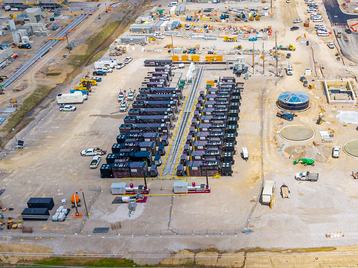
PROPWR harnesses natural gas for its power generation solutions. Particularly for AI workloads that have what Bosco refers to as “volatile, spiky demand curves,” it’s often as valuable to a customer as raw megawatts.
“Pairing it with battery storage, as we’re doing on our first hyperscale contract, lets us smooth those swings even further,” he adds.
Alongside its partner, Caterpillar, PROPWR has deployed equipment across demanding oil and gas applications already. It routinely handles complex transient loads in harsh field conditions, including through its Midwest hyperscale deployment.
“That track record and our collaborative approach with partners to manage expectation is what gives us confidence it will scale and respond reliably under the volatile load profiles AI data centers present,” Bosco says.
PROPWR’s movements come as the US seeks to position itself even more successfully to meet digital demands with natural gas. The Shale plays in particular, including the Permian Basin, are well-positioned on the fuel side, with associated gas output continuing to grow as Permian wells produce more gas per barrel of oil.
“Basin-wide gas production is expected to grow significantly over time – a durable, low-cost supply where data center developers are increasingly looking to site,” Bosco explains.
The tighter constraint industry-wide, however, is equipment. Bosco adds that order books across the major turbine and engine manufacturers are “backlogged” years out, and that scarcity is compounded by supply chain bottlenecks and manufacturing throughput limits.
“All of it is exacerbated by power demand rising across essentially every industry at once, not just for data centers,” he says.
PROPWR aims to address this challenge through easy and sizable equipment orders. Most recently, it signed a strategic framework agreement with Caterpillar for up to 2.1GW of additional power generation capacity, focused on serving continuous duty power plant needs in Island or BTM installations across the AI and data center sectors.
“This puts our total delivered capacity at roughly 2.6GW by 2031,” Bosco adds.
To ensure its solutions keep pace with industry requirements, PROPWR has also purpose-built PWR~NODE, a hybrid gas-plus-battery system for hyperscale AI workloads, as part of its partnership with Caterpillar. The system is delivered through a turnkey power service model, built on its standardized fleet of high-efficiency, ultra-low-emissions, gas recip and gas turbine generators.
It runs its assets under the actual load a customer needs at its test site, The Field Lab, in addition to conducting site-specific testing for where those assets will ultimately be deployed.
“Before PWR~NODE ever reached the field, we stress-tested the complete system against simulated transient load profiles to find the limits in a controlled environment, not on a customer’s site, so equipment and crews were proven from day one,” Bosco says.
Modular by design, it also means customers can scale as load grows, using battery storage to extend effective equipment life, absorbing transient load swings so gas engines can run more efficiently.
Natural gas generation is also beneficial for the longevity of a data center, and PROPWR designs to that standard.
“Longevity also must be measured in emissions and efficiency, not just service life,” Bosco adds. “Time-to-power is critical, but these assets will run for decades, so how cleanly and efficiently they run compounds over the life of the site. That’s why we deliberately lean into lower-emission, higher-efficiency configurations rather than settling for what distributed generation has historically looked like.”
The risk of prioritizing availability over sustainability
As AI evolves, the focus has perhaps shifted away from renewable energy procurement, as data center operators find themselves needing to prioritize availability and reliability. This comes at a turbulent turning point for the data center industry, as public opposition to sites centers around an alleged lack of consideration for sustainability.
“The center of gravity has clearly moved. Customers still care about emissions, but very few are willing to wait years for a fully renewable interconnection when AI capacity has become a competitive race,” Bosco says.
Bosco explains his view that natural gas is a meaningfully lower-emissions bridge, as opposed to diesel or coal-fired grid power.
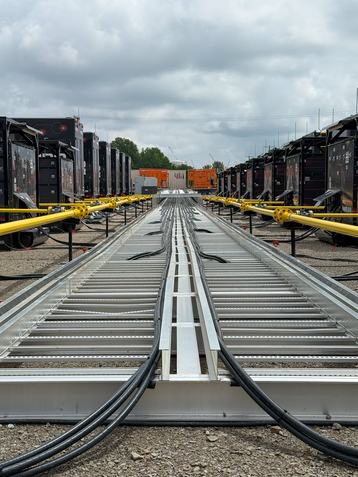
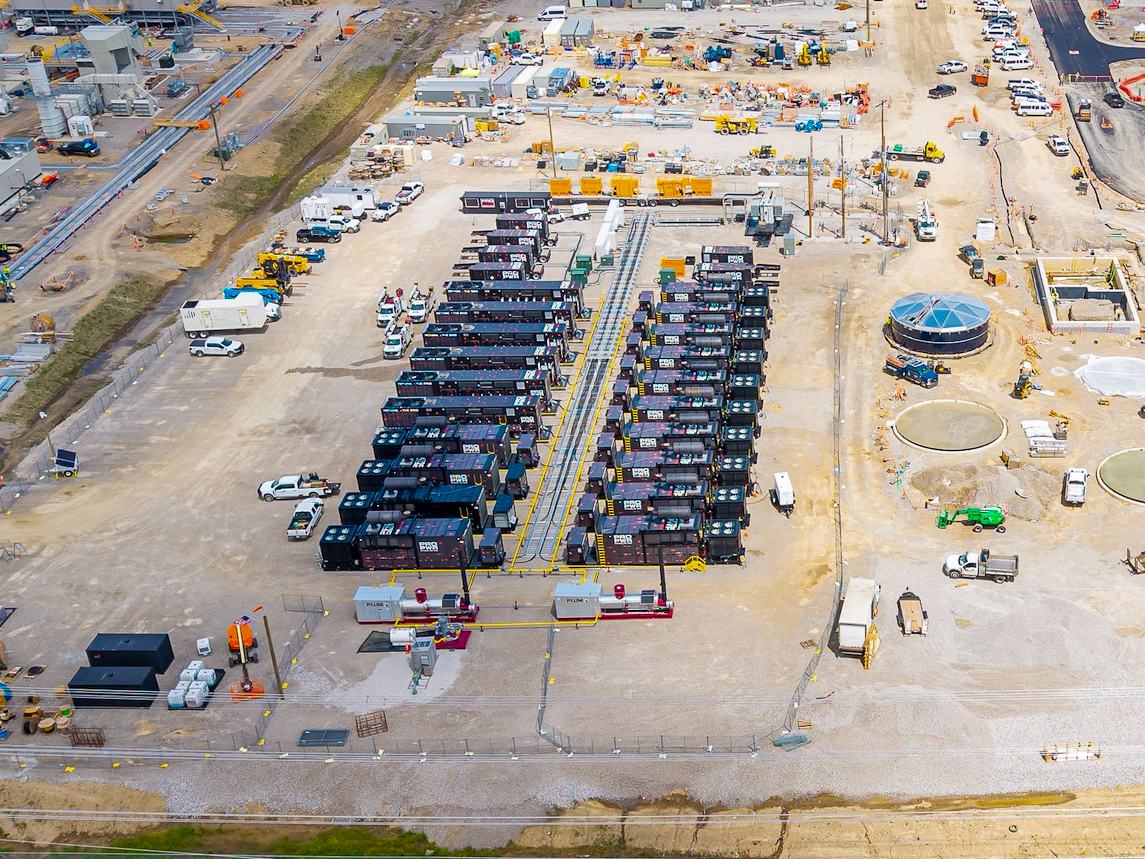
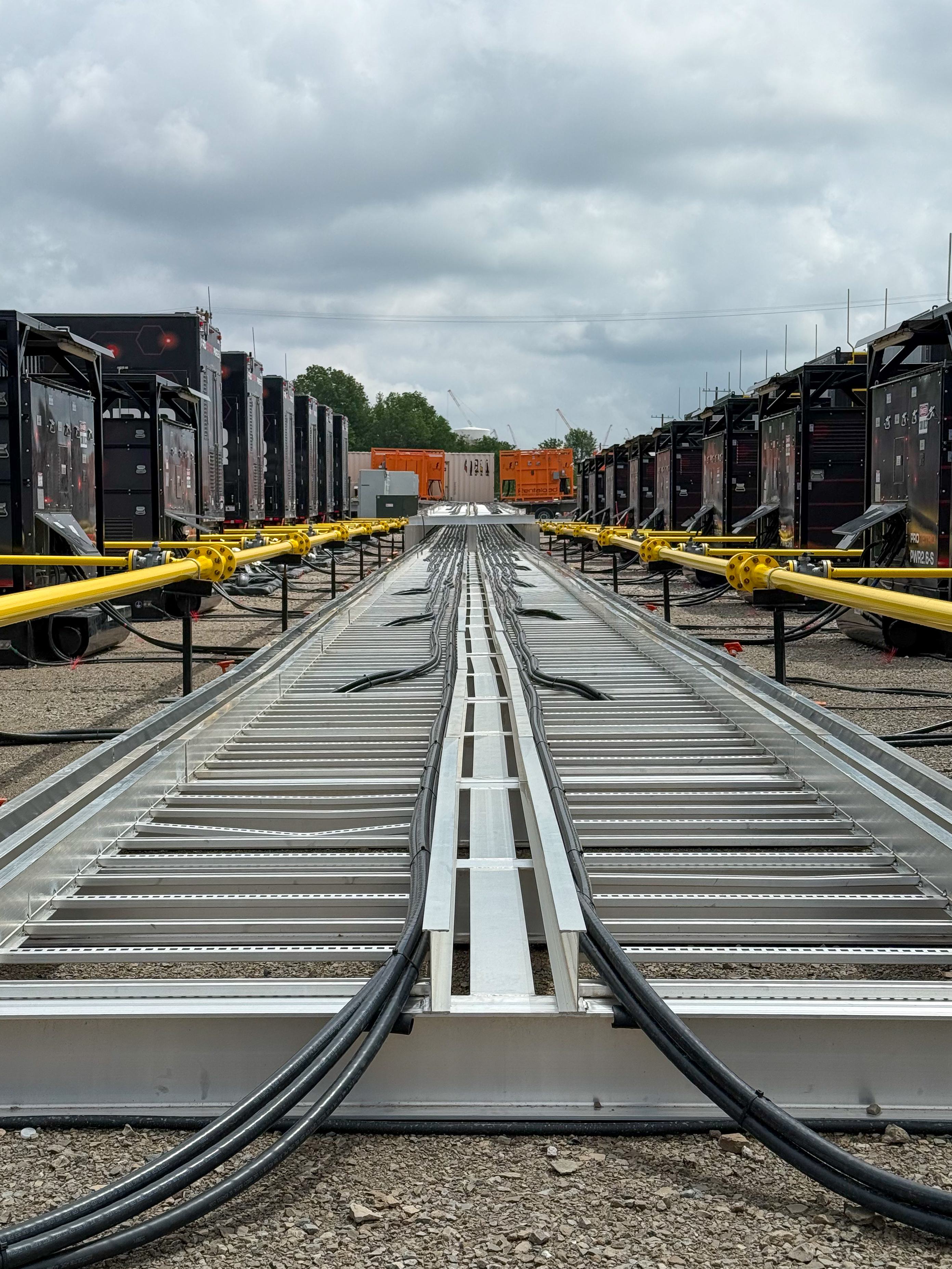
“A number of our conversations still include a longer-term decarbonization roadmap alongside the immediate reliability need,” he says. “Our own view is that speed and sustainability must be solved together, not sequenced.”
“Availability is the customer’s first question, but the answer shouldn’t cost them their emissions position,” he adds.
Natural gas has been touted as a greener alternative for data centers specifically because it emits fewer greenhouse gases than coal and oil. However, as Bosco explains, it is finite.
“The tradeoff is cost and the time it takes to integrate any of it at scale today,” he says. “There’s no shortage of exciting technology in the sustainability space right now … we keep a pulse on the market and stay close to where our clients want to go instead of picking a winner early.
“As these technologies scale and stabilize for mass-market adoption, our intent is to be the partner who helps customers get there, on a timeline that actually works commercially.”
PROPWR, the power advisor
PROPWR’s process starts with a consultative assessment, understanding a customer’s timeline, load profile, and site constraints. It then proposes a configuration to deliver the MW or GW the individual client may require based on its fleet – adding hybrid storage where the load is volatile, Bosco notes.
“Our recent contracts call for accelerated, single-digit-quarter deployment rather than the multi-year path of new-build utility interconnection,” he says. “We also stay on as the operating partner. It’s full turnkey power, so the customer has one accountable partner for the life of the contract.”
The company is also able to take on a more advisory and consultative approach, blending talent across assets, electrical engineering, infrastructure, the gas process, controls, and connectivity.
“Many of our data center customers are experts in compute, not necessarily power generation, so we act as their power advisor: sizing the plant, sequencing capacity against their build schedule, and working through interconnection and permitting complexity with them,” Bosco says. “The equipment has already been proven for that site before it ever arrives. Our crews train on that same equipment under realistic conditions, so nobody is learning on the customer’s site.”
Likewise, through the establishment of its ‘PWR~GUILD’ internal talent development and training program, PROPWR trains its staff onsite with the actual assets, instead of in a classroom removed from the equipment.
“We’re also expanding relationships with local communities, technical colleges, and workforce organizations near our operations to build a steady funnel of new hires with the right foundational skill sets, which is both faster than competing for a scarce national talent pool and better for the communities that host us,” Bosco explains.
Evolving alongside power generation changes
In this AI era, flexibility is the name of the game. To meet expectations, Bosco says PROPWR solutions can be tailored to each individual customer use case.
“Every engagement is tailored: fuel and equipment mix between reciprocating engines and turbines, hybridization with battery storage, contract duration, and site configuration, whether that's classic behind-the-meter or a fully islanded microgrid, all flex to the customer's load profile and timeline,” he adds.
The company’s model is designed to have standardized equipment, but customized configuration. This, Bosco explains, is how PROPWR keeps speed-to-power fast while still solving each customer’s specific requirements.
“What we are seeing is BTM or island power is no longer temporary; it’s the long-term solution everyone is banking on across industries, even outside of the data center space,” he says.
Bosco says PROPWR expects the data center market to continue evolving toward hybrid, distributed generation that blends natural gas with storage. Over time, they expect it to then incorporate other technologies as they mature and scale, rather than any single solution winning outright.
“Operators who build flexibility into their power strategy now – multiple fuel and technology options, modular capacity they can phase in, and partners who can move at their speed – will be better positioned than those betting on one long-lead technology or waiting on grid upgrades,” he advises.
As AI-driven demand continues to outpace what the grid can deliver, PROPWR's 'Rethink the Grid' approach closes that gap - quickly, reliably, and at scale.
Discover more
-

DCD Talks: Powering US data center growth beyond the traditional grid with Dave Bosco, PROPWR
Dave Bosco, SVP Commercial and Strategy at PROPWR talks to DCD's Zoe Turner about how US data centers are turning to behind-the-meter power as grid constraints intensify
-

Sponsored PROPWR secures strategic framework agreement with Caterpillar Inc
The agreement enables acquisition of up to 2.1 gigawatts of incremental power generation capacity by 2031
-

Sponsored The hidden capacity inside aging data centers: Uncovering performance, capacity, and capital through efficiency
In a world where power has become the ultimate currency, you can no longer afford to waste it
Comments