
AI infrastructure is entering a new phase. As operations move beyond experimentation towards increasingly autonomous AI, the systems supporting these workloads are becoming more complex and interconnected.
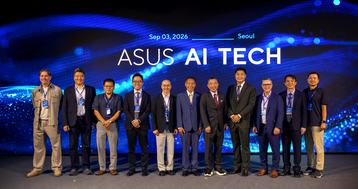
This was a central theme at ASUS AI Tech 2026 in Seoul, where ASUS AI Tech 2026 brought together NVIDIA and ecosystem partners including Aleria, AMD, Crusoe, Foxlink, IBM, Intel, Samsung, Schneider Electric, and WD. Spanning accelerated computing, trusted data, power and cooling, cloud services and industrial applications, the ecosystem demonstrated how cross-industry collaboration can turn advanced technologies into production-ready AI factories and business value.
Across the event, ASUS showcased its latest AI infrastructure portfolio spanning NVIDIA accelerated computing, enterprise storage, and Edge systems. Together, these capabilities form the foundation of the ASUS Full-Stack AI Factory approach, supported by an integrated software stack spanning infrastructure deployment, management, and AI governance.
By connecting planning with production, ASUS helps enterprises and AI service providers turn computing capacity into operational AI services – and accelerate the path from infrastructure investment to tokens and revenue.
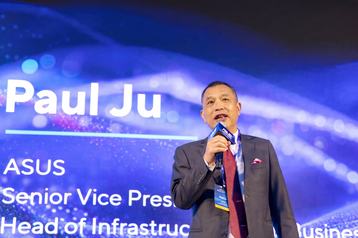
"Traditional AI governance has focused primarily on models, data, and application outputs.
These remain essential, but production AI now depends on a much broader physical and operational foundation," says ASUS. "If the underlying infrastructure is inefficient, unreliable, or difficult to control, governance at the application layer alone cannot deliver trusted AI at scale."
AI may be getting smarter, but this doesn’t mean it should be left to its own devices. As autonomous systems take on more responsibility, the question of who – or what – is keeping an eye on it has become critical.
Against this backdrop, ASUS shares its view of AI infrastructure extending beyond compute capacity, connecting the physical foundations of an AI factory with the operational controls required as increasingly autonomous AI moves into production.
Before the first token
The scale and complexity of modern AI factories make this broader approach increasingly important. Rack-scale platforms can provide significant computing capability, but their performance ultimately depends on the infrastructure around it.
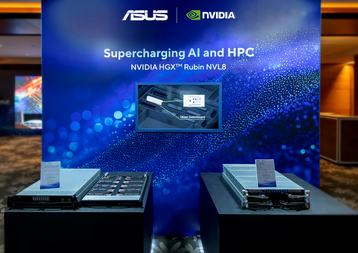
Across the event, ASUS showcased infrastructure spanning NVIDIA Vera Rubin NVL72 and HGX Rubin platforms, NVIDIA MGX, enterprise AI storage and Edge systems.
Networking needs to move data efficiently, storage must continuously supply models and context, while power and cooling need to sustain increasingly high-density workloads. The same principle applies to systems such as the ASUS XA NR1I-E12LR and XA NR1I-E12L, based on NVIDIA HGX Rubin, where accelerator performance is only one part of the equation.
"An AI factory operates as one interconnected system," says ASUS. "For operators, the meaningful measure comes down to how much sustained, useful AI output the complete infrastructure can produce from every watt, dollar, and minute invested."
This makes decisions around power efficiency and automation increasingly significant, determining how much useful compute can ultimately be secured. The data foundation is equally important.
At AI Tech 2026, ASUS showcased enterprise storage technologies including the UF920-E3-RS24 CMX server, OJ340A-RS60 object-storage solution, and VS320D-RS26N storage system. These address different requirements across context memory, model data, and enterprise AI pipelines.
Taken together, these technologies mark a shift in how AI factories are engineered – with everything from compute capacity and connectivity to critical power and cooling increasingly treated as parts of one operational system rather than independent infrastructure decisions.
Deployment is an AI economics story
The challenge becomes even more evident when deploying AI infrastructure at scale. A small design mismatch repeated across an entire facility can quickly become an expensive operational problem, affecting the economics of the AI factory – from time to first token and tokens per watt to time to revenue and total cost of ownership (TCO)
By the time these issues become known during physical deployment, correcting them can involve significant delays and stranded capacity. This is where simulation and digital twin technology are becoming increasingly important to the AI factory lifecycle, turning infrastructure design into a measurable economic decision.
ASUS is combining its system-engineering capabilities with the NVIDIA DSX Sim Blueprint, allowing operators to assess compute, networking, storage, power, cooling, and facility conditions inside a digital environment before the physical infrastructure is built.
"The purpose is not to introduce another approval stage," explains ASUS. "But to identify costly problems earlier, while they remain design parameters that can be adjusted rather than physical infrastructure that must be rebuilt."
ASUS Signal Virtual Lab provides an additional bridge between digital simulation and physical validation, helping reproduce deployment conditions and verify whether a design put together on paper will perform reliably under real-world conditions.
Once validated, the configuration can move into physical deployment via the ASUS Infrastructure Deployment Center (AIDC), which helps automate system configuration and provisioning. Once live, ASUS Control Center Data Center Edition provides centralized visibility into hardware status, resource utilization, and system health.
This delivers a continuous workflow spanning the entire project lifecycle – from design and planning through to deployment and operation – by bridging decisions made before construction with the metrics that ultimately determine the economics of an AI factory.
Intelligent infrastructure
The practical value of this approach can be seen in Nano 4, a liquid-cooled AI supercomputer delivered by ASUS for Taiwan’s National Center for High-performance Computing. Integrating NVIDIA GB200 NVL72 and HGX H200 systems with ASUS storage and direct-to-chip liquid cooling, the project used AIDC to reduce system deployment from three weeks to three days. Its operational HGX H200 cluster delivers 81.55 PFLOPS, achieved a PUE of 1.18 under full-load HPL testing and ranked No. 29 on the TOP500.
This example illustrates how deployment speed and performance can be addressed together in tandem when infrastructure is engineered as one coordinated system.
Ubilink further demonstrates ASUS’s end-to-end delivery capabilities. Completed in three months, the center houses 128 NVIDIA H100 servers and 1,024 GPUs, delivering 45.82 PFLOPS and ranking No. 31 on the TOP500 and No. 44 on the Green500.

For ASUS, projects such as these demonstrate why effective AI infrastructure must be treated as a complete operating environment, rather than a collection of individual components.
The operational harness
As AI becomes more autonomous, the shape of the operational challenge is changing again.
Agentic AI can plan tasks, retain context, access data, invoke tools, and execute actions across multiple systems while physical AI introduces real-time interaction with machines and operational environments.
The infrastructure supporting these workloads therefore needs to accommodate both higher compute requirements and greater visibility into how AI services are behaving and what they’re permitted to do.
ASUS is addressing this emerging challenge via its AI Software Stack and the broader concept of an ‘AI Harness’, which the company describes as a cross-platform operational layer connecting infrastructure management with enterprise AI governance.
The ASUS XA P2N-E2, a 2U NVIDIA MGX platform powered by two NVIDIA Vera processors, is designed to support the reasoning, data processing, tool use, and orchestration associated with responsive agentic AI services.
Meanwhile, the ASUS ESC8000-E12P, featuring NVIDIA RTX PRO 6000 and RTX PRO 4500 Blackwell Server Edition GPUs, supports enterprise inference, vision AI, and visual-computing workloads.
At the Edge, the compact ASUS PE3000N, powered by NVIDIA Jetson Thor T5000, extends these capabilities into applications involving real-time inference, sensor fusion, and autonomous control.
As these systems become more capable, however, traditional infrastructure monitoring alone is unlikely to provide the level of oversight required.
"An effective harness should provide model routing, least-privilege access, approved data and tool boundaries, sandboxed execution, policy enforcement, continuous validation, human approval for sensitive actions, and complete audit trails," says ASUS.


"Operators don’t just need to know whether a server is operating correctly, but also whether an autonomous agent is operating within its intended boundaries."
In practice, this means governance must become proportionate to risk. An agent retrieving approved information can operate with a different level of autonomy from one modifying production code, initiating a transaction, or controlling physical equipment.
From ‘all in on AI’ to ‘AI in all’
The future of AI may be increasingly autonomous, but it won’t be entirely hands-off. Behind intelligent systems must sit an infrastructure layer capable of supporting its performance while setting the right boundaries.
This requires increasingly interconnected AI infrastructure capable of shaping end-to-end operational strategies that span hardware, software, deployment, and ongoing operations.
"The difference will be infrastructure yield – how effectively an organization converts installed computing capacity into useful and reliable AI output," concludes ASUS. "This is the transition from being ‘all in on AI’ to achieving ‘AI in all.’"
At ASUS AI Tech 2026, the company's message was about how compute, data, facility infrastructure, simulation, deployment, and AI operations can and should be connected across the lifecycle.
Tomorrow's systems will need to strike the right balance between maintaining performance and delivering data reliably at scale, all while providing the operational visibility required as AI becomes more autonomous.
For more information visit https://asus.click/Asus-ai-tech-seoul
Comments