

There is a shared anxiety bubbling in the US.
The AI data center buildout is continuing to ramp up, and the high power requirements of each new campus are starting to make people nervous.
The concept of the data center moratorium always felt very “un-American,” but with data center projects coming to every city, town, and village across the country, it seems, attempts to stifle developments are growing.
In recent months, we have seen not only the shift towards local moratoriums or attempts to slow down or stymie data center projects, but a move towards state-wide cancellations.
Michigan state representative Jennifer Wortz announced in February 2026 that she was penning a bill to impose a state-wide one-year moratorium, and other similar proposals are being considered in the established data center markets of Georgia and Virginia, as well as other states such as Oklahoma and Maryland.
A common concern for data center opponents is whether there is the necessary grid capacity available to support these projects, and if there isn’t, who is going to pay for the cost of network upgrades?
Many worry the ultimate bill payer will be the regular consumer. Rising utility prices have been a concern frequently raised at the planning meetings of data center projects, though it is hard to pin down whether data centers actually cause energy price increases for residential customers.
In December 2025, DCD met Brandon Oyer, head of Americas power and water at Amazon Web Services, to talk about how the cloud platform works with the utility companies when it is planning data center campuses.
A small part of the puzzle
AWS, while by no means the only data center developer in the US, is one of the biggest builders of digital infrastructure globally. In 2025 alone, the company stood up 3.8GW of data center capacity, and a leaked report released last year claimed AWS operates more than 900 data centers around the world, though the company has not confirmed this.
On the subject of increasing utility bills, Oyer has a clear stance; the data centers are only a small part of the puzzle.
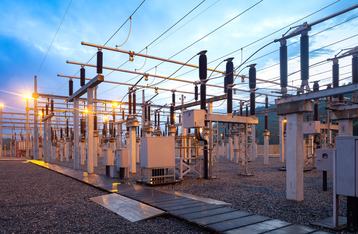
“There are a lot of things that go into a consumer’s electric bill,” he says. “One of the main drivers is fixed cost recovery, the wires, the generation, the transformers, and breakers - all the things that people don’t really pay attention to.
“All that stuff is capital-intensive and needs to have a fixed cost recovery. These things last a long time, but they don’t last forever, and something like 70 percent of the US’ power lines were built more than 25 years ago.”
Utility companies also have to factor in elements such as extreme weather events, natural gas price volatility related to the Ukraine war, and even shrinking customer demand. These “esoteric things,” as Oyer calls them, are “constantly putting pressure on the system.”

The Critical Power Supplement
Data centers face the energy dilemma
He continues: “It's easy to point to data centers as a large load that's causing rates to go up, but it's also important to remember that there are a lot of things that are increasing load, and it's not increasing load that directly correlates to an increase in residential electric rates.”
Such comments from Oyer and other figures in the data center industry are unlikely to quell the questions and worries of residents contemplating new data centers springing up in their neighborhoods. This means that, increasingly, moratoria get discussed.
With the prospect of moratoria looming large, AWS commissioned a report from Energy + Environmental Economics (E3) to look into whether data centers were impacting utility bills. Despite Oyer’s reaffirmations that the study was independent despite being AWS funded, the findings of that report unsurprisingly found that data centers are “not burdening other ratepayers with their costs, rather they provide a benefit,” through grid modernization and income from the data centers themselves.
Generating a surplus?
E3’s case studies covered four utility areas: Pacific Gas & Electric (California), Umatilla Electric Cooperative (Oregon), Dominion Energy (Virginia), and Entergy (Mississippi).
The report states that there is an inherent cost to serve that varies widely between utilities, but “represents the expenses incurred to provide reliable electricity service to customers, including costs associated with modernizing existing infrastructure, constructing new generation, operations and maintenance, required return on investment, and other items.”
Utilities in the US have a regulated “Return on Equity,” or the amount that they can earn from infrastructure investments. This is set by state commissions and the Federal Energy Regulatory Commission, and varies by region and year, and can also be reduced during periods with elevated electricity costs. It is typically in the range of nine to 11 percent.
With this in consideration, when new capacity is brought onto the grid and the grid operator is required to pay for the upgrades, provided there are new customers using the capacity and paying for it, the rate shouldn’t change noticeably - the “cost to serve” has already been considered, and the cost for the utility to add, say, 500MW of data center capacity, should be offset by the income from the new user.
Explicitly looking at AWS and Amazon data centers, E3 said that Amazon’s data centers are projected to generate “$33,500 per MW of surplus value in 2025 that utilities can use for the benefit of their other customers.”
“Assuming a typical data center is 100MW, this implies $3.4 million in value per facility that utilities can use to reduce rates for other ratepayers, but how this potential benefit is realized will differ across jurisdictions.”
This is not always immediate. As E3 notes: “Marginal supply costs can increase and raise costs for customers until more supply is added and the system regains equilibrium,” which can happen even if data centers pay their “fair share of costs” and is “not an explicit source of inequity.” E3 further adds that this dynamic only occurs “at a system-wide level beyond any individual data center,” something which is not covered in the report.
It is here that we reach an impasse. We are no longer able to look at data centers as individual projects and have to instead consider their collective impact on the power network.
In October 2025, a report by S&P Global found that data centers across the US market will require 22 percent more grid-based power by the end of 2025 compared to the year prior. This trajectory has continued now for the past few years - more or less since the so-called “AI boom” - with the number of data center projects growing and also the capacity of each data center skyrocketing.

The Virginia Joint Legislative Audit and Review Commission (JLARC) report, published in 2024, addressed data from 2023. A single data center campus under construction today could be equivalent to ten large data centers in 2023.
US news publication Axios published a report in August 2025 comparing residential energy prices between May 2024 and May 2025, citing data from the US Energy Information Administration.
That report found that five states saw no change or a price reduction over the year: Iowa, North Dakota, Montana, Nevada, and Hawaii. The rest all saw utility bills rising, with Connecticut, New York, Louisiana, Utah, and Maine at the higher end. Maine saw the greatest increase at 36.3 percent.
Cathy Kunkel, energy consultant at the Institute for Energy Economics and Financial Analysis, told Axios: “Anywhere you're seeing a massive takeoff in load growth, the most likely cause is data centers, and that is almost certainly going to have an impact on electric rates.”
AWS’ Oyer also critiques some of the media coverage to date on the matter, arguing that some news headlines are missing the nuance surrounding the issue.
“I think some of the negative articles have been based on hypotheses and less on data,” he says. “It's taken time to collect the data and do the analysis to say that, adding growth in an electrical system, contrary to popular belief, does not increase rates. “I think a lot of people apply ‘Econ 101’ to the electricity system, but it isn’t a simple supply and demand.”
Will Big Tech pay its way?
And so, the data is conflicting. Regardless of the AWS study findings, utility bills are climbing for most people in the US, and data centers are getting the blame.
At the start of this year, President Donald Trump revealed that the administration was working with data center companies to ensure that households would not pay more for electricity due to the AI buildout.
"I never want Americans to pay higher electricity bills because of data centers," the President said. "Therefore, my administration is working with major American technology companies to secure their commitment to the American people, and we will have much to announce in the coming weeks."
Shortly after, Microsoft released a blog post, promising that the company would “pay its own way,” including a promise to pay utility rates high enough to cover its electricity costs to “ensure our data centers don’t increase your electricity prices," as well as an agreement to not to take tax incentives which are often offered by state governments to data center developers to encourage them to build in a specific location.
OpenAI, similarly, published its own piece promising that “across all of our Stargate Community plans, we commit to paying our own way on energy, so that our operations don’t increase your electricity prices.”
Oracle has also followed suit, writing: “Yes, AI data centers require more power, but they are either built with their own on-site power generation sources on or near the campus, or we’re paying for any grid upgrades we require in partnership with the local utility. Oracle is committed to paying our own way on energy.” At the time of writing, AWS has yet to comment directly on the issue. DCD has reached out to see if there is an update on its stance, and discussed some of the company’s strategies to keep utility bills in check with Oyer.
He was keen to impress that the issue is something AWS takes seriously: “We've always wanted to pay our fair share,” Oyer says. “We never wanted to place the burden of our infrastructure onto the residential customers around us. This is because we think it's just generally the right thing to do, and a lot of those residents around us are our customers, and perhaps our employees.”
Some areas and utilities have begun placing ‘minimum use’ agreements on large load users. In other words, if they ask for 100MW, they have to pay for a certain portion even if they don’t use all of it.
“I'm supportive of the structure for the minimum take or pay,” Oyer says. “If a company is going to commit capital to meet the demand, then we should be accountable for paying for that.”
He notes, however, that when it starts going to 75 to 80 percent commitments, “I have a hard time justifying the economics.” He adds: “At Amazon, we are trying to continuously drive towards structures that are fair and equitable, towards the rate payer, fair and equitable towards the utility, and fair and equitable towards Amazon.” But, he says, the company is “not here to build the entire US electric grid on our own back. We will contribute, and we have done so.”
It is undeniable that Amazon has indeed contributed to the grid. In the US, Oyer cited the company’s November 2025 agreement with NIPSCO, one of Indiana’s largest natural gas and electric companies.
Under that agreement, Amazon will pay fees to use existing power lines and cover the costs for any new power plants, power lines, or equipment needed to serve its new data centers. The agreement could add up to 3GW of new capacity, beyond the 2.4GW Amazon said it will require.
“NIPSCO is responsible for building those assets,” Oyer explains to DCD. “We both share risk. If they execute and perform well, they get to generate a higher rate of return than they would have if it were a regulated utility. If they don't perform, then their return lowers because they've delayed our business.” Should all 3GW be developed, 600MW would be made available to Hoosians, paid for by Amazon.
In addition, Amazon has invested in small modular nuclear reactor (SMR) company X-energy. It is hoped that the nascent technology, profiled by DCD in the December 2025 edition of our magazine, will be able to help meet the power needs of hyperscale data centers with an abundant supply of low-carbon energy. However, SMRs remain some years away from becoming a reality.
Resolving the question of whether data centers are ramping up consumer utility costs remains challenging. The sheer multiplicity of data, the manifold variables, and the conflicting opinions create a whirlwind of confusion.
What cannot be denied is that the US grid is currently experiencing some growing pains, and with major data center developers seeking to cover their own costs, it can only be hoped that once the transition is resolved, all users will be able to benefit from a stronger, modernized, grid.






Comments