
It was the morning of February 28, 2026, when destruction fell from the skies over Iran.
The US and Israel launched numerous airstrikes on the Middle Eastern nation on Saturday, while active negotiations were ongoing over the country’s nuclear program. The Israeli Air Force claimed to have dropped more than 1,200 bombs that day, while the US said it conducted dozens of strikes from planes under what it called “Operation Epic Fury.”
The naming was apt, for Iran indeed responded with some epic fury of its own and, notably, the targets of its wrath have been in part US-owned data centers across the region.
For the general population, the conflict has been devastating, and its outbreak was something of a surprise. Yes, tensions had been escalating, and yes, the leaders of the countries involved have not been known to shy away from confrontation, but one doesn’t simply expect war.
The data center industry was caught similarly unawares. David Sandars, regional director EMEA at analyst firm DataCenterHawk, tells DCD that shortly before the outbreak, “a very large deal was signed in the UAE, and some large deals were signed in Israel. At that time, there was no real indication that any conflict was going to start - it really happened pretty quickly,” Sandars says.
Before the conflict, he explains, “there was a lot of activity in the Middle East and Israeli markets. There’s a lot of energy available, many new subsea cables are being developed and planned for the area, and there has been a lot of appetite to get into these regions.”
This has certainly been reaffirmed by many market analyses, with Mordor Intelligence estimating in 2025 that the hyperscale data center market in the Middle East was valued at around $4.61bn, predicting it will grow to $16.38bn by 2031 with a CAGR of around 23.53 percent.
While the exact numbers differ from analyst to analyst, the message is consistent. There is a lot of interest in the region, and it has been growing.
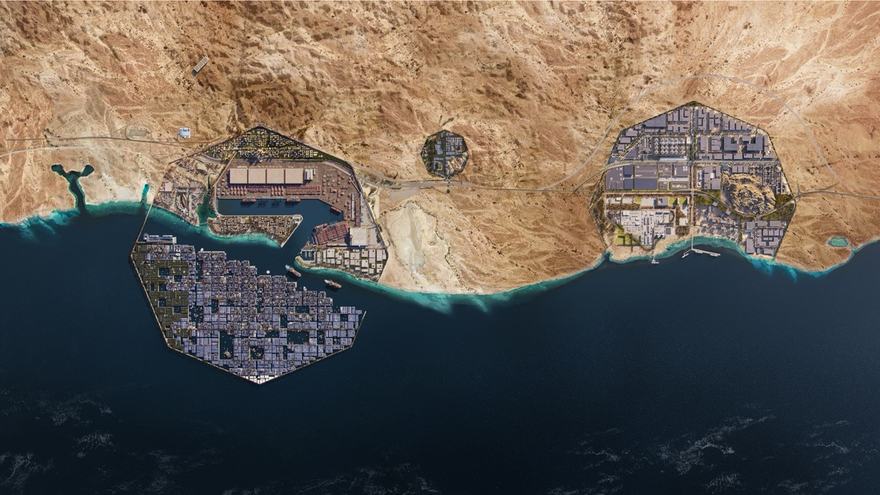
Companies have made massive commitments to develop in the region, including gigawatt-scale campuses. G42’s campus in the UAE, which will be used by OpenAI, is but one example. In Saudi Arabia, the “Neom” megaproject that previously was planned as a 170km linear city is set to pivot towards becoming a data center hub, with DataVolt planning a 1.5GW campus in the Neom Oxagon industrial area.
Humain, backed by the deep pockets of Saudi Arabia’s sovereign wealth fund, has secured 211 plots of land in the Kingdom for data centers and is working with the Saudi National Infrastructure Fund (Infra) to build 250MW of data center capacity. And the US hyperscalers - Google, Microsoft, Amazon, and Oracle - all have regions either in operation or under development across the region, all of which represent billions in investment.
Many nations in the Middle East are publicly courting such projects and investment from overseas companies - the UAE has an AI strategy in which it aims to become a “global leader” by the 2030s, and both Qatar and Saudi Arabia have similar national AI strategies which they are throwing their weight (and money) behind.
Slowly but surely, the region had been evolving its economy to embrace AI.

DCD Magazine #61 - Life and death on a tower
The cell tower climbers risking it all to help us stay connected
But then war broke out.
Within days of airstrikes launched on Iran, the Iranian military responded with attacks that included Amazon data centers in the Middle East.
On March 1, Amazon Web Services (AWS) confirmed that two data centers in the UAE had been directly struck by drones, and a third site in Bahrain was impacted by a "drone strike in close proximity" that damaged the facility. In April, the Bahrain cloud region was hit yet again, with a fire breaking out. As of May 10, AWS lists both its UAE region and Bahrain regions as “disrupted,” with the company “strongly recommend[ing] customers migrate” to other regions, with restoration expected to take months. Oracle has also had a data center in Dubai impacted by shrapnel.
In return, the US has also targeted data centers in Iran, hitting at least two. An SES satellite teleport in Israel has also been struck by missiles. Iran’s Islamic Revolutionary Guard Corps (IRGC), in late March, listed 18 US tech companies with locations in the Middle East as “legitimate targets” due to the alleged use of technology from those companies to aid the attacks in Iran.
Shortly after, the IRGC specifically threatened G42’s planned data center in the UAE, which is under construction. At least 1GW of capacity at that campus is set to be used by OpenAI. In a video on X, Iran's Khatam al-Anbiya Headquarters said: "Nothing is hidden from our sight. All ICT companies in the region will be considered legitimate targets for us." Within days of threatening OpenAI, a ceasefire was agreed.
While drawing direct links between the threat to UAE Stargate and the agreement of a ceasefire would be speculation, it is hard not to look at the close relationships between Big Tech firms and both the US government and Israel’s leadership. Both the US and Israeli economies are built around technological development, and destroying data centers represents the devastation of billions of dollars.
As Sandars puts it: “The importance of these kinds of facilities to the global economy and to everything we do and how we live our lives, cannot be understated. Although it's being delivered by a local company, its customers are basically very large technology companies from the US.”
In the course of writing and researching this article, DCD contacted several AI labs and all of the US hyperscalers, including Amazon Web Services (AWS), Google, Microsoft, and Oracle. AWS, Microsoft, and Oracle declined to provide an interview or comment. The rest did not respond to DCD’s attempts to contact them.
The cease-fire has proved extremely tenuous, however, and calls into question the future of numerous data center projects.
Sandars reiterates the risk for communications infrastructure in conflict. “The primary targets in any conflict are communication systems, and data centers now house these systems, and they are very large and very sophisticated.”

“The Ukraine War showed the importance of the Starlink system, for example, and the fact that Musk made that available to Ukraine has enabled them to keep moving and progressing because they have kept communication links live. That’s one of the factors, and the same would be true of any armed conflict, however sophisticated and whatever form the comms technology takes.”
Lessons from Israel
For Eli Matara, CCO of MedOne, a data center firm based in Israel, to not be prepared for such an outcome was naive when looking at the market.
“People are not learning from other people’s experience, and this is why history is repeating itself. If you look back at the past 2,000-odd years, we’ve had the Greeks, the Roman Empire, the Byzantines, and the Ottoman Empire. There have been so many fights on this land over the past two millennia that it shows us this will happen again. This isn’t the UK or Spain, where the last war was hundreds of years ago,” he points out.
Pure DC CEO, Gary Wojtaszek, disagrees. “It’s always easy to play ‘Monday morning quarterback’ and figure out what could, would, or should have happened,” he says. “But no one expects that there’s a war that’s going to break out when designing these things. If you were really concerned about a war breaking out, then you probably shouldn't have been building a data center there to begin with. I think everyone thinks that, long term, this is a region that has a lot of potential.”
Whether it should or should not have been predicted, Israel specifically is familiar with operating in the circumstances of conflict. The nation is known in the data center industry for its fondness for underground data centers - a design practice that MedOne specializes in.
MedOne’s Matara explains to DCD: “The boom of data centers started in Israel around 2006, and we evaluated that there were two kinds of threats. We have what we call natural disasters: earthquakes, tsunamis, etc, and then we have man-made disasters. Man-made disasters are missiles falling from the sky. So, when we built the data centers, we said to ourselves, ‘Why not increase the capital invested in the project and make it safer for our customers and more appealing to move in? So we built it underground.”
He notes, however, that most data centers in the country are not in fact built in bunkers. “If you look at the Google region, it's not underground, the Amazon region is also above ground. The Oracle region is on the side of a hill. And, well, we’ve seen what happened to the AWS data center in the Emirates.
“In Israel, it is not mandated by the government to build underground, and Amazon and Microsoft, etc., tried to avoid this by saying, ‘Guys, redundancy is between sites and not within the site,’ but we thought it was best practice to build underground, and make it more protected,” he adds, though concedes that you can’t protect a data center against every threat.
Oracle, at least, does have some data centers underground. The company is known to use a Bynet Data Communications data center in Jerusalem, which is in a 14,000 sqm (460,000 sq ft) bunker located below five parking levels and a 17-story building in Jerusalem’s Har Hotzvim tech hub, and in 2024 revealed plans to establish another data center that would be nine floors underground.
DCD previously spoke to other firms in the region about building conflict-resistant data centers prior to the latest outbreak of war.
NED is a relatively new data center developer based in Israel, and broke ground on its debut Alpha Campus in April 2025. A $350 million project, the data center will be located on the coast around 20km (12.42 miles) from the Tel Aviv metropolitan area.
Speaking to DCD in 2023, prior to Israel’s invasion of Gaza, NED CEO Daniel Efrati said: “In Israel, we have very different threats than other parts of the world. Unfortunately, every year or so, we have something which is called the campaign, where our neighbors are throwing missiles at us.”
With this in mind, NED is building its data center partly above ground and partly below ground, to serve both government clients and the private sector. This, however, was not the only consideration. Efrati said: “We want to pick an area that is ‘relatively safe.’ We have two main missile threats: first of all, from the south, from the Gaza Strip, and secondly from Lebanon in the North, so you want to stay at least 30 kilometers from both of those fronts.”
In the time since this interview, around 80 to 90 percent of Gaza’s infrastructure has been damaged or destroyed, as per the United Nations, as a result of Israel’s attacks on Palestinians. Israel is conducting ongoing bombing campaigns in Lebanon at the time of writing.
NED similarly said that the majority of competitors in the region aren’t planning to build underground, adding that it is possible to properly protect a data center without doing so, but they chose to adopt the solution.
To dig, or not to dig?
Serverfarm is one of the companies that opted to keep its head - and its data centers - out of the sand. Arun Shenoy, CMO of Serverfarm, previously told DCD - also in 2023 and prior to the current Gaza conflict - that its Israel data center was its first ever greenfield site, and instead of deciding to dig deep underground, it built its data center into the side of a hill, meaning it is “physically protected by the natural gradient of the land.”
The company stated that they were able to build a 10.5MW data center in around 13 months by taking this approach and meeting “protection requirements.”
“It comes primarily from how you architect the building, how you create blast zones, for example, between the outer perimeter, which could be a concrete wall, and the building envelope, and then you put blast zones within the building envelope as well - making decisions about how you segregate data halls in relation to service corridors.
“The main issue from a resilience perspective is actually protecting all of the external plant. In theory, you could house chillers and generators underground, but it becomes cost-prohibitive and operationally restrictive that there are only a few organizations that would sum up that particular cost, and for the vast majority of the market, they aren’t prepared to pay for that level of protection.”
Times have, perhaps, changed. MedOne’s Matara tells DCD that the company has seen an influx of interest in its data center capacity since the outbreak of conflict, to the tune of around a 200 percent increase.
“We are seeing a booming request from new customers, it's amazing how many are approaching us now, and because it's not an unlimited space or unlimited power, we are juggling between customers.
“Even from hyperscalers, they are coming back to us and saying ‘actually, we would like at least one site underground to make sure it’s safer and not all sites in the region are being targeted.’”
Microsoft president Brad Smith told Nikkei Asia in April that it was reevaluating how it designs and builds data centers in high-risk regions following Iran’s targeting of data centers.
He said that attacks would “have some influence over time on the design and construction of data centers, and it may not be the same everywhere.” The company has yet to elaborate on what this will look like in practical terms.
From Matara’s perspective, the choice to not have even one underground region is little more than a “gamble,” but he theorizes: “I think they were very sensitive to the price.” Naturally, building an underground data center comes with greater cost due to the need to physically dig out the land, but to gain the same level of protection for an above-ground data center requires a massive investment in thick and reinforced concrete walls.
“In the last war against Iran, they sent missiles with one ton of TNT. To protect yourself against one ton of TNT, you need a wall thickness of four meters of reinforced concrete. That is a huge investment. Usually, concrete is some 10 to 20 percent of the cost of construction; in that scenario, it becomes around 50 percent,” Matara explains, adding that this is even with taking into account the recently rising costs for generators and other equipment.
“Building underground isn’t really for those kinds of missiles - but smaller ones, if they land within, say 10m of the data center, you are protected. The data center will continue working. It’s a balance between cost and needs.”
Two roads diverged in a yellow desert
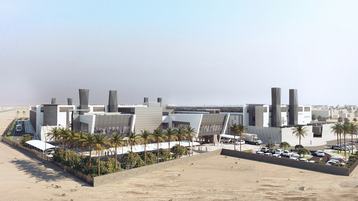
It does not seem that current construction projects in the region have wavered as a result of the conflict. Sandars tells DCD that one of DataCenterHawk’s analysts based in the region has been attending a large data center project site in Abu Dhabi throughout, and told Sandars that he is at work every day and nothing has changed - “They haven’t been sent home or told that construction is set to stop. The opposite is in fact true, and they are now ahead of schedule on the data center project he is working on, and that same customer has just made an award for the next phase to the general contractor.”
This was reiterated by local data center operator Khazna’s CCO, Greg Jasmin, who told DCD in an email that the company’s active projects and builds have continued, adding: “Where conditions required it, we operated with a controlled, risk-based posture focused on safety, continuity, and disciplined change control,” but for the time being, delivery remains as planned.
Pure DC hit the spotlight after CNBC reported that its data center in the UAE had been hit by shrapnel, with Wojtaszek saying that investment decisions had been paused on all data center opportunities, and that others would be unlikely to develop new data centers in the region until things are settled.
“No one’s going to run into a burning building, so to speak,” he said at the time, adding that the company was not “mandating anyone be in the facility.” Speaking later to DCD, Wojtaszek clarified these statements.
The data center was not, in fact, hit by shrapnel; some debris was found on the grounds of the facility, but no damage was done, and while the company had indeed not mandated anyone go to the facility (“God forbid something happened”), everyone on staff decided to go to work regardless. No construction work was paused at the site; as construction was already finished, but Wojtaszek said: “We continue to do lots of planning, and we have efforts underway to develop other facilities. Conversations with customers have not stopped, and in the last month or so, we have been pulled into more to discuss expanding further.”
As for whether this will lead to greater adoption of protections for coming data center projects, Wojtaszek says that such decisions come down to what the customer wants, and if they demanded those types of “enhanced fortifications,” then the company would come to an agreement with them. But he noted such measures could make a project expensive and commercially unviable. “It’s going to depend on the use case of what is actually stored in the data center.”
DataCenterHawk’s Sandars says of these types of design considerations: “It’s a bit early to say. It's something that will be taken into consideration for future projects, but an awful lot of capacity through the Gulf States is already under construction, and so to change such a fundamental element of the design at this stage would cause, first, a huge delay, but secondly, it would come at vast expense.”
While MedOne’s Matara is seeing increasing interest in underground data centers from Europe, and maintains that Israel will insist on underground data centers “no matter what happens,” he thinks wider adoption across the Middle East will depend heavily on how tight any long-term peace agreement is made. “If Trump achieves his goals, then I expect interest in underground data centers in, say, Saudi Arabia, will actually decrease slightly.”
Regardless of how negotiations resolve, and what this means for data centers, AI, and big tech’s bottom line, it is reassuring to hear that Matara understands what is truly important.
He tells DCD: “We hope this business will die. We hope we will sign peace agreements, and the region will transform and be much more peaceful. “I’m willing to gamble on my business in order for that to happen.”




Comments