
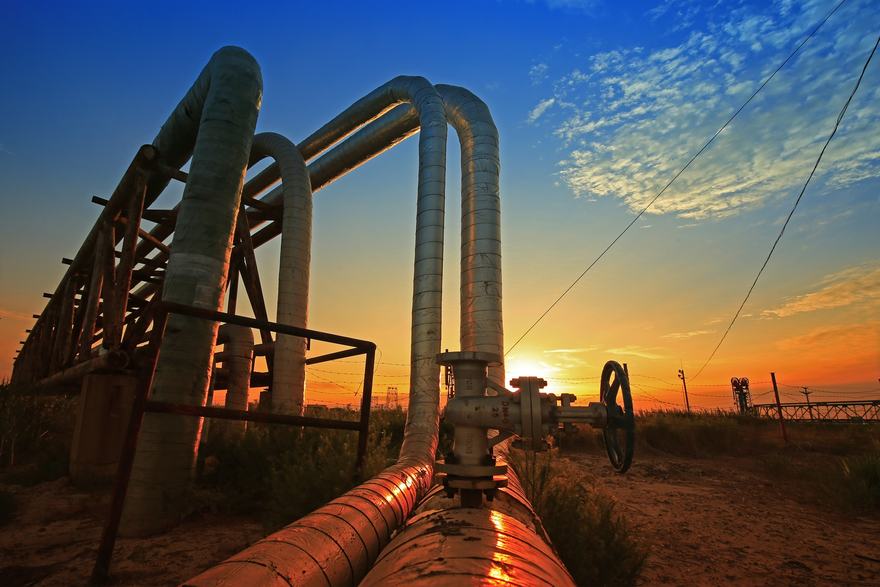
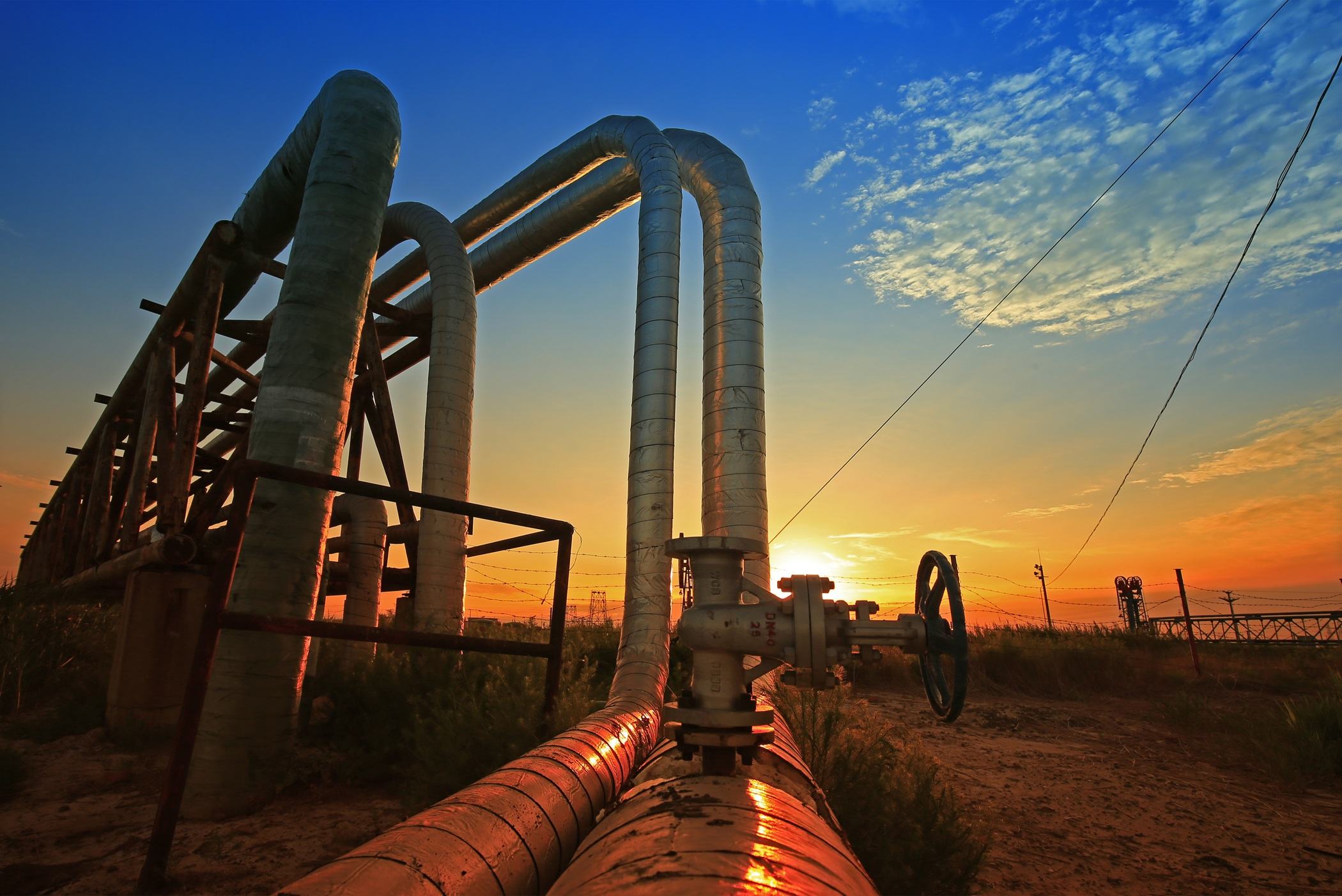
Gas pipelines criss-cross the US, traversing different states - and each other - like a particularly tangled cat’s cradle puzzle.
According to the US government’s Energy Information Agency (EIA), there are 210 gas transmission pipelines in America, covering 305,000 miles and mostly clustered around the southeast, where the Permian Basin oil field provides a plentiful supply of fossil fuel.
Natural gas is back in fashion since the AI boom left some of the biggest US tech firms requiring vast amounts of near-term to feed their data centers. At the same time, US President Donald Trump’s administration has heavily backed polluting fossil fuel-based technologies at the expense of renewables and other forms of clean energy.
With the gas network here to stay, and being expanded (the EIA said capacity worth an additional 6.3 billion cubic feet per day was added in 2025), can more be done to make the most of the pipelines, specifically the pressure required to send gas around the country?
Sapphire Technologies thinks so and is proposing to work with another company, Anax Power, to install modular data centers on the gas network, using pipeline pressure to provide cooling, as well as power, to the facilities.
Turbo-charged cooling
Founded five years ago, Sapphire Technologies builds and sells turbo expanders. This technology is not particularly novel, according to Sapphire’s vice president, Jeff Earl, but its application for data centers is a new frontier for the company.
“Turbo expanders were initially developed in the oil and gas space to make fluid cold,” he says. “They were used within oil and gas to separate out different components within gas mixtures. We’ve taken this principle and applied it to gas pipelines.”

The Cooling Supplement
Next generation cooling
Gas is transported through pipes at high pressure, Earl says, and that pressure needs to be lowered before it is supplied to end users via pressure-regulating stations. “Larger consumers of natural gas - a hyperscale campus is a good example - are connected to transmission pipelines that operate somewhere between 60-80 bars,” he says. “Typical power-generating equipment is operating at 25-40 bars, so it's this differential pressure that we're using to spin the generator.”
Normally, this pressure would be vented using a simple valve in the connection between the pipeline and the power generator, meaning potentially useful energy disappears into the atmosphere. Sapphire proposes to install its free-spin turbo expander in parallel with the valve (“that way if anything happens to our equipment, the operator has the option to switch back to the traditional method,” Earl says) to harness this energy.
A compact device, two meters long by a meter wide, Sapphire’s turbo expander differs from others on the market by using proprietary technologies relating to magnets. The system operates on active magnetic bearings, which means the shafts at the heart of the device levitate, eliminating friction with other components. Earl says this ensures a much longer operational life, with less maintenance, than other similar products on the market.
The turbo expander can apparently be installed easily and cheaply. Earl explains: “It recovers the high-pressure energy within the upstream gas by using it to spin an expansion turbine wheel, which in our model we directly couple to an electricity generator, so as this high-pressure gas goes through the expansion turbine wheel, it spins the generator and makes the electricity.”
At the same time, de-pressurizing the gas makes it significantly colder. Earl says the degree of cooling achieved varies depending on the difference in pressure. “This conversion happens within a fraction of a second, and you can see a drop of temperature in the tens of degrees, depending on the pressure ratio,” he says. “At the point the turbo expander is installed, it is creating both electrical output and a cold fluid, so those two things need to be routed to the correct place within the data center to be taken advantage of.
“Power would go to a power distribution center, cooling would go to a heat exchanger, which could either be directly integrated with a [liquid cooling] CDU, or go to air cooling. The point is that it provides low temperature, high flow rate cooling fluid.”
For this to work as a cooling solution, the data center has to be pretty close to the pipeline, but Earl points out that the boom in gas-powered data centers means this is a pretty common configuration for new campuses. “It’s become critical to have gas access for many new sites,” he says. “We’re able to quickly specify a system that can easily be bolted on to what is already being planned.”
While this process is not going to generate enough power or cooling capacity to run a massive AI campus, Sapphire has produced a white paper that claims using a turbo expander can cut opex across power and cooling by 2 percent, which when you’re spending billions of dollars on CDUs and gas generators, is not something to be sniffed at.
On the Edge
For smaller data centers, the turbo expander could have a bigger impact on cooling bills, something California-based Sapphire hopes to take advantage of through its partnership with Anax Power, a New Jersey-based company that is also in the turbo expander business.
Together, they intend to build modular data centers that can be attached to pressure-regulating stations. Sapphire will supply its turbo expanders, while Anax will handle data center construction and operation.
“Anax has some experience integrating power-generating equipment with data centers,” Earl says. “So the partnership developed around the idea that we could deploy this system, demonstrate the value proposition, and pave the way for doing it at scale.
“The nice thing about the way these pipelines are set up is that there are a limited number of companies that own the infrastructure, so it becomes much easier to repeat the deployment when I only need to talk to a handful of companies per region. Transmission pipelines typically operate in the same pressure regimes, and the downstream equipment is the same, so my system doesn’t need to change a lot from project to project, save for a couple of components.”
Sapphire and Anex already have their first project lined up, and intend to build a modular data center in an undisclosed location that will be attached to a gas pipeline. Work on the facility is set to begin later this year, and it will be leased to Magellen Scientific, a Bitcoin miner.
Earl says the value proposition changes considerably for these modular installations, and that the turbo expander could meet all of a small Edge data center’s cooling - and power - needs. “One of our units produces 5 million BTU of cooling capacity per hour, and 300kW of power,” he says. “For scaling, it depends on how much natural gas is flowing through the system, but for a gigawatt-scale campus we’re talking about deploying eight to ten units at a time.
“I think the smaller data centers represent the bigger ongoing opportunity for us because there are so many places you can deploy across the pipelines, but in the short-term, the big AI campuses are a compelling market because we have a value proposition we can take to them and deploy quickly at scale.”
Sapphire’s factory in California can make hundreds of turbo expanders a year, Earl says. And having previously worked with oil and gas firms, he says he is enjoying getting to know the data center sector.
“The willingness of the data center industry to evaluate new technologies has been really encouraging for us,” he says. “That’s helping us pivot our company and our sales model towards this area. There’s some risk aversion, of course, so we’re trying to tread carefully so we can get operators this product that we think they need.”




Comments