
The International Renewable Energy Agency’s (IRENA) 16th Assembly, held in Abu Dhabi this month, convened energy ministers, regulators and industry leaders at a moment when the global power system is under visible strain.
For hyperscalers and colo operators, global energy forums often feel orthogonal to day-to-day reality – long on diplomacy, short on actionable signals. The IRENA Assembly is an exception.
IRENA operates as a pre-regulatory space. What happens here sets the boundaries of what will be politically and economically acceptable in energy systems over the next cycle. The assembly offers an early view of how governments are recalibrating priorities under grid stress, capital constraints, and social pressure.
At this year's IRENA Assembly, the conversation was shaped by three power centers. Energy ministries define the political and industrial agenda: what gets prioritized, delayed or constrained. Multilateral institutions – UN bodies, development banks, the European Commission – translate those priorities into financing mechanisms and regulatory logic. And an increasingly vocal private sector – utilities, heavy industry, and large technology players – anchor the discussion on what can actually be built, financed, and operated at scale.
While IRENA's parallel Youth Forum – and wider civil society – provided moral pressure, the core narrative was dominated by entities capable of deploying capital and infrastructure at scale.
For digital infrastructure operators, this matters. The IRENA Assembly is less a conference than a preview of the regulatory environment operators will face in the coming months and years – from interconnection rules to expectations around firm power, flexibility, and social impact.
For teams navigating utility processes market by market, the assembly offers something harder to access: early signals on how regional institutions are reframing the energy system itself and where large power-intensive users will sit within it.
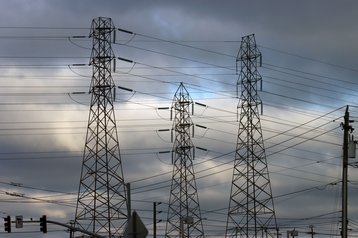
The political backdrop
The tone of the 16th assembly was less soft than in previous years. Climate ambition is still the headline but the underlying vocabulary has shifted toward energy security, affordability, and industrial resilience.
Across sessions, speakers emphasized that electricity is no longer treated as an abundant commodity but as a strategic asset. Energy policy is being pulled into the core of economic security, with governments increasingly explicit about prioritization: which sectors matter, which uses are strategic, and which loads are negotiable.
This is happening while international coordination shows visible strain. References to political backtracking, particularly around climate commitments, were framed as risks to system-wide planning. At the same time, leaders from Africa and Small Island Developing States (SIDS) challenged extractive transition models, warning that global decarbonization cannot rely on exporting value creation while importing resource pressure.
For data center developers, this backdrop means a change in how large loads are perceived. Energy access, grid capacity and capital have become politically mediated resources. Large new demands get evaluated through a lens of national interest rather than economic efficiency alone.
The spirit of the assembly: Confidence in technology, anxiety in delivery
From a technical standpoint, the assembly revealed a striking consensus: technology is not the bottleneck. Renewable generation, storage, and digital optimization are widely described as mature enough to scale.
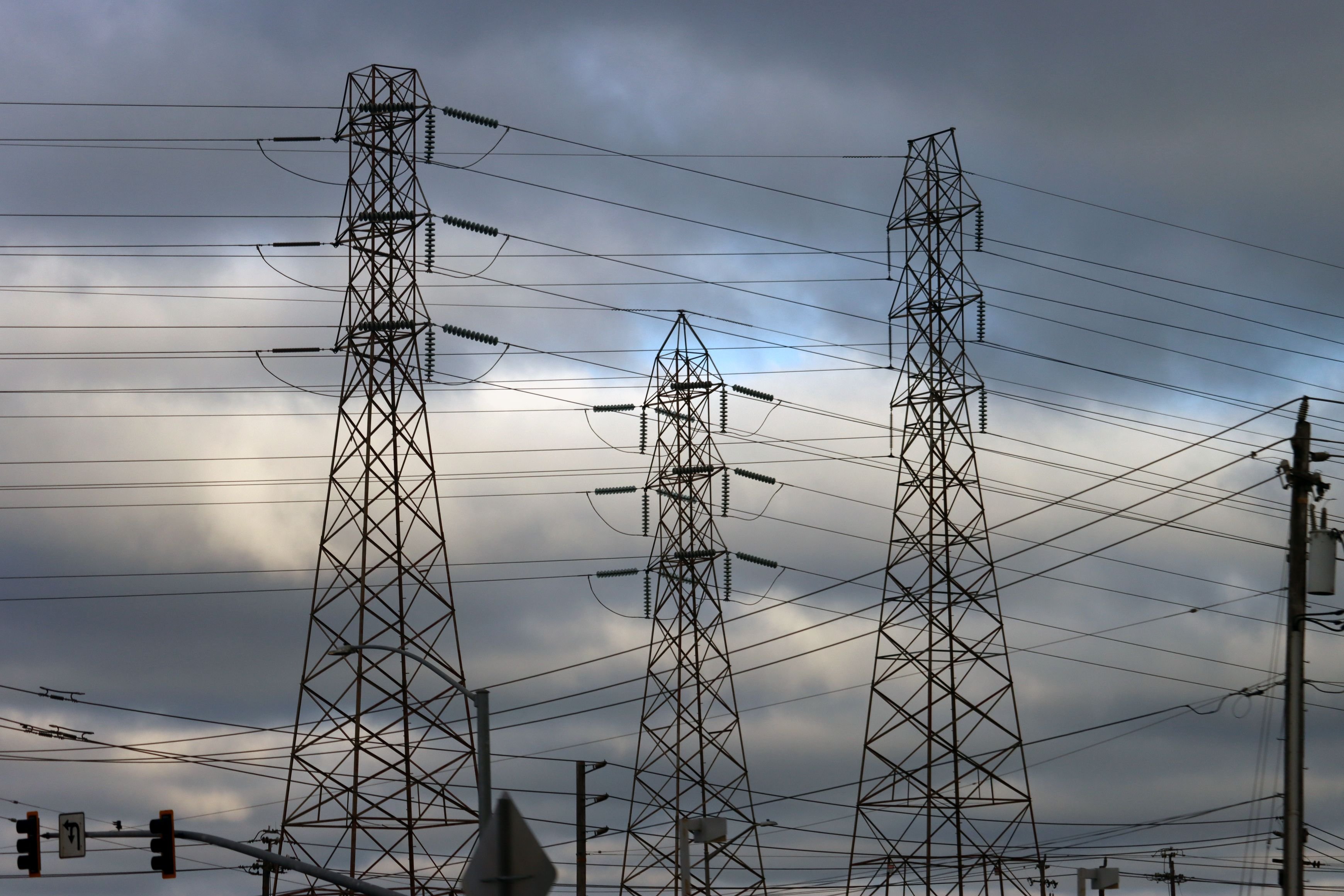
The problem is infrastructure, specifically grids and capital deployment. Speakers repeatedly highlighted the growing mismatch between generation buildout and transmission capacity. Global clean power investment continues to set records but investment in grids lags far behind, creating congestion, restriction, and multi-year interconnection delays.
This concern dominated the conversation before data centers were even mentioned. The assembly was already wrestling with inadequate transformer and substation capacity, permitting timelines misaligned with decarbonization targets and planning models that underestimate variability and peak stress.
Overlaying this technical anxiety is a social one. Repeated references to the 600 million people without electricity in sub-Saharan Africa framed grid expansion not just as an engineering challenge but as a political obligation. The fear, sometimes explicit, often implicit, is a two-speed energy transition where advanced economies solve for decarbonization while emerging regions remain capacity-constrained.
This is the environment data centers are entering into.
When large-scale digital infrastructure demand appears in this context it doesn't get evaluated in isolation. Governments are weighing it against grid scarcity, capital competition, and social priorities. The implicit question is: what does supporting data centers delay or displace?
Large new sources of electricity demand get scrutinized as competitors for a finite, politically charged resource. The debates around AI, data centers, and digital infrastructure that follow aren't happening in a vacuum, they're unfolding inside an energy conversation already stretched to its limits.
One of the most telling signals from the IRENA Assembly wasn't how often data centers were mentioned but how, across ministerial panels, technical sessions, and industry interventions, data centers surfaced repeatedly as an implicit stress test for the energy transition, even when they weren't the headline topic.
Spain's Secretary of State for Energy in the Ministry for Ecological Transition and the Demographic Challenge, Joan Groizard, articulated this unease directly, cautioning against the assumption that data center demand can be treated as a convenient sink for excess renewable generation. The message was clear: future demand (particularly from AI) cannot be "taken for granted" as a balancing mechanism. That statement alone marks a departure from years of quiet accommodation.
Meanwhile, utility executives and system operators spoke openly about demand growth that no longer fits linear planning assumptions. Martin Pibworth, CEO of power network SSE, acknowledged that the non-linear nature of new electricity demand "is likely to catch people out," a remark that resonated across sessions focused on grid resilience and planning uncertainty.
These interventions reveal something important: data centers are no longer external to the energy conversation. They're embedded in it but without a shared understanding of their role.
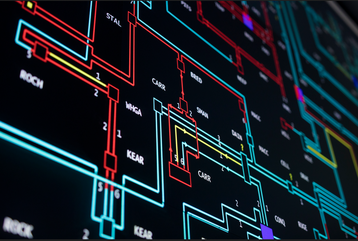
Passive load to system shock
The most consequential shift at the Assembly was technical, not rhetorical. Dr. Gerhard Salge, Hitachi Energy's CTO, cut through policy abstractions by drawing a sharp distinction between traditional data center loads and AI-driven infrastructure. Conventional facilities behave as relatively levelized consumers. AI data centers don't. They generate power bursts that ramp up and down in milliseconds, creating frequency challenges that today's grids and particularly gas peakers are not designed to handle.
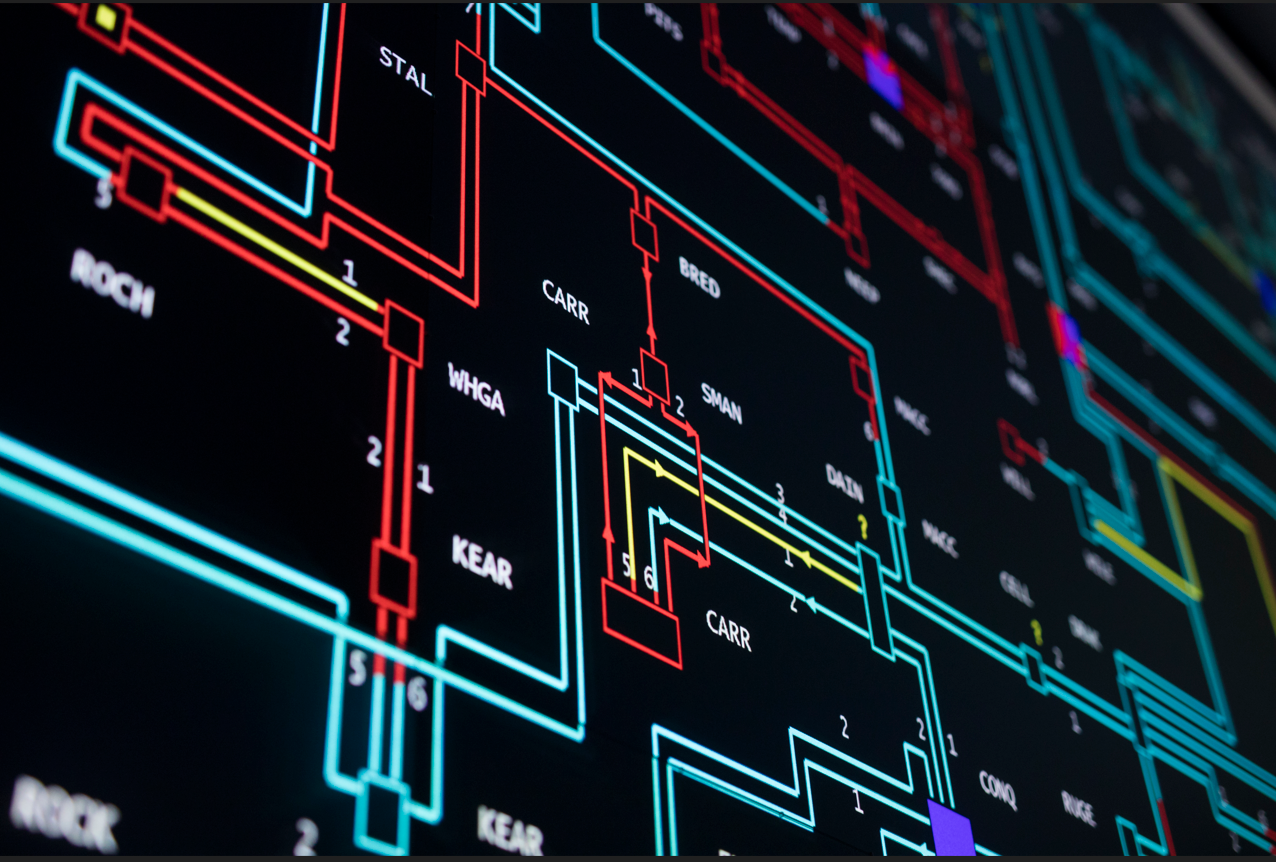
This point reframed multiple discussions that followed. Frequency stability, inertia, storage and grid-forming capabilities, normally niche topics, were suddenly central. The implication was unavoidable: AI compute represents dynamic demand with system-wide consequences.
What this reveals is anxiety, not hostility. Planning models assume predictability. When that assumption collapses, so does regulatory patience. The assembly's discourse suggests that utilities are beginning to see AI-driven load as a potential source of instability unless actively managed.
For the data center industry, this is a reputational pivot point. If operators don't demonstrate how they mitigate volatility through on-site storage, grid-forming inverters, or fast frequency response they risk being classified as technical liabilities rather than partners.
Another theme surfaced repeatedly: speed. Representatives from the Global Renewables Alliance observed that hyperscaler priorities have evolved rapidly from "affordable, clean, firm" power to "fast, firm, affordable, and if possible, clean." That reordering speaks volumes.
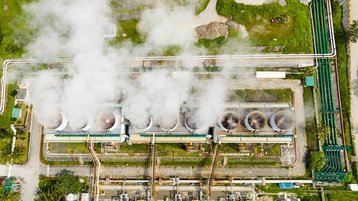
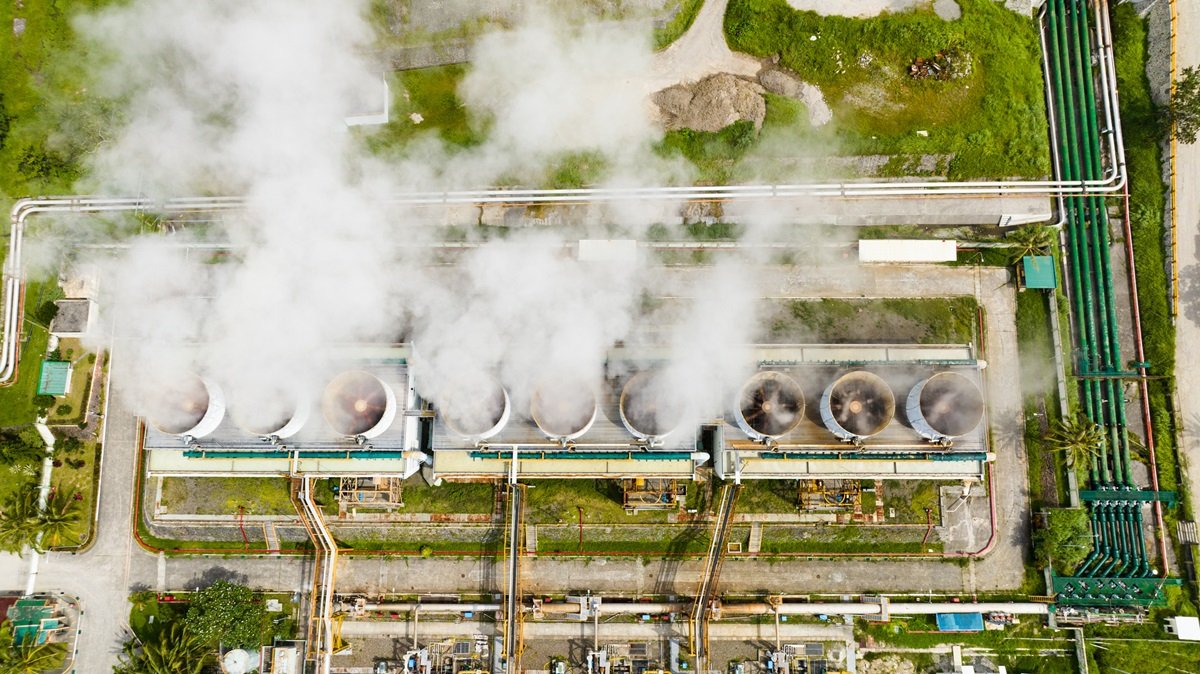
Other sessions focused on development strategies that did not compromise the energy transition, such as the geothermal energy roundtable. Project InnerSpace framed geothermal not just as a renewable option but as a strategic answer to data center urgency, suggesting it could supply up to two-thirds of projected US data center demand. Iceland echoed this narrative, positioning geothermal-backed data centers as a cornerstone of its circular economy model.
At the same time, China's approach was described in spatial terms rather than technological ones: relocating data center growth westward to align with stranded renewable capacity. Here, location strategy becomes energy strategy.
What ties these examples together is an implicit vote of no confidence in congested, slow-moving grids. While officials from Korea and elsewhere expressed optimism that renewables plus storage can meet AI demand, the private sector's actions, highlighted repeatedly at the assembly, suggest otherwise. Behind-the-meter and semi-islanded models have become default strategies for speed-to-market.
This creates a structural tension. The more data centers detach from public grids to secure firm power, the less visible and accountable they become to the communities those grids serve.
When growth feels like displacement
If ministerial panels conveyed optimism, the parallel IRENA Youth Forum delivered disruption.
Youth representatives from all over the world challenged the prevailing narrative head-on, citing cases where data center-driven demand coincided with severe grid congestion and electricity price increases of up to 267 percent, diverting investment away from basic energy access.
This critique landed particularly hard alongside data showing that India, one of the fastest-growing data center markets, still has nearly half its population without reliable Internet access. Revealing that local infrastructure development doesn’t mean community access.
What emerges here is a clash of frames. Governments and multilaterals tend to discuss data centers as enablers of efficiency, AI optimization, and economic growth. Civil society increasingly experiences them as competitors for scarce infrastructure.
The assembly didn't resolve this tension but surfaced it clearly. And once voiced, it can't be unheard. The risk for the industry is that grid expansion, justified by hyperscaler demand, is no longer assumed to be socially beneficial. Instead, it's being interrogated through the lens of equity and distribution.
Regulatory frustration surfaced most clearly around definitions. Spain's energy minister Groizard openly questioned how a "green data center" should be defined, challenging the audience to move beyond generic claims toward proof of new, firm, and time-correlated renewable supply.
Parallel efforts were referenced but remained fragmented: the EU is advancing efficiency rating schemes, China is emphasizing algorithmic efficiency and compute optimization. Yet across sessions, there was no shared language, let alone a shared metric, for what sustainable AI compute actually means.
This fragmentation gets interpreted as opacity, not innovation.
The message from the assembly is unmistakable: voluntary disclosure is approaching its political limit.
The core issue
What the IRENA Assembly revealed is discomfort with asymmetry in the data center revolution.
Data centers scale faster than regulation, consume infrastructure faster than governance adapts, and speak a different technical language than most energy policymakers. Data centers have become critical infrastructure without ever fully stepping into the public arena as such.
AI has now forced the issue. The questions being asked about volatility, equity, firm power, and verification are the questions societies ask of any system that reshapes energy flows at scale.
The Assembly made one thing clear: data centers are no longer invisible to the energy transition and they no longer have the luxury of strategic silence. Transparency about load behavior, proactive engagement on grid stability and credible acknowledgment of community impacts have become prerequisites for growth.
For the data center industry, the challenge is to articulate its role in the same room and in the same language as the energy system it now helps define.





Comments