
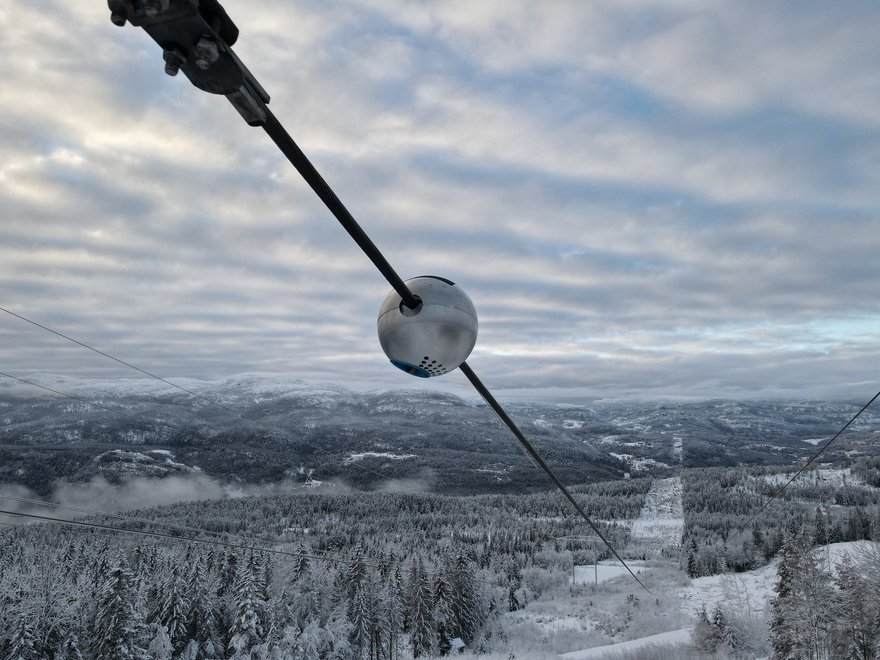
“If Apple were to make a product for the power grid, it would probably look something like this,” says Heimdall Power CEO Jørgen Festervoll, referring to his company’s range of Neuron power sensors, also known as Magic Balls.
DCD has heard this kind of talk about many a product over the years, to the extent that such fanciful comparisons now automatically generate a slightly cynical eye roll. But on this occasion, Festervoll’s claims may be justified; with their sleek silver exterior, the Magic Balls, which are slightly smaller than a bowling ball, have an almost alien-like quality, and would not look out of place alongside the iPhone or any of the other products emerging from the labs of Cupertino.

The Critical Power Supplement
The changing face of the power grid
If nothing else, the name is the sort of instantly memorable moniker Apple’s marketing team would be proud of. But the Magic Balls are far more than a gimmick, and have the potential to make the power grid much more efficient by identifying under-utilized power lines. At a time when data centers are putting greater demand on the power grid than ever before, such an innovation has the potential to make a real difference in markets around the world.
Having a ball
Heimdall’s sensors aim to combat what Festervoll says is a major limiting factor when it comes to the amount of power that can be transmitted through a cable: weather. “That’s the speed limit for power lines,” he says. “When you don’t have any sensors measuring temperatures, you’re operating your grid at somewhere between 20-40 percent below capacity because you don’t know how close to the speed limit you’re going to be.”
Factors such as wind, ambient temperature, and even solar radiation have a big impact on a power line’s ampacity, or its current-carrying capacity. Grid operators will typically assign a static rating to a particular cable based on the weather conditions in the area in which it is installed. Though this may be altered slightly depending on the season, it is not adapted in real time, meaning that even during spells of good weather, ampacity is strictly limited.
Heimdall is providing “the speedometer” to enable its clients to utilize as much of their available capacity as possible by adjusting ampacity more regularly, Festervoll says. The concept, known as dynamic line rating (DLR), is not a new one, with researchers and businesses having been exploring various options since the 1990s, but Festervoll says two factors mean it is now being taken more seriously by power companies.
“Changes in communication technology, and the advent of the cloud, AI, and machine learning, mean the products are now much more sophisticated and easy to deploy,” he says. “You have also never had the power bottlenecks before that we are currently experiencing. Previously, if you wanted to build a new factory, it would take years, and there would be time to build the grid out. Now we have data centers going up in 18 months and generating significant additional grid load. There’s been some congestion before, but it’s never been like this.”
The Neuron sensors that provide the brain of the Magic Balls have their roots in the oil and gas industry, where they were developed to monitor electrical systems on oil rigs. The company’s investors soon spotted that they could be used in the wider power grid too, and the current version of the product emerged following an iterative design process.
“It’s a sensor platform that can measure line temperature, line sag, voltage, ambient temperature, and smoke,” Festervoll says. Data is fed into Heimdall’s system, which can supply information to grid operators via an API. Though constantly adjusting line ampacity in real time would not be practical, Festervoll says this can offer much greater flexibility, particularly as new technologies are incorporated into the grid.
“You could simply lift capacity if you see your levels are too low,” he says. “You could also potentially use batteries to store power in times when conditions are good, so you have that for when extra capacity is needed.”
The Magic Balls can be installed on live lines by drone, meaning it is possible to attach them to power lines even in remote and dangerous locations. They harvest power from the line itself, though also feature a backup battery, and Festervoll claims they can remain in place for ten years without maintenance.
Thousands of sensors
Heimdall’s claim that it can give operators access to up to 40 percent in additional grid capacity has certainly caught the eye of investors. The company, which is based in Norway, raised $25 million last year in a Series B funding round co-led by international energy firm Orlen, Nordic cleantech fund NRP Zero, and the Steinsvik Family Office.
It will use the cash to scale up production of Magic Balls and try and crack the US market, where DLR has not been deployed at scale. The company was buoyed by the results of a project it undertook with Green River Energy, a cooperative made up of 27 power companies serving 1.7 million consumers and businesses in Minnesota, North Dakota, and Wisconsin. The pilot scheme, which saw Magic Balls installed on Green River’s transmission lines, generated a 43 percent increase in capacity, the companies claim.
Festervoll says Green River initially tried out four sensors, but once they realized the savings that could be made, they decided to install Magic Balls on “every line where there was congestion.”
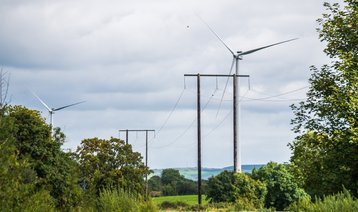
He adds: “It took us three months to produce the sensors, then eight days to put them up using drones. We’re talking about the largest DLR project in the history of the US, and we did it in eight days and integrated it with their systems in three days.”
More recently, Heimdall has announced a partnership with Iridium, which will see it use Iridium’s satellite connectivity network to transmit data from the sensors to the cloud for processing.
Festervoll is thinking big when it comes to his company’s future, and says it is already working with 40 companies on small-scale or pilot deployments. “In the last two years, we’ve moved from proof of concept to a technology that works and is being used,” he says. “Now it’s about preparing for large deployment, which in my head is thousands of sensors. We’re built for scale because this technology is relatively low-cost, and we can push it out quickly. We want it to be something that grid providers have in their toolbox.”
With a background in the utility industry, Festervoll says his career was “built” for his current role. “It’s one of the few things you can sell where you have zero haters,” he says. “Even things like wind and solar energy have opponents, but everyone wants to make the most of the power we have. Politicians love it, regulators love it, and utilities are starting to understand it and recognize that they need to change the way they operate.”








Comments