
Boston is not somewhere you’d expect to find a cement factory. Yet, just a 20-minute walk from the hallowed halls of Harvard, tucked away in the artsy neighborhood of Somerville, sits Sublime Systems.
When walking into Sublime’s headquarters, you assume that you'd be met with a blast of heat synonymous with traditional cement manufacturing. Instead, you enter an open-plan office, with no discernible feeling that you are in a cement production plant, outside a covering of fine dust, which seems to cake the facility. However, the apparent sterility belies the work underway in the depths of the building. This is because Sublime, unlike conventional producers, is pioneering the use of electrochemistry to make cement, a process, it claims, could significantly decarbonize the sector.
A concrete issue
The cement industry is one of the world's largest polluters, accounting for approximately eight percent of global CO2 emissions. It also plays a crucial role in the construction of data centers, accounting for up to 40 percent of the structure. And with more than 3,000 new builds (and counting) planned or under construction in the US market alone, the carbon intensity of data center construction has been thrust into the limelight.
In response, several hyperscalers have begun to throw their weight behind the growing number of sustainable cement companies, including Sublime, which secured backing from Microsoft last year. The deal, modeled on a carbon offset agreement, saw Microsoft commit to purchasing the environmental attribute value of up to 622,500 tons of Sublime cement over a six-to-nine-year period.
Amazon, Meta, and Google have all followed suit, backing myriad companies with a range of approaches to the problem. Sublime claims to be the only firm seeking to completely revolutionize cement production through its novel electrochemical process.

Issue 60 - Quantum of promise
Building the chips to power quantum computers
Current to cement
The brainchild of Dr. Leah Ellis and Professor Yet-Ming Chiang, Sublime reflects the academic excellence of the city where it is based. Formed in 2020, it spun out of a research project at the Massachusetts Institute of Technology (MIT), where co‑founder Ellis developed the electrochemical process as a postdoctoral researcher in Professor Chiang’s lab.
Instead of adapting existing technologies, Sublime seeks to replace traditional cement manufacturing. Ordinary Portland Cement (OPC) is produced in high-heat kilns, where limestone is heated to ~1,450°C (2642°F). However, the process is highly CO2-intensive, not only because of the release of carbon from fuel combustion, but also due to calcining limestone, which is composed of around 50 percent embodied carbon.
Sublime uses calcium silicate rocks - such as basalt - instead of limestone and, through electrochemistry, refines them into the elements it needs to produce cement. “You basically refine rocks in a vat,” a member of the company’s R&D team tells DCD. “Instead of firing them, we break down low-value calcium silicate rocks and some industrial waste into the elements we need.”
By avoiding carbonate rocks and using electricity rather than fossil-fuel-powered kilns, the company reduces the vast majority of emissions associated with traditional cement production. To achieve full decarbonization, however, the plant would need to be powered entirely by renewables, which is unlikely in the immediate future. Even so, the process offers a much less carbon-intensive and more energy-efficient option, requiring much lower heat levels and eliminating the need for fossil-fuel-powered kilns.
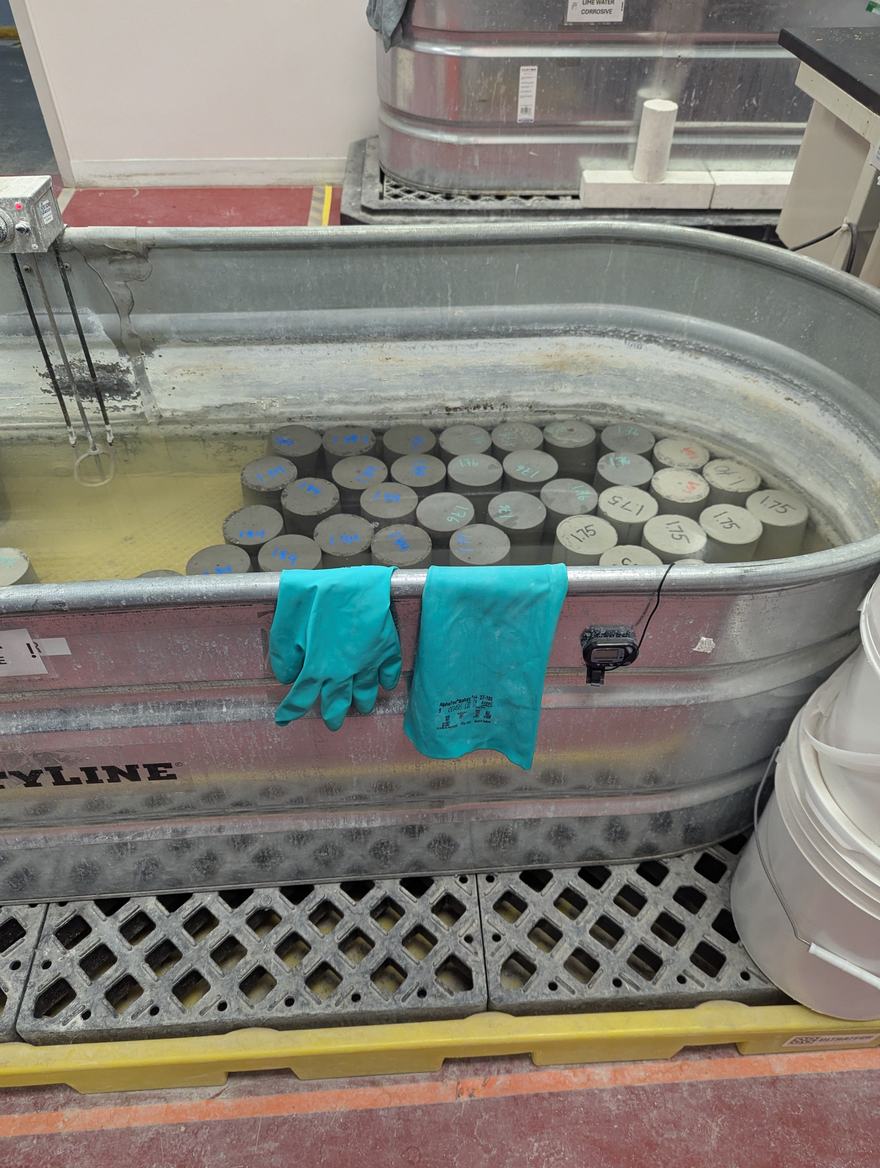
After the cement is made, it needs to be tested. Continuing the tour through the pilot facility, we encounter a series of small mixers where mortar cubes are blended and then poured into lime-water baths. It’s an odd sight, but a member of the Sublime team assures DCD it serves a purpose, with the solution used to mimic the conditions within a large concrete structure. After the bath-tub brine, the cubes are loaded into a compression tester that slowly applies force until the cubes fracture.
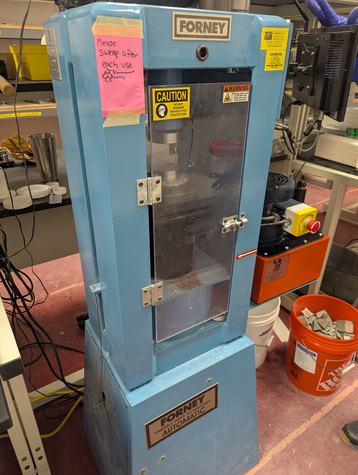
The tests help uncover the optimal mix that meets the industry-standard cement requirements. Therefore, each test is carefully repeated, with strict control over mixing speed, proportions, and curing times, to ensure that the cement performs in real-world construction conditions.
The rigorous process has borne fruit, the Sublime R&D team says, with early durability tests showing that the cement resists cracks and wears better than standard OPC. Tiny additives are used to fine-tune performance, and the resulting product is designed to work with the same trucks, pumps, and processes already used in construction, creating what Sublime claims is a seamless drop-in alternative.
Another benefit of the electrochemical approach, beyond its low-carbon process, is its cosmetic appeal: the cement produced through the Sublimes process is lighter in color, making it more useful for heat-reflective surfaces in hot climates.
How to scale
Following the tour of the center, DCD sits down with Sublime’s CEO, Rob Davies. A veteran of the cement industry with more than 35 years of experience, including leadership roles at Blue Circle, Lafarge, and Holcim, Davies was brought in specifically to lead Sublimes' transition from pilot to commercial operations. After joining as COO, he was appointed CEO in October 2025.
“I’ve been aware of CO2 emissions from cement since the 1990s,” he recalls. “Now the focus has intensified. Cement companies are making commitments, setting targets, and investing in solutions. Low-carbon cement is moving from concept to a commercial reality - and that’s where Sublime is positioned.”
The Microsoft offtake deal is a critical part of this scaling effort. It will see the cloud company purchase both the environmental attribute credits tied to cement and provide the option to use the physical supply first when applicable.
“They can use our environmental benefits even if the product is poured elsewhere, making the approach logistically practical,” Davies explains.
As a result, Davies sees the hyperscalers as early adopters of the product, providing a ready-made, willing off-taker for the cement. Realizing this, the company has already made the effort to demonstrate the product's efficacy within the data center market, completing several test pours, including one at a Stack campus in Virginia, to validate the material in real-world conditions.
While Sublime has proved its technology works, scaling it is another question. Through its pilot facility, Sublime has produced a cement that meets the ASTM C1157 performance standard and exceeds the requirements for general use. However, it is clear that the lab, while impressive, is much too small to support any meaningful production scale. The pilot facility in Somerville produces only 250 tons a year, enough for small-scale demonstrations but not for commercial rollout and the vast amounts required by the data center industry.
The next step, Davies says, is a 30,000-ton-a-year facility slated for construction in Holyoke, Massachusetts, a location chosen for its renewable electricity, existing industrial infrastructure, and proximity to potential cement buyers, including data centers.
Looking long term, Sublime has plans for multiple one-million-ton-a-year facilities across North America and Europe. To do so, Davies argues, will require leveraging partnerships with established cement operators to scale without replicating century-old infrastructure. “We provide the technology and engineering packages; they build and operate,” Davies explains.
However, that timeline could already be slipping. Originally targeted for early 2028, the company was forced to pause deployment at the plant following the cancellation of a $87 million grant from the Office of Clean Energy Demonstrations (OCED), due to funding rollbacks for sustainability-focused federal investments. The award was set to fund 50 percent of the plant's construction. The company was also forced to reduce its workforce by 10 percent.
According to a statement at the time, the company said that the loss of funding had “created challenges in assembling our capital stack and forced us to consider alternative approaches to our demonstration project. We are actively working through a robust set of alternative scale-up plans and have several exciting options to bring our first commercial plant online.”
Maintaining support from the data center market will therefore be crucial to securing further funding for the project, which remains in limbo. Despite these headwinds, the potential of Sublimes' solution is clear, but it is not the only company vying for a market share.
Spoilt for choice
While Sublime may have the most eye-catching low-carbon cement offering, it is by no means the only firm active in the space. Brimstone and Fortera are two of the most notable examples, and have also gained the backing of large data center companies, partnering with Amazon and Microsoft, respectively, to validate and commercialize their technology.
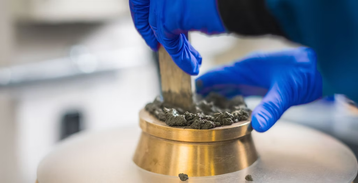
Amazon-backed Brimstone has positioned itself as a bridge between conventional OPC and a decarbonized cement solution. Rather than inventing a new cement production process, the company uses standard OPC, but substitutes basalt for limestone.
This made it a “compelling” prospect for Amazon, says Chris Roe, director of worldwide carbon at Amazon.
In addition to using basalt as a drop-in replacement, Brimstone’s solution does not require high-heat kilns to extract the necessary calcium components. In a process similar to Sublime’s, it uses a chemical extraction technique to separate calcium from silicate rock without triggering the CO2 release associated with calcination.
Its partnership with Amazon differed from many other deals on the market, representing a physical offtake agreement rather than merely the environmental credits. In addition, the companies agreed to collaborate on supporting R&D efforts, testing Brimstone Cement's workability, compressive strength, and other key properties, to ensure it performed in accordance with ASTM C150 requirements - the industry benchmark for OPC.
“It’s a huge validator that Amazon is actually taking offtake of the physical material, not just the environmental attributes,” says Brimstone CEO Cody Finke. “Structural materials require decades of proof and massive statistical confidence, and that’s why we decided to make the exact same material as Portland cement.”
The company is planning its first commercial facility, with the potential to produce up to 140,000 tonnes of industry‑standard OPC per year while avoiding around 120,000 tonnes of CO2 emissions annually. Initial estimates have the plant coming online sometime in 2030; however, like Sublime, Brimstone has lost federal funding for the project, expected to be up to $189 million, placing a potential cloud over long-term scaling.
Despite the loss of funding, Amazon remains bullish on Brimstone and on the wider potential of the sustainable cement sector, viewing the support of the data center sector as critical in providing long-term demand for the products.
“Risk and funding challenges aren’t unique to concrete,” says Roe. “What we can do is provide long-term demand and incorporate low-carbon requirements into our procurement standards. That stability can be just as important as public funding.”
Bolt on
Based in San Jose, California, Fortera has probably taken the most divergent approach to sustainable cement production, seeking to leverage legacy cement infrastructure across the US to create a consistent stream of low-carbon cement. The company has developed a bolt‑on decarbonization technology that works within existing cement plants to turn a major source of emissions into cement itself.
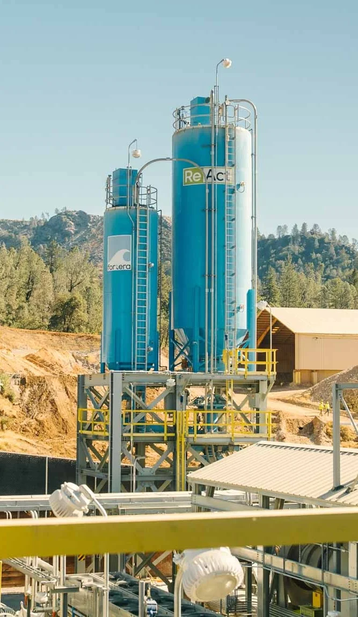
“Most other companies are either working at the concrete stage, after the cement has already been made, or they’re trying to change feedstocks entirely, which requires new quarries, new permits, and new infrastructure,” says Ryan Gilliam, CEO of Fortera. “We’re the only company directly reducing CO2 at the cement plant itself.”
According to Gilliam, the process takes inspiration from coral reefs and shell formation, which absorb CO2 and convert it into reactive limestone. He explains: “We apply the same principle at cement plants - capturing CO2 and recombining it with lime to create cementitious material instead of emitting it.”
The technology, known as ReCarb, captures the CO2 from kiln exhaust, reacts it with lime, and produces a reactive carbonate that meets current ASTM standards for cement.
According to Fortera, this allows producers to retain the full mass of feedstock, achieving 70 percent lower emissions per ton and effectively doubling cement yield. Fortera also claims that the system can be paired with renewable energy to achieve fully zero-carbon cement, though it emphasizes that its process is already deeply decarbonized and does not require grid-scale clean power.
The implications for the data center sector are significant, argues Gilliam. “Data centers are a compelling market because hyperscalers have made strong public sustainability commitments and consume vast amounts of concrete,” he says. “They’re among the few willing to place early bets on greener construction materials.”
Data center dilemma
The number of options available to the data center sector is proliferating; however, whether the sector can actually decarbonize its cement use remains an open question. For Amazon, investments in low-carbon concrete are not only seen as a means to offset their own emissions but also as a signal to the broader market to support the use of low-carbon concrete.
“We’ve seen over and over again that if we can send a strong demand signal and deploy our capital to de-risk early R&D, we can help create a flywheel. The market sees the demand, technology developers gain confidence, and solutions scale,” says Brandon Oyer, head of Americas power and water at AWS.
To support the scaling effort, Amazon is seeking to replicate the model it has deployed in the renewable and advanced energy markets in the building materials market, as part of what it calls a “deliberate strategy.” It has already deployed low-carbon cement at sites in Indiana, in collaboration with Ozinga and Clayco; in Japan; and in Virginia with construction firm Holcim.
“Embedding a 35 percent carbon reduction requirement for concrete into our design standards is a powerful lever. Performance-based specifications create real market certainty and give suppliers the confidence to invest,” adds Roe.
As a result, Amazon has not only invested in low-carbon building companies but also sought to engender greater collaboration across the market to support these solutions. This is evidenced by the founding of Amazon and Meta alongside a consortium of other organizations of the Sustainable Concrete Buyers Alliance (SCoBA), launched in September of last year, which seeks to drive corporate demand for low-carbon concrete through a "book and claim" system.
Despite efforts and early success in deploying cement across its data center portfolio, several key barriers remain. One of the biggest challenges in scaling the technology is that, by nature, cement is extremely difficult to transport long distances due to its heavy weight and low value, which can quickly make transit costs prohibitive. It is also sensitive to moisture and handling conditions, making regional production far more practical and cost-effective than long-haul shipping.
Therefore, given the nascent nature of production and the loss of federal funding, which has led to some sustainable cement plant plans being mothballed, it seems likely that, in the short to medium term, the use of low-carbon concrete may remain the purview of the hyperscalers.
This has not put off Amazon. “Once a low-carbon solution is ready for commercialization, we can help bring it to market through our logistics, procurement, and operational capabilities,” Oyer contends.
However, while supporting the growth of the sustainable cement industry is crucial in Amazon's strategy, the hyperscaler is also focusing on reducing the volume of cement needed for its data centers through advancements in design and engineering.
“The most efficient way to reduce carbon is not to use something in the first place. So before we even talk about lower-carbon concrete, we ask how we can reduce the total volume of concrete through smarter design and engineering,” says Oyer.
While these advancements may reduce pressure on the supply chain, it's evident that cement will remain a crucial component of data center builds going forward. The good news is that the sustainable cement sector seems well-positioned to meet demand and provide a concrete solution to this problem, with a little help from the hyperscalers.



Comments