

"They think it’s all over; it is now!” is perhaps the most iconic moment in English football (aka soccer).
Uttered by BBC commentator Kenneth Wolstenholme as Geoff Hurst scored the winning goal to see England beat West Germany in the final of the 1966 FIFA World Cup, fans stormed the pitch before the goal had even gone in. It might have happened 60 years ago, but that clip is etched in the memory of football fans born long after the event.
The excitement happens in real time, but sporting moments become iconic after being endlessly repeated on TV, film, and increasingly online. Legends and villains are created through endless highlight reels showing the greatest (and worst) moments of athletes and their teams.
In today’s world, there’s more video content than ever; hours and hours of footage all painstakingly tagged and repackaged for fans to consume. There are also huge amounts of video analytics information designed to eke out minute gains from athletes already close to their peak.
At the same time, there are decades of archive footage still yet to see the light of day, waiting to be put online.

DCD Magazine #61 - Life and death on a tower
The cell tower climbers risking it all to help us stay connected
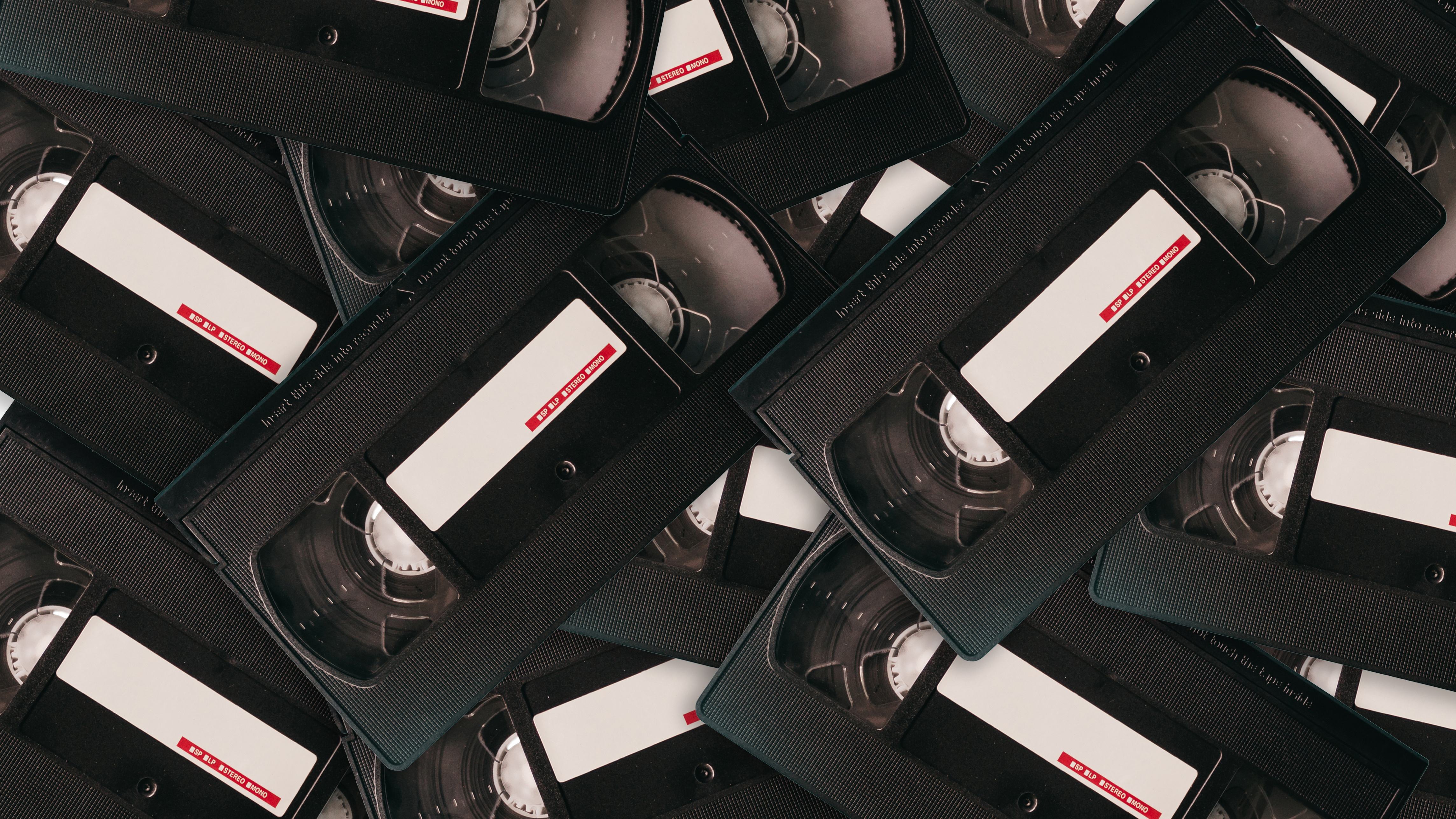
Content on a VHS might be stored relatively safely – though likely slowly degrading – on-site, but each tape is a mysterious black box. It might be housing a long-lost gem of a moment, or a lesser-known player’s greatest achievement – there’s no way to know until someone checks.
Sports teams are eager to digitize this content to secure its long-term future, but also find ways to provide greater context without the need to manually tag each second of libraries that go back decades.
Football team Liverpool Football Club, baseball team the Boston Red Sox, and ice hockey team Boston Bruins all boast more than 100 years of history.
They also all have large historical content archives, generate huge amounts of video content at today’s games, and manage complicated IT estates. The Red Sox, the Bruins, and LFC are all customers of Wasabi, using the cloud storage provider to host large portions of their audiovisual content.
The Red Sox look to the cloud
The Boston Red Sox are a baseball team based in Boston, Massachusetts. Founded in 1901, the team has called Fenway Park its home since 1912 and is one of the most successful teams in Major League Baseball (MLB).
For the Red Sox, more than 50 high-speed cameras throughout Fenway Park mean a single game can generate terabytes of data. Known as the Olde Towne Team, the Sox also have to contend with video captured and produced at six additional ballparks from instructional, minor, and major league facilities. As well as game day footage, the team relies on video coaching systems to analyze players.
The Red Sox utilize Azure and Google Cloud, alongside a number of cloud software providers. But there are still a number of things that need to stay local, such as networking and some baseball-related operations, and the group hosts infrastructure in Markley’s One Summer Street facility in downtown Boston.
“One of the more strategic projects that we have going is the native cloud migration of almost every mission-critical service that we have,” says Randy George, Boston Red Sox SVP of technology. “But we’re still a mid-sized on-prem compute footprint; we’re a Broadcom shop, we have 12 hosts, 400 cores across 7TB of memory on-prem. For on-prem, we’re a Dell partner. There’s probably 3PB of on-prem spinning disk still at Fenway Park.”
George tells us that the organization’s video content – which includes player highlights and content shown on the in-stadium jumbotron, as well as the critically important player tracking content that includes scouting and biomechanical platforms – is “mission-critical.”
Content is generally initially saved to a spinning disk environment on-premises, and then uploaded to the cloud after a period of time, once it is less likely to be needed regularly.
“We have whole separate environments: an array of very high frame rate, and high resolution cameras capturing frame by frame video of a player’s mechanics,” he says. “It’s a lot of video, and we need it. We don’t really ever want to let it go because it has video coaching and analytics value for us.”

George notes that if the team didn’t have cloud storage, it would be forced to make “really difficult decisions” on what content to keep.
“As we were scaling out our on-prem storage, we were contemplating whether to add an LTO library into the mix. The MLB has a massive Grass Valley tape library. But the economics aren’t necessarily that advantageous versus S3- compatible cloud storage.”
There’s still work to be done, though. The Red Sox have video content dating back to the 1940s and 1950s, and George notes that the organization still has “about 2,000 VHS tapes stuck in a bin upstairs in the Fenway Park control room” that the group needs to be digitized and stored.
“It’s a treasure trove, but imagine your family history locked in a VHS tape that is going to decay at some point,” he says. “There has to be some hidden gems in these 2,000 tapes.”
There does, however, need to be a balance when it comes to archived footage. On the one hand, it is incredibly important to the history of every sports organization. On the other, it’s not material that is core to the current sporting or financial goals, and isn’t accessed super frequently, so choosing the right way to store and protect the material is important.
“We have all this content, but there’s no real burning business need to digitize it. But as an archivist, we know this content likely doesn’t exist anywhere else,” says George. “So we do feel some urgency to get to the point where we’re starting to digitize that content. This is effectively a living museum. I look at us as like the Smithsonian of Major League Baseball, and the content we have sitting on tape is important from that perspective.”
LFC - video success follows sporting success
Liverpool Football Club (LFC) is one of the titans of English football.
Founded in 1892, the Merseyside team has played at Anfield for its entire history, winning a joint-record 20 league titles, more than 30 domestic trophies, and 14 international trophies.
The Red Sox and LFC are owned by Fenway Sports Group (FSG), an American multinational sports holding conglomerate. FSG was founded as New England Sports Ventures in 2001 as the vehicle to acquire the Red Sox, subsequently purchasing LFC in 2010.
Having previously relied on storing media and video on-premise, LFC started using Wasabi for cloud storage during the Covid-19 pandemic to make it easier to manage content without having staff on-site.
“We are the most successful team in English football, and we have a huge archive, terabytes of data going back over decades that we can call upon,” says Andy Fletcher, VP tech & products, LFC.
Adopting a cloud-based archive has allowed LFC to create new content from its archives much more quickly, speeding up what was “historically a very manual, elongated process” to find the perfect moment to share.
LFC has its own TV channel that is broadcast to around 90 countries globally, alongside a large social media presence that is “very reliant” on the team’s video and picture library. Each game day will have pre- and post-match coverage, as well as highlights – now all of that can be made more quickly thanks to easier content analysis.
“We can pull out some great moments from specific points in the game. We can target specific players, or moments, and be able to cut to that, rather than VT editors saying ‘I think it happened around 50 minutes.’”
The team still retains a hybrid approach, keeping some content on-prem while also using the cloud. LFC has a data center at Anfield Stadium, its AXA Training Center, and at its offices in the city, but declined to provide further info. Fletcher did note, however, that the team has ‘cupboards full of videotapes’ at one of the sites.
The Bruins look to preserve 100 years of history
The Boston Bruins are an ice hockey team competing in the National Hockey League (NHL).
Founded in 1924, the Bruins are one of the "Original Six" NHL teams. Jeremy M. Jacobs, billionaire owner of hospitality and food service business Delaware North, owns the team, acquiring it back in 1975 for $10 million. Delaware North also owns and manages TD Garden, the home of the Boston Bruins and the Boston Celtics since 1995.
The Bruins has some 50TB of archival storage in the cloud – along with another 210TB locally.
“You never really know what piece of footage is going to come back to either haunt you or laud you,” jokes Josh Carley, VP of technology for the Boston Bruins and TD Garden. “It's not something that you're going to go back and tap into on the constant, but when you do need it, you've got to get it.”
Previously, the company had “external hard drives that were stacked in a safe,” before it began moving data into the cloud.
“The local storage we were using is packed to the gills, and so they were offloading it onto external drives and putting it into a safe,” he says. “We started trying to expand that infrastructure and bought a little bit of extra disk space to give them a little bit of leeway. But then it became pretty clear that we were not going to have external hard drives sitting in a safe: Let's get literal history out of a closet and put it somewhere safe.”

Carley calls the Bruins/TD Garden IT estate a “mixed marriage,” consisting of the Bruins’ systems, TD Garden’s own infrastructure that is managed by Delaware North Corporate, and the onsite day-to-day operations on the game presentation side.
Delaware North is also known to use Amazon, and TD Gardens has an on-site data center, partly serving AT&T’s stadium connectivity.
Carley notes TD Garden is a 30-year-old building in downtown Boston. While he says that the Bruins are “not going anywhere,” he calls the venue a “gorgeous historical object” with limited room to grow.
“Even if I did want to increase my storage footprint, I don't have the room,” he adds. “We've got limited capability in the building to expand. I've got nowhere to go. My storage location is very, very small, and I've got to keep it that way. Cloud storage has to be a part of the conversation: They’d laugh me out of the room if I told them I need to expand my data center.”
Carley adds that the Bruins, which celebrated its centenary in 2024, is going so far as to reach out to broadcast partners searching for historical content relating to the Bruins, then digitizing and storing it for posterity.
“We thought it was incredibly important for us to celebrate our history that way,” he says.
Adding AI to sporting history
As well as ensuring the long-term survival of footage, sports groups are adding context to historical content archives, adding new levels of detail to games and events going back decades and previously largely lost to time.
“What we’ve been hearing from sports organizations around the world is they want to add value to their fan base, and a lot of that has to do with uncovering hidden gems from the content,” says David Boland, VP innovation marketing and market intelligence at Wasabi. “There’s a lot of value in taking that archive footage, moving it to the cloud, and making it readily accessible for folks.”
He noted an unnamed US ice hockey team that had terabytes of video and data from the 1970s to 1990s that doesn’t have metadata attached to it, and so “they don’t know how to find content in there.”
“They want to bring up those moments and share those, but it takes hours or days to find,” says Boland. “They have to take it off the local drive to an on-prem environment, move it to the cloud, and tag everything – faces, jersey numbers, transcriptions, etc. – and then create that fan content.”
Carley of the Bruins says the ability to find just the right moments for ‘sizzle reel’ promotional videos for events like jersey retirements or celebrations can be difficult without the right metadata. And even though the company has people who have worked with the team for decades, relying on superfan employees isn’t a long-term strategy.
“If we went to certain people in the game presentation world, and said, ‘I'm looking for that 1996 triple overtime goal in game six of the Stanley Cup Finals,’ they're going to know where that's at and go get it,” says Carley.
“That institutional memory is great. We love those kinds of people. But they aren’t going to be around forever, and we have to find different ways to gain access to that footage.”
And even beyond just tagging, Wasabi’s Boland says organizations are now looking at how they can add even greater value to their archives by combining that content with homegrown large-language models, potentially allowing people to query AI agents about the content.
An example he gives would enable people to ask: ‘When was the last time a specific player scored a hole-in-one at a specific golf course?’ and it would be able to show that moment.

The storage company’s latest innovation is Wasabi’s AI Recognition service (Wasabi AiR), a new AI metadata service that allows customers to automatically add context to stored content. The system can offer frame-by-frame facial detection, transcription and translation, character and logo recognition, audio classification, and other tags and descriptors.
The core AiR models have been trained on various foundational LLM models, and each instance is then customized and trained on individual customer data to create a custom model. Wasabi said AiR is trained and delivered to customers via GPU clusters from cloud GPU providers. The company declined to share information on the types of GPUs the system was trained on or its GPU providers.
In LFC’s case, the organization is retroactively using AiR to tag its cloud-based archives – including the women’s and under-18s and academy games, training the model to recognize not only the household names like Mo Salah but many youth team players yet to break through. Finding moments from matches years ago can now be done in minutes, rather than hours.
On the commercial side, the models can be trained to recognize logos, so sponsors can be quickly shown if their brand is visible in important moments likely to be widely shared by fans.
Boland notes another US sports organization has an archive featuring a lot of historical content with cigarette and alcohol sponsorships on its race cars, but doesn’t want to show those logos anymore when publishing that legacy content. They are using AI to find those unwanted logos and blur or write over them when needed.
The Red Sox baseball team aims to add an AI layer on top of its content to automatically add metadata and tag and understand what they have once it is all moved up to the cloud. The team is using Scoreplay, a sports-focused media asset management solution firm, alongside Wasabi AiR, to add that context.
“That’s really empowering our marketing department,” says George, “which traditionally has to go to video production to ask for content on a given player if you’re ever looking to highlight that player or tell a story about something. Now we can empower them with direct access to that archive; they can ask the question and retrieve the content.”
Boland notes that around “90 percent” of its customers use a hybrid approach to their content, keeping the most recent valuable content local, before moving older material up to the cloud for more long-term storage.
And while adding moving historical archives to a more reliable storage medium than VHS is useful, it is the future of content that needs planning for today.
More cameras, more angles, more pre- and post-game analysis, more interviews and footage than ever – storage needs for sports organizations of all stripes are growing more than ever.
“When I started in 2002, we could record a whole season's worth of baseball games on like 2GB,” says the Red Sox’s George. “Today, the rate of growth of our video production team is in the 60-70PB per year range, but it’s going to grow.”
He notes that with the growth of 4K content in the short term and cameras moving towards 8K in the longer term, the growth of captured content is likely to go up by orders of magnitude. That might mean getting more chances than ever to see iconic sporting moments, but they will survive in perpetuity if they are properly looked after.
“One of the reasons why we don't have everything in a cloud is because of the speed of access,” says the Bruins' Carley. “It’s often easier to go to the local archive and grab what they need, rather than having delays and latency from grabbing that particular file from another location.”
But, he adds: “We’re at an inflection point in the broadcast world, where you can do game presentation and broadcast remotely. If I had a crystal ball, I would say that the need for local storage is going to become less and less over time.
"When that speed of access becomes greater, we can keep everything in the cloud and don't have to have anything on premises. I don't see the need for on-premises data storage to grow again, provided it's cost-effective, and it's available, and I think that you're going to see a lot of organizations moving that way."









Comments