
The University of Stanford has long been a breeding ground for innovation. The university where Google, among others, was founded, remains one of the most fertile grounds for new and exciting companies.
The Energy & Sustainability Supplement
Towards a greener future
One of the latest to emerge is GridCARE, which formally launched earlier this year following the successful raise of $13.5 million as part of its seed funding round. The company, born out of Stanford's Sustainability Accelerator, aims to address one of the biggest bottlenecks facing the data center industry today: time-to-power. To do so, it is leveraging one of the fruits of the sector's unprecedented growth, artificial intelligence.
The company has launched a generative AI platform, which it claims can unlock untapped capacity across the US grid, enabling developers to secure reliable power at a fraction of the time and cost, without having to wait for costly transmission upgrades.
DCD spoke with its cofounder and CEO, Amit Narayan, to learn more about how GridCARE is using AI to make grids more flexible and intelligent in the face of increasing uncertainty about whether current infrastructure can manage the exponential growth of the data center sector.
Myth Buster
GridCARE was founded on the realization that while the US power grid is almost universally perceived to be heavily constrained, the reality is actually much more nuanced.
According to Narayan, on average, the US grid only operates at about 30 to 40 percent of its maximum utilization capability, meaning that there is significant untapped capacity that could be unlocked through more intelligent analysis and planning. The founders of GridCARE saw an opportunity brewing to “take the latest advances in generative AI and apply it to improving the power grid,” according to Narayan.
In doing so, the company believes that it can bust a few of the myths of grid constraints, which it says are predominantly the result of outdated assumptions and conservative planning practices.
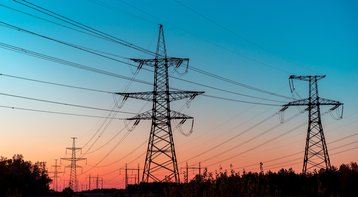
At present, grid planning typically looks at worst-case scenarios such as multiple outages on high-temperature days and assumes those conditions are persistent across the year. This creates a perception that the grid is constrained when, in reality, constraints are often only present under very narrow and infrequent conditions.
Narayan points to the California grid as the perfect example of this, arguing that it is only constrained during peak hours, with no problems at night or during the winter. GridCARE discovered that there is a significant amount of latent capacity available on the grid, which is not considered by planners, who fail to take into account operational controls and technologies that are already in place.
Therefore, through the use of generative AI, which considers all the tools and technologies on the grid, GridCARE can simulate and validate its effectiveness under real-world conditions, which it says can significantly accelerate connection timelines and unlock hidden capacity that doesn't typically reveal itself in the utilities analysis.
Increased flexibility
GridCARE is approaching the power issue with flexibility as a central tenet, with AI seen as the perfect tool to unlock greater flexibility across the grid. Its solution works through the use of generative AI and advanced scenario modeling, which identifies geographically and temporally specific constraints and proposes targeted, cost-effective bridging solutions.
The solution is able to analyze hundreds of thousands of possible grid scenarios and pinpoint exactly when and where congestion occurs, allowing for better planning and understanding of where new capacity can be added to the grid. These include leveraging existing tools like demand response programs, battery storage, and microgrids more effectively to free up extra capacity on the grid.
Through its solution, the company seeks to support utilities that have access to operational tools like battery storage and demand response, but have not factored them into planning. In addition, it works directly with data center developers, from major hyperscalers to AI data center developers, to accelerate time-to-power for infrastructure deployment, both for upgrading existing facilities and identifying new sites with immediate power availability for gigascale AI clusters.
The impact of this can be staggering in terms of reducing the waiting times for a connection, says Narayan, with data centers that usually would have to wait between five to seven years for a connection, seeing time to power slashed to potentially six to twelve months.
“We don't just model constraints—we also map what assets are available to relieve those constraints in real time,” Narayan says. “By combining grid data, asset visibility, and scenario modeling, we’re able to surgically unlock capacity—even in regions where traditional thinking says nothing is possible for the next five to seven years without building new infrastructure.”
According to Narayan, GridCARE’s solution has already seen “tremendous interest from data centers across the spectrum.” This interest is not only confined to the major hyperscalers, with data center operators focused on inference in a prime position to take advantage of the solution, due to their inherent flexibility, both geographically and temporally. This means that they can be sited in areas with a smaller footprint, which will expedite their time to power.
In addition, the solution offers significant financial benefits for the data centers themselves. This is especially true for AI data center developers, where revenue is greatly impacted by power availability, with the typical estimate being about $10,000 of lost value per megawatt per day of delay.
Narayan notes that this tends to add up quickly, as for a “100 to 200MW project, you're talking about hundreds of millions or even billions in potential value. Therefore, our technology doesn’t just help them find power, it helps them accelerate time to revenue and reduce the need for expensive new builds by better utilizing the assets we already have.”
Acting as the middleman
Despite its clear focus on reducing time-to-power for data center developers, GridCARE has positioned itself as a “trusted, neutral third party” between the data centers and utilities that serve them, says Narayan.
As a result, GridCARE is not only partnering with data center providers but also the utilities themselves. It has already signed partnerships with Portland General Electric and Pacific Gas & Electric, which view the solution as a means to better utilize their grid assets, as a means to increase overall revenues, and bring down the costs of electricity.
“Collaborating with GridCARE and using advanced planning tools enables Portland General Electric to make more informed and faster decisions in bringing this critical infrastructure online with confidence,” said Larry Bekkedahl, SVP of advanced energy delivery at Portland General Electric.
Therefore, like Switzerland, neutrality is embedded in GridCARE’s approach, which in turn will allow for greater flexibility to support not only data centers, but any large load seeking an expedited connection to the grid.
“We want to remain neutral, like a TSA PreCheck. We help developers and utilities move faster by creating a trusted “fast lane,” following utility standards, and only challenging assumptions when it’s justified,” says Narayan.
In acting as a middleman, GridCARE hopes to improve communication between the different stakeholders, which Narayan accepts is poor, which has led developers to view utilities as blockers, and utilities to consider developers with trepidation, unsure whether their proposal is serious or speculative. Therefore, in acting as a middleman between the two, both sides are provided greater clarity on when power can likely be delivered, removing the sense of distrust that has become prevalent throughout the industry.
In positioning itself as a middleman, GridCARE has also developed a somewhat unique business model, with the company being paid for every successful transaction that happens between the utility and the developers. Therefore, as Narayan contends, GridCARE has skin in the game, meaning that it is extra incentivized to see results.
Regulatory landscape and US focus
For Nayran, the “secret sauce” of the company is the fact that it works within the existing regulatory regime, meaning that its deployment is not dependent on any major policy change from the Federal Energy Regulatory Commission (FERC) or the North American Electric Reliability Corporation (NERC).
Despite the secret sauce, Narayan argues that greater transparency across the regulatory landscape would still make a significant difference, especially on the side of utilities. Currently, utilities do not typically report utilization or queue backlogs, which significantly hinders the ability to understand how modest flexibility, in the form of a battery or virtual power plant, could unlock significant flexibility across the grid.
As a result, if this flexibility were factored into grid studies, and especially if the public utility commissions required it, it could create much greater urgency within the sector to support solutions such as GridCARE’s.
For the foreseeable future, GridCARE is focusing all its energy on the US market, due to the size of the country’s data center sector and massive load growth projections. The company plans to focus predominantly on regions facing the most acute capacity bottlenecks, including California, Texas, and the Northeast. However, grid constraints are not simply a US issue, but one that is wreaking havoc across the globe.
As a result, while GridCARE will continue to focus on the US market, it contends that all its solutions are globally applicable. Narayan revealed that even without a proactive marketing campaign, it has seen interest from across Asia, the Americas, and the Middle East. Therefore, if the company can demonstrate success in the US market, there is the potential for global expansion down the line.
No time for a grid connection
The ultimate goal for GridCARE is to create a system where grid connection time is reduced to zero, effectively removing the bottleneck of time-to-power.
“We want to go to a point where there is no wait for getting connected to the grid,” says Narayan.
The goal is very ambitious, given the current state of the US grid and the huge projections of load growth from the data center sector alone. To achieve this, Narayan says that GridCARE is seeking to redefine how grid capacity is understood, planned, and utilized, using the current infrastructure more intelligently.


“We’re not just a technology company—we’re helping to shift mindsets. We’re challenging assumptions that no longer reflect today’s reality,” says Narayan.
GridCARE is not the only firm exploring the use of AI in this regard, with several companies emerging in 2025 alone promising significant cuts in grid connection through proprietary AI tools.
Several companies have launched or signed deals seeking to deliver similar reductions in grid connection times through AI. Most notably, Google X's moonshot project Tapestry, which signed a deal with PJM Interconnection to manage its interconnection queue and automate processes currently completed by grid planners, ultimately seeks to create a model of the grid, akin to Google Maps.
Therefore, we are seemingly on a precipice, like many other sectors, where AI companies are offering solutions that could revolutionize the way we interact with some of the most critical infrastructure. As a result, we could be getting closer to a day where time-to-power no longer represents one of the biggest bottlenecks for data centers on their route-to-market.
Comments