
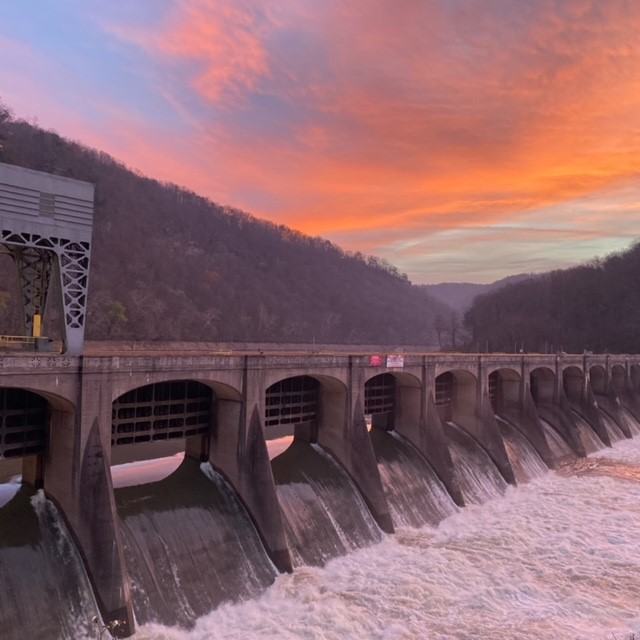
For most of human history, we have relied on the power of rivers to drive industry, evolving from rudimentary water wheels to grind grain to industrial water mills during the Middle Ages to today, where colossal dams can generate several gigawatts of power.
The vast appetite of data centers for power has led operators to explore numerous alternative energy sources, from geothermal power to advanced nuclear microreactors. However, despite hydropower's maturity, there have been very few instances of data center companies investing in or directly procuring power from plants outside traditional utility agreements. Bucking trends, 2025 saw two major offtake agreements signed in the hydropower sector, with Google and Digital Realty inking deals to offtake hydropower. The agreements offered two starkly different approaches, with Google purchasing power from large legacy hydroelectric assets, and Digital supporting the development of new small-scale hydroelectric plants.

The Critical Power Supplement
Data centers face the energy dilemma
When we think of hydropower, we think big. Hydropower facilities account for four of the five largest power plants by capacity globally, the largest being the Three Gorges Dam in China, with a whopping capacity of 22.5GW. However, big hydro, especially in the US market, has a problem: it is effectively tapped out. At present, approximately 80 percent of the economically feasible traditional hydropower potential in the US has already been developed.
This means new large dams are effectively off the table, and matters have been compounded by environmental concerns, permitting hurdles, and public opposition. The US fleet is also particularly aged. The approximately 80GW of hydropower generating capacity in the US has an average age of 60 years, and while efficiency improvements can be made, the potential for new large hydropower facilities in the near future seems unlikely. Therefore, for data center developers, the opportunity to secure direct offtake agreements with hydropower facilities has, until now, been a pipedream.
Once in a lifetime
Brookfield Renewables US is one of North America's premier hydroelectric power producers.
“We have about 6GW of hydro assets across the US and Canada, and are the largest private owner of hydro licenses in the US,” its CEO, Stephen Gallagher, tells DCD.
Historically, most, if not all, of this huge capacity has been tied up in long-term utility supply agreements, leaving little wiggle room for private offtake agreements. However, over the past few years, a rare opportunity has arisen.
“Many of these assets had been contracted to utilities for decades, and as those long-term contracts rolled off, they became merchant for the first time in 20 or 30 years,” Gallagher says. “That created a rare opportunity to structure new long-term agreements with companies like Google.”
The aforementioned Google deal, signed in July of last year, was one of the largest in the sector's history. In what was described as a first-of-its-kind Hydro Framework Agreement (HFA), Brookfield committed to deliver up to 3GW of hydro power across the US directly to the hyperscaler.
For Gallagher, the deal reflected an evolution in the market, with hyperscalers moving away from buying power project by project towards large-scale, strategic procurement.
“The question became: who can reliably deliver 500MW, 1GW, or even 5GW, on time and at scale?” He tells DCD. And with its 6GW of installed capacity, Brookfield certainly could.
The first contracts to be executed under the agreement will be the 670MW Holtwood and Safe Harbor hydroelectric facilities in Pennsylvania, with power delivered via a virtual power purchase agreement (vPPA) with Google, which will purchase the environmental attribute credits (EAC) tied to the project.
While critics would point to EAC's obvious flaws, the reality remains that, when dealing with such vast capacity, it's impossible to have a direct power line. Even if there were, there would likely be unbridled opposition in the states where these hydroelectric dams operate, mirroring what we have seen in the nuclear sector.
The real attraction of the assets, Gallagher argues, outside of the combination of 24/7 base-load power, low-cost electricity, and zero-emission credentials, is their potential to complement the hyperscaler's vast portfolio of wind and solar assets.
Google, along with the majority of the other hyperscalers, has committed to match its electricity consumption in all places, at all times, a practice known as 24/7 matching. Therefore, by adding such a vast baseload power source, the company could feasibly better match its load profile in specific geographies.
“In Pennsylvania, for example, we have about 670MW of hydropower that is highly complementary to Google’s data center footprint in the region,” says Gallagher. While the deal definitely represented a historical opportunity for the data center market, it may also prove crucial in helping Brookfield maintain and extend the life of its hydro assets for years to come.
Maintaining the flow
Hydropower facilities are both engineering behemoths and long-life assets, requiring heavy investment each year by operators. According to the International Renewable Energy Agency, operation and maintenance costs typically range from 1-4 percent of annual investment costs.
Therefore, securing a creditworthy offtaker such as Google is crucial for underwriting the upkeep of the facilities, notes Gallagher. “That long-term certainty allows us to reinvest in these assets, fund relicensing, and extend their operating lives by decades,” he says.
This desire is reflected in the long-term nature of the deals, with vPPAs signed for 15 to 25 years to provide cash flow certainty to maintain the plants and fund relicensing.

Relicensing is one of Brookfield's biggest concerns. While there “has been welcome federal policy support in recent years,” says Gallagher, “more support is needed at the federal and state levels to streamline relicensing and spur investment to ensure the nation’s hydro power fleet is able to meet growing electricity demand.”
At present, the process can take more than five to six years to complete and requires significant capital investments in environmental upgrades, such as fish passage and ecosystem protection. Therefore, by aligning with the major hyperscalers, Brookfield aims not only to ensure stable capital flows but also to give it the time to navigate the licensing and maintenance processes for its facilities.
Even with improvements, capacity from large hydropower facilities is expected to remain fairly static in energy production, meaning that deals like Google’s are likely to remain the exception rather than the prevailing trend.
Little hydro
Of the roughly 90,000 dams in operation across the US, fewer than three percent are powered. The majority of the facilities, which dot the country’s waterways, are used for a single purpose, be it irrigation, water supply, flood control, or navigation. While much smaller than large hydroelectric plants, these dams still have generation potential, and over recent years, several companies have emerged from the woodwork looking to retrofit them for power generation. The potential capacity is rather staggering, with up to 12GW available in the US alone, according to the US Department of Energy.
For data center firms always on the lookout for clean power generation, this has piqued interest, offering a potential new power source on their doorsteps. One company to jump at the opportunity is colocation provider Digital Realty. For Digital, the allure of hydro mirrors that of the hyperscalers, aligned with its shifting outlook on renewable procurement from annual renewable energy credit matching towards 24/7 renewable energy matching. “We’ve built a strong wind and solar portfolio,” notes VP of sustainability Aaron Binkley, “but hydropower operates 24/7, 365 days a year, which mirrors how our facilities run.”
While recognizing its potential, Digital was deliberate in its approach to procurement, says Binkley, taking several years to vet potential developers. Its search culminated in September of last year, when it inked a deal with Current Hydro LLC for 500GWh of hydropower from three retrofit projects on the Ohio River.
Against the Current
Launched in 2013, Current Hydro is a hydropower developer with a specific focus on adding power generation to existing lock-and-dam infrastructure along US waterways. Rather than focusing on constructing new dams, the company works with existing navigation structures, particularly those operated by the US Army Corps of Engineers, to generate power.
Its CEO, Jeremy King, who joined the company in August of 2024, recognized the potential these facilities could have in adding reliable baseload power to the grid.

“We evaluated many renewable energy sources and asked: what does the grid need most right now? The answer was clean, firm power - something reliable and non-intermittent,” he says. “With so much intermittent generation coming online, we saw a clear opportunity in non-powered dams, particularly existing lock and dam structures.”
Unlike traditional hydropower developers, which often focus on peaking power and maximizing nameplate capacity, Current Hydro is taking a different approach, says King.
“We design smaller facilities with higher capacity factors. That means more consistent, firm energy output with a smaller physical footprint, lower environmental impact, and minimal interference with the Army Corps of Engineers’ navigation mission,” he contends.
None of its announced projects exceeds 30MW in projected capacity. King claims that this allows the company to avoid the capital risks of owning dams, as it works with existing navigational infrastructure that already has known hydrology, established transmission access, and defined operational constraints.
“We felt like adding hydropower to those existing assets was one of the fastest, lowest-risk ways to deliver and bring new, clean, firm generation online at scale,” he says.
Despite the smaller scale, the work to transform the dam is still substantial, but pales in comparison to a major hydroelectric project.
The retrofit process involves building a concrete powerhouse - a reinforced structure where turbines, generators, and control systems are housed - adjacent to the existing structure. As a result, water that would normally spill over the dam is redirected through these turbines to generate electricity, while maintaining navigation and river flow.
According to King, the retrofit process is considerably faster than many comparable schemes, with the company expecting to bring the first projects online by 2029.
“Once you have shovels in the ground, we’re seeing anywhere from a 24-36 month construction duration. Dewatering and excavation take the longest, and concrete can only cure so fast,” he says.
Despite these lofty claims, Current has yet to actually complete one of its retrofit projects, with the three projects tied to the Digital Realty deal its first. However, several other companies have demonstrated proof of concept, the first being the Red Rock Project in Iowa, which was completed in 2021. Even if the first three Current dam conversions do come to fruition, ensuring long-term success will depend on a scalable, repeatable process.
Scalable and repeatable
For Current, the deal with Digital Realty is merely the beginning of what King calls a scalable model. The scalability is centered on the repeatability of its construction process.
“Holistically, we focus on building a scalable platform rather than pursuing one-off projects,” King says. “Pike Island and New Cumberland are identical projects, and that repeatability is really core to our model.”
At present, the company has 20–25 projects in its development pipeline, primarily on large industrial waterways east of the Mississippi, including the Ohio, Mississippi, Arkansas, and Alabama rivers. King argues that if the first three projects are successfully deployed, they could be scalable nationwide, delivering hundreds of megawatts over the next decade.
“We see a pathway to 250MW, 400MW, potentially up to 500MW over the next eight to ten years, and we definitely think this will be scalable beyond these first three projects.”
The environmental impact of hydro has historically been its biggest barrier to deployment, with large dams at risk of disrupting ecosystems and reshaping river systems. King claims that Current Hydro’s model aims to avoid this by working exclusively with existing dams and navigational structures; it does not create new impoundments or significantly alter river flows.
Even so, permitting remains complex. Projects must comply with federal, state, and local regulations, including environmental impact assessments, waterway protections, and coordination with the US Army Corps of Engineers. While retrofits face fewer obstacles than greenfield dams, they remain capital-intensive and time-consuming to permit, which could affect deployments.
While data centers were not the original target market, the company sees strong alignment between its clean, firm power generation and the growing demand from hyperscalers and digital infrastructure providers. The deal with Digital Realty is seen as particularly important to the company’s future prospects. “This partnership enabled a long-term offtake with a very high-quality, mature investment-grade counterparty, and we felt that was important for these first three projects as the cornerstone for our business.”
For Digital, the deal came at the most opportune time, says Binkley. “Hydropower has not historically been the most competitive price, but as wind and solar prices have increased, it’s become more attractive — especially given its firm, baseload characteristics,” he affirms.
Therefore, if the Current Hydro model proves scalable, it could create a new low-carbon power stream for data center operators across the US. Whether that stream can evolve into a raging torrent, however, is yet to be determined.




Comments