
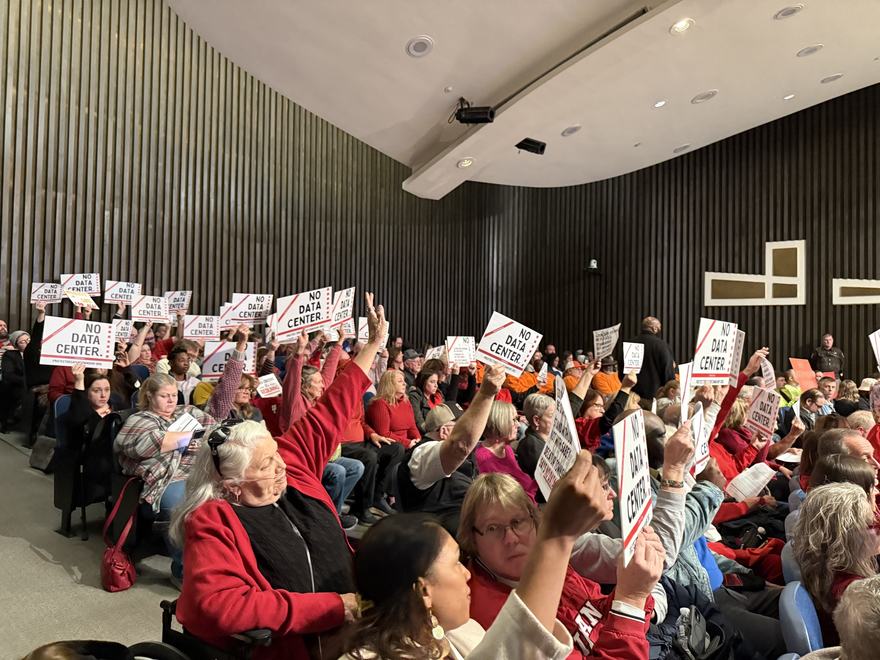
With the midterm elections just a week away, it seems like everyone in the US hates data centers.
In a deeply polarized nation, opposition to digital infrastructure projects has stitched together a temporary coalition of wildly differing politics, ideology, and geography.
The list of personalities inveighing against data centers is startling for its diversity.
Senators Alexandria Ocasio-Cortez and Bernie Sanders, the two most recognizable figures in progressive American politics, recently proposed a national moratorium on data centers. President Donald Trump, who constantly surrounds himself with Big Tech CEOs and has personally invested millions of dollars in data center industry firms, has made half-hearted attempts to appease the concerns of data center opponents in fear of electoral retribution. The Pope – himself an American – has highlighted the environmental impacts of data centers in a broadly critical encyclical about AI. Many more celebrities, comedians, podcasters, YouTubers, and politicians – local, state, and federal of all shades – have come out against these facilities.

DCD Magazine #61 - Life and death on a tower
The cell tower climbers risking it all to help us stay connected
Moratoriums on data center applications have been proposed and adopted in local governments across most states, and in 2026 alone, state lawmakers in Georgia, Maine, Maryland, Michigan, Minnesota, New Hampshire, Oklahoma, Pennsylvania, South Carolina, South Dakota, Vermont, Virginia, and Wisconsin attempted to impose state-wide moratoriums.
State-level bans have been imposed in New York, Oregon, and, perhaps most surprisingly, Texas, as politicians of all stripes realize that taking a strong anti-data center stance could be a vote-winner.
Perhaps the most prominent name on that list of opponents is the Internet. Although it is often meaningless to say that “the Internet”, probably the most diverse place on planet Earth, likes or dislikes something, the sheer quantity of anti-data center content that gets posted there and the reception with which it is met does seem to be indicative of the general vibe, especially when contextualized with the broader anti-data center mood.
Part of the reason is that criticism of data centers naturally dovetails with other popular sentiments about wealth inequality and tech overlordship. “People over profit” is a common refrain that can be found in the comment sections of Reels and TikToks, many of which depict local council meetings in which attendants are chanting the same phrases in real life.
It has since taken root in meme culture, which treats the subject with irreverent, absurdist humor.
“The hoard [sic] of Bill Gates ticks trying to stop my 2006 Honda Oddesey [sic] from crashing into the nearest Palantir data center”, reads the caption of an Instagram post by meme account @onlyshitpostsig. The post is a clip from the final set piece in Guardians of the Galaxy (2014) which sees the villain’s spaceship – representing the Honda 2006 Odyssey – crashing through a forcefield made up of smaller ships – representing the ticks.
But at its core, all of this anti-data center action is an outgrowth of grassroots, bread-and-butter concerns about the impacts of data centers on people’s lives at the individual level.
According to 1,000 randomized telephone interviews conducted by American pollster Gallup in March, 71 percent of interviewees said they would oppose the construction of an AI data center in their area: 48 percent said they were strongly opposed, with the remaining 23 percent saying they were somewhat opposed. Of the 27 percent in support, only 7 percent were strongly in favor. A majority of respondents belonging to all political party groups said that they would oppose the construction of a data center – an indication that political bipartisanship at the elite level is fuelled by bipartisanship at the local level.
Not everyone shares the same priorities. If someone lives close to a data center, they might be more worried about light pollution, noise pollution, air pollution, the impact on property values, and the impact on their view. If they don’t, then they might be more worried about utility rates, impact on local wildlife, or the use of fossil fuels. Most national figures are equally concerned with AI as they are with data centers, but some locals have little qualms about using AI to produce graphics for anti-data center meetings and protests.
But at the local level one thing is becoming clear. In the controversial words of Lyndi Stone, a principal corporate counsel representing Microsoft, “nobody really wants a data center in their backyard.”
Living right next to a data center
On March 27, 2025, More Perfect Union, a progressive media organization, released a video called “I Live 400 Yards from Mark Zuckerberg’s Massive Data Center.”
It depicts how two residents of Morgan County, Georgia - Beverly and Jeff Morris - have been impacted by the construction and operation of Meta’s Stanton Springs data center, around 350 meters from their house.
All of the complaints described are quality-of-life issues that are easy to sympathize with. The video includes footage proving that the data center is clearly visible from their home. The light from the campus streams through the couple’s home at night, and the wind blows dust from the construction site to the house, severely lowering visibility. The pine trees that used to surround their home were felled as part of the campus’ construction. The water from their taps now runs murky.

“Being in the country has always just been my piece and my therapy. When we found this place, we decided that this was it. It was perfect… It’s been a struggle. Every month is a struggle,” said Beverly Morris.
The Morrises’ story has become an easily recognizable example of the impact of data centers on those who live right next to them. It has been covered in most major news outlets, and most recently, Senator Alexandria Ocasio-Cortez brandished two jars of murky water sourced from the county whilst questioning an Environmental Protection Agency official.
The pair also represent an archetype of a local data center opponent – the kind who live very close to a proposed or existing data center, are impacted by its immediate physical footprint, and are therefore easy to sympathize with.
There are several ways that this physical footprint can appear – a data center might block an existing view; it might not fit with the vibe or feel of the environment; it might contribute to increased traffic owing to construction – but its clearest manifestation is pollution.
The National Association for the Advancement of Colored People and the Southern Environmental Law Center, for instance, have sued Elon Musk's SpaceXAI, now styled SpaceXSI, for its operation of 27 gas turbines at its Colossus 2 data center in Southaven, Mississippi, alleging that it is operating these turbines in contravention of the Clean Air Act and polluting the air.
The organizations allege that SpaceXAI’s power plant will release harmful amounts of nitrogen oxide, particulate matter, carbon monoxide, and formaldehyde. Attempts by the Federal Government to get the case quashed were overruled by a judge this week, meaning it will proceed to court.
A less dangerous but more pernicious form of pollution is noise pollution, which can be created by backup generators, cooling systems, and onsite power plants, and can exceed levels that are considered harmful to hearing.
In May 2026, residents of Hood County, Texas, filed a lawsuit against cryptomine company MARA Holdings over alleged noise pollution from its data center near Granbury, Texas, alleging that it has contributed to numerous health issues, including cardiac problems, tinnitus, permanent hearing loss, and insomnia. The lawsuit also linked the unexplained deaths of chickens in the area to noise pollution from the data center, though there appears to be little evidence to back this up.
The NAACP’s lawsuit against SpaceXAI also mentions pollution and cites the example of a NAACP member living less than one mile from the turbines who has “had to wear earplugs at night to prevent the noise from the turbines from interrupting her sleep.”
Living close, but not next to, a data center
But data centers are also capable of exerting an impact on residents in a local town who do not live right next to it.
The best-known example of this is a data center’s use of shared resources, which has translated into one of the most recognizable and successful manifestations of the anti-data center movement: the use of legislative and regulatory tools in Maryland, North Carolina, Ohio, Oregon, Oklahoma, Virginia, Wisconsin, and more that effectively protect electricity ratepayers from price hikes that would otherwise be incurred by companies passing off the cost of new infrastructure onto consumers.
Lesser-known is the degree to which the courtship of a data center developer can play on a town’s historical grievances with other infrastructure projects.
Abre’ Conner, director of the Center for Environmental and Climate Justice, draws a direct line from the historical practice of redlining – where certain civic and financial services were denied to areas home to large numbers of racial minorities – to the creation of ‘sacrifice zones’, which is a term used to describe deprived areas that have become dumping grounds for infrastructure with highly localized negative impacts and de-localized positive effects.
The most notorious example of a ‘sacrifice zone’ is Cancer Alley, an 85-mile stretch of the Mississippi River between Baton Rouge and New Orleans in Louisiana that is home to more than 200 petrochemical plants that process around a quarter of the American petrochemical industry’s products. The area’s majority-Black population also sports some of the highest cancer risks in the US.
“Some of the ‘best practices’ that were told to some of these tech companies and data center operators was to go to places where there is already industrial buildout. What does that mean if you have places that have literally been deemed sacrifice zones?,” Conner tells DCD.
In Martindale-Brightwood, a neighborhood northeast of Indianapolis, Indiana, accusations of “environmental racism” have been levied against a $500 million proposal to build a 72MW, 154,000 sq ft (14,307 sqm) data center.
“Data centers are being pushed into black legacy neighborhoods like Martindale Brightwood. Not because it’s right, but because decision-makers and predatory developers think we’ll accept the burden,” said an Instagram post made by Protect Martindale Brightwood, an anti-data center organization.
A separate case study is the example of St. Joseph County, Indiana, which has a complicated relationship with solar energy companies.
In 2024, an application to build a 2,500-acre solar farm filed by energy company Hexagon Energy attracted opposition from locals who were worried about the proximity of the panels to their homes.
“Solar was something that we actually pushed back on,” Amy Drake, a councilwoman in St. Joseph County, Indiana, tells DCD.
“A lot of us were concerned that our county was making it so easy for solar to come in. You didn’t have to have a permit to build – you could go right onto [agricultural] land and just put up solar without any kind of zoning hearing. So we actually went and changed that.
“A big solar company was coming in, and they literally had a plan that weaved around people’s houses with solar. And so their houses were surrounded by solar panels.
“There’s a similarity in the fact that they’re both taking over large swathes of farmland with industrial building materials. The solar farms are probably not as intense as the data centers, obviously, but still changing that farmland that always was. And that worries a lot of people.”
Having a say
All of these concerns crystallize into a feeling that the inhabitants of an area have no way to control what happens there. They feel like their voices have gone unheard, with decision-making powers invested in planning boards and town committees that are seen, fairly or otherwise, as unrepresentative and corrupt.
“One of the things that really gives me hope about this issue specifically is the fact that it is an issue of democracy and self-governance and people being able to make decisions that impact their lives and their livelihoods moving forward,” says Conner.
These issues of representation can flare up at various points and about numerous issues. The debate can be about whether a data center should be built, but it can also concern finer details like tax abatements and zoning conditions.
The most controversial manifestation of these concerns about transparency are the non-disclosure agreements (NDAs) signed by developers and local governments, which are perceived mildly as confusing and most acutely as anti-democratic and nefarious.
The intense opposition towards these agreements, which hide the identities of end-users and further strain an already tense relationship between developer and resident, led to Microsoft announcing in March that it was no longer asking local governments to sign NDAs.
“Our neighbors deserve to know when we are coming to their community. They deserve transparency about what we are building and why. This shift is about strengthening public trust, enabling better dialogue, and ensuring that our growth is matched by meaningful engagement,” said Rima Alaily, the head of Microsoft’s infrastructure legal affairs team.
But it seems clear there is something wrong with the administrative and civic infrastructure of the local town or county when it comes to data centers.
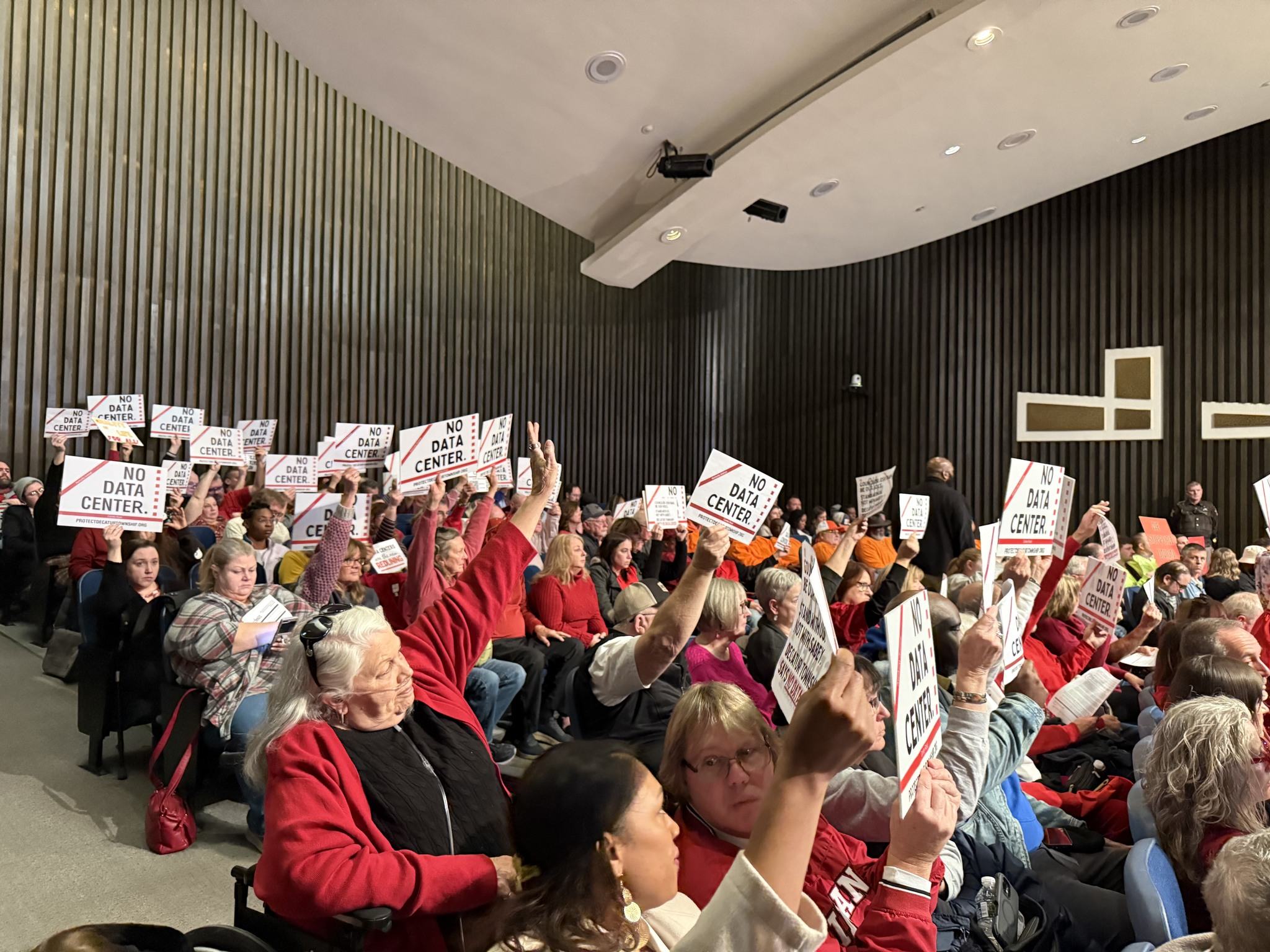
For starters, it has become common for planning or county council meetings to be postponed because it would be unsafe to let all interested attendees into the originally proposed venue.
These meetings, when they do go ahead, are often rowdy and combative. All it takes is dozens of residents to sign up for public comment, and a meeting can drag on well into the night: the December 12, 2025 meeting of the St. Joseph County Council lasted for ten hours, and the March 17, 2026 meeting of the Franklin County planning and zoning commission lasted for 11 hours.
In these tense environments, law enforcement sometimes escalate the situation by using violence when removing members of the public. In early May, the use of profanity during a public comment section of the Andover Township Committee meeting led to law enforcement tackling a man to the floor, and last December, three women were dragged out of a meeting in Port Washington, Wisconsin, after one of them spoke for slightly longer than their allotted time.
The use or threat of violence against officials has also become a real threat to the fabric of local life.
In January, Anthony P. Hinojosa, a resident of Troy, Illinois, was arrested after he threatened to use a firearm to kill City of Troy officials or contractors who were considering a data center proposal put forth by Cloverleaf Infrastructure.
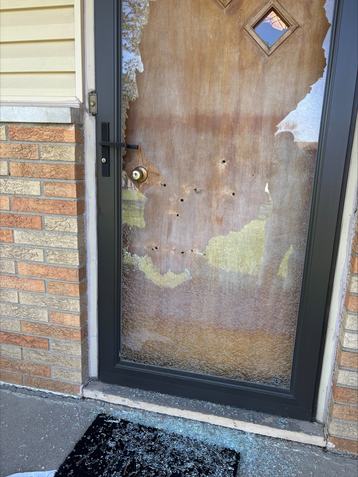
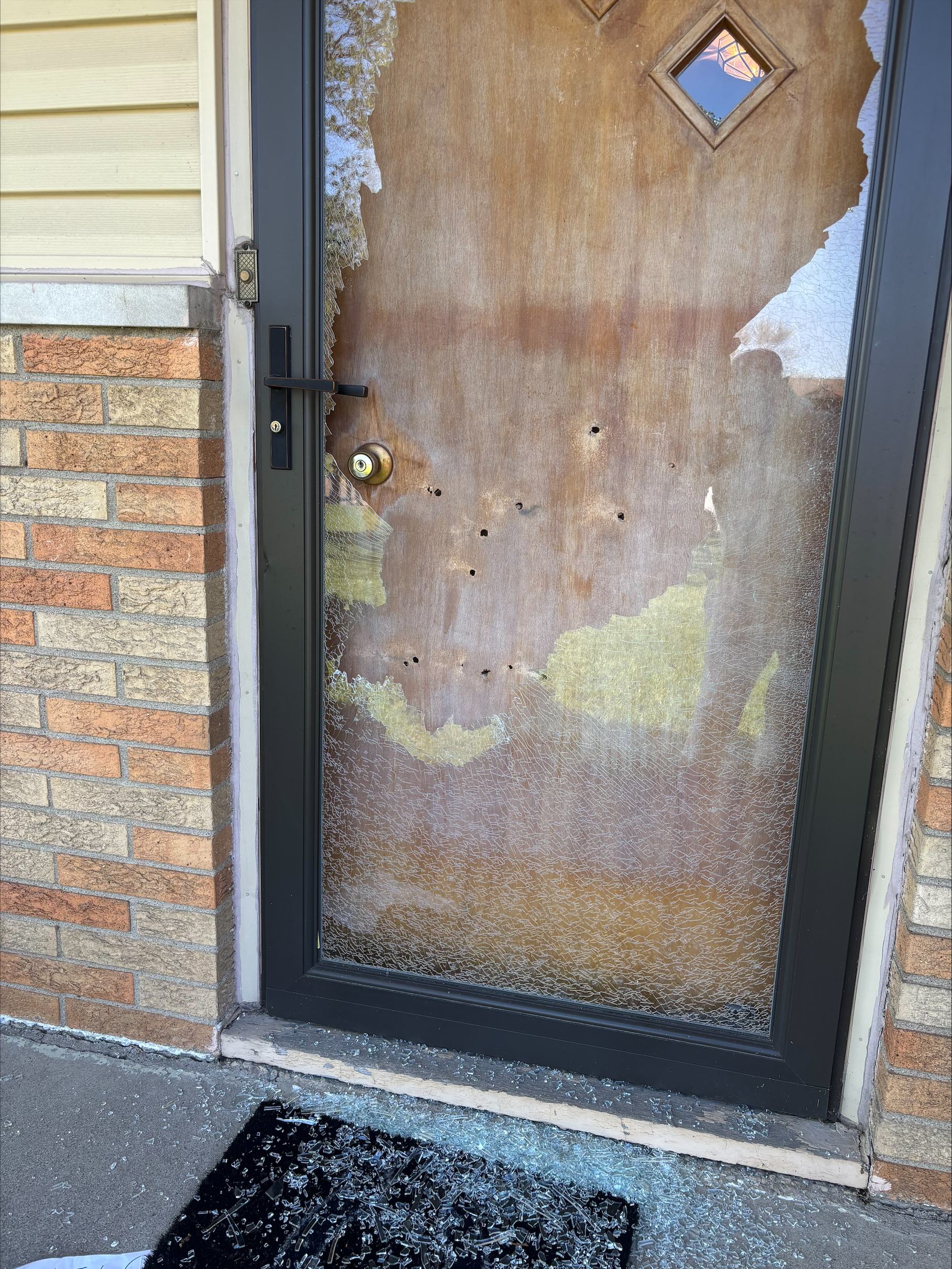
April saw the home of a city councilor in Indianapolis was shot 13 times by an unknown attacker. A “NO DATA CENTER” sign was found at the doorstep.
In May, Jennifer Zink, the treasurer of Saline Township, Michigan, announced that she would be resigning her post after receiving death threats. The township initially voted against a rezoning application filed by Related Digital for a 250-acre data center, but Related sued the Township for its decision, bringing it to a settlement allowing the project to go ahead.
“I can’t take it any more. The threats. The ‘I’m going to tar and feather you. I hope you get bit by a [tick]’ – it’s so disgusting,” said Zink in a public meeting.
The intensity of anti-data center sentiment has caught the attention of the Trump administration’s security apparatus. Wired reported on May 26 that it had obtained unpublished reports from the Department of Homeland Security, FBI, and fusion centers indicating that law enforcement was surveilling alleged threats against data centers. These documents also show that law enforcement has written reports about local government meetings in Arlington and Fairfax County, Northern Virginia, according to Wired’s reporting.
But it is important to recognize that local opposition to data centers takes its current form because public meetings become the primary outlet for disgruntled citizens to express anger at their representatives, even when there are no data center items on that day’s agenda.
For instance, the decision to approve a data center is almost never put up to a local referendum. In the case of Independence, Missouri, an attempt to file a referendum petition that would challenge the city council’s decision to approve tax incentives for an 800MW Nebius data center campus was shot down by the courts in late March.
Calls for local officials to impose moratoriums or to change zoning regulations in order to regulate data center developments are common, but this only works if local officials choose to listen, and even the threat or act of voting a local official out will do little to change the legal status of a data center project that has already been approved.
If every government decision were put to a direct vote by the people, governments would cease to function. It would be unduly obstructive and onerous for both officials and citizens to get the public to vote on every stage of the planning process for all projects.
But it is also clear that the planning process needs to find ways to address the political volatility of data center proposals. It seems strange to consider a conditional use permit for a gigawatt-scale campus right after a rezoning proposal for a hair salon or car park. Locals are unable to vote directly for or against developments and can only affect the decisions of officials through pressure campaigns or threats to unseat them.
Some communities have begun mandating that data centers go through separate planning processes that allow for greater community input.
“A lot of communities in Virginia have shifted from allowing data centers as a right in their zoning code to requiring them to go through a special use permitting process,” says Amanda Garcia, a senior attorney with the Southern Environmental Law Center.
“It allows community members to raise concerns during the process. It allows data center developers to propose mitigation, to address those concerns on the front end, and it allows the local government to balance the concerns of the community and the needs of the community with the needs of the data center developer.”
It is unclear whether opposition to data centers now means that there will be opposition to data centers forever.
“Some communities are adopting or pressing pause,” explains Garcia. “They’re saying: we need a little bit of time to figure out the right approach in terms of whether and on what terms to allow data centers into our community. That’s part of a legitimate democratic process, particularly when you’re talking about an industry that does require a huge amount of water and power and hasn’t been transparent about those things up to this point.”
But whether opposition to a data center in one’s local community necessarily means that one would be opposed to building a data center in someone else’s is an open question.
Those seeking to discredit the anti-data center movement as parochial, narrow, and selfish will highlight the aspects of the movement which seem to be playing an extended game of hot potato – not in my backyard, but yes in yours.
After all, in public anti-data center Facebook groups, it is not uncommon to find posts, posters, or graphics with anti-data center messages that bear the artistic imprint of AI (an alternative explanation would be that these people are simply unaware that the AI boom is powered by data centers). But just because a person is opposed to a data center in their local area does not mean that they are only opposing it for reasons limited to their locality.
More crucially, the consensus over whether data centers are necessary for the functioning of daily life is still up in the air, and it is why the notion of a ‘sacrifice zone’ – which rests on the assumption that the infrastructure being placed in an area is useful for the nation or state – is slightly less applicable to data centers.
The heart of local opposition, therefore, is not only about the balance between national and local interests, but also whether the nation and the locality will benefit at all.


Comments